
The short answer
With a corrugated asbestos roof, the first question is what you can safely keep. The survey and roof condition guide the choice: manage it as it stands, encapsulate it, overclad it, or remove and replace it. Each route leaves a different finished roof, so compare the complete jobs.
Black Hangar Studios records a 4000 m² corrugated asbestos-cement roof sealed from below. Read the hangar record.
Global House, Surbiton, records external work from above on about 1575 m², with preparation, roofing foam and a silicone finish. Read the external treatment record.
HSE's duty-to-manage guidance puts assessment and the management plan before work on non-domestic asbestos-containing materials. Read HSE's guidance.
HOLVEM has treated more than a dozen asbestos-cement and fibre-cement roofs this year.
01Asbestos information
Start with the asbestos survey and register
Before discussing a treatment, find out what the sheets contain. Corrugations tell you the shape, not the material. Use the building’s asbestos survey and register, then ask a competent adviser whether that information covers the work you have in mind.
If you manage non-domestic premises, keep the asbestos duties in the picture throughout. HSE’s duty-to-manage guidance covers recording the material, assessing its condition and planning how it will be managed. Those responsibilities continue when you keep the roof.
Tell the surveyor exactly what you plan to do. Paperwork for managing an undisturbed roof may not cover work that disturbs it. The assessment needs to identify the material affected by this job and give the contractor the information to plan it.
Our role starts with the roof information and the treatment you need. We assess insulation, encapsulation and refurbishment within our scope. HOLVEM does not test for asbestos or replace roof sheets, and never removes asbestos sheets. If the roof is safe to keep, we encapsulate it; if not, removal is a job for asbestos removal professionals, licensed where HSE requires it.
Send the paperwork you have, with its date and the work it covers. Add photographs taken from a safe position. We can help you establish the next step from there; you do not need to identify asbestos from a photograph before making an enquiry.
A corrugated profile tells you the shape of the sheet, not whether it contains asbestos.
02Condition first
Condition sets the available options
Once you have the material information, look at the condition. Record cracked, slipped or missing sheets, loose fixings and signs of rain getting through. Those findings, together with your plans for the building, decide which treatments are worth considering.
Existing leaks go to a roofer first. HOLVEM is not a roofing contractor; spray foam is not waterproofing.
Look beyond the sheets too. If the roof or its supports raise a concern, arrange the structural and roofing checks before specifying insulation. Being able to reach the underside does not tell you whether the roof above is fit to retain.
Future use can change the decision. A building remaining a store and a building undergoing a wider conversion may need different investigations and design work. State that intention early so the retained material and new assembly are considered together.
You should come away knowing what can stay, what needs repairing first and what the treatment cannot solve. With those answers, you can compare prices for routes that actually suit the building.
03Route 1: retain
Route 1: retain and manage the existing roof
Sometimes keeping and managing the roof is the right answer. If the competent assessment and management plan support that route, an extra layer is not automatically needed. Decide from the condition and intended use of your building.
Ask what ongoing management involves for that roof. Keep the material information, condition record and arrangements for future work accessible to the people who manage and maintain the premises.
If the roof is staying but the building has a separate condensation or thermal problem, assess that objective next. Set the insulation depth and added layers for the roof and objective.
Retention also needs to make sense against future plans. If substantial alterations or replacement are already expected, discuss how the proposed treatment affects that work. Avoid committing to an assembly without understanding its intended service in the building.
04Route 2: from below
Route 2: encapsulation from below
If the roof is suitable to keep, we can work from inside. Closed-cell insulation follows the underside of the sheets, leaving the roof in place. We specify the depth and the junctions to treat so you know exactly what the application covers.
This can serve an underside-condensation and insulation objective. Correctly diagnosed and specified, closed-cell spray foam stops roof condensation. Zero call-backs for condensation. The depth is typically 25 mm or 50 mm closed-cell, depending on the roof make-up, confirmed before we spray.
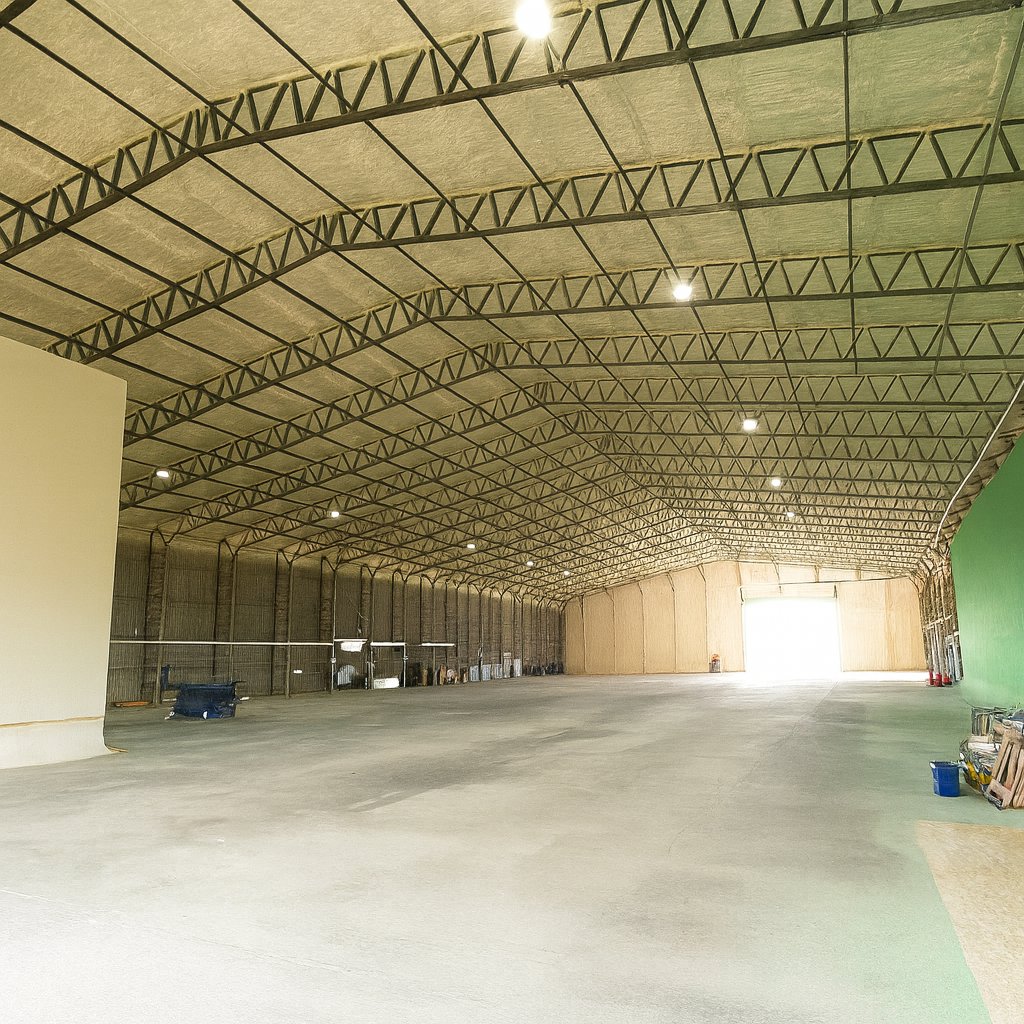 Project recordBlack Hangar Studios, Alton
From the project record
Read the record4000 m² hangar under a corrugated asbestos-cement roof sealed from below.
Before that work starts, sort out the weather side. Cracked sheets, failed details and existing leaks need the appropriate repair. An underside treatment does not replace that work, remove the asbestos roof or make fragile sheets safe to walk on.
We also check how moisture will behave through the retained layers and new insulation. Ask to see the build-up and any calculation needed for your roof. A surface that looks dry today cannot answer that question on its own.
Then plan the space below. Identify rooflights, services and equipment that need future access, and agree what will be protected or left clear. The treated area follows the actual roof profile and the boundaries set out in your quote.
Read Asbestos roof encapsulation for HOLVEM's application route, including the condition check and the distinction between insulation and roofing repair.
05Route 3: from above
Route 3: a system applied from above
If the weather-facing surface needs treatment, the work moves above the roof. That changes the preparation, finish and access plan. We assess the roof and asbestos information before specifying a complete external system.
Global House shows what that system involves: a biocidal wash, 25 mm of closed-cell roofing foam and an airless silicone finish, all applied from above. The wash prepared the roof for the coating system. We never wash a roof as a standalone service.
Price the whole external system, including preparation, layers, junctions and access. An underside foam rate cannot cover that different job. Your quotation should show what is being installed and how the weather-facing details will be finished.
We assess the roof first, then decide whether an external system suits its condition and the work you need.
Keep the repair work visible in that proposal. Damaged sheets and unsuitable supports need resolving before the finish goes on. The asbestos information and competent assessment guide what work can proceed and which contractor completes each part.
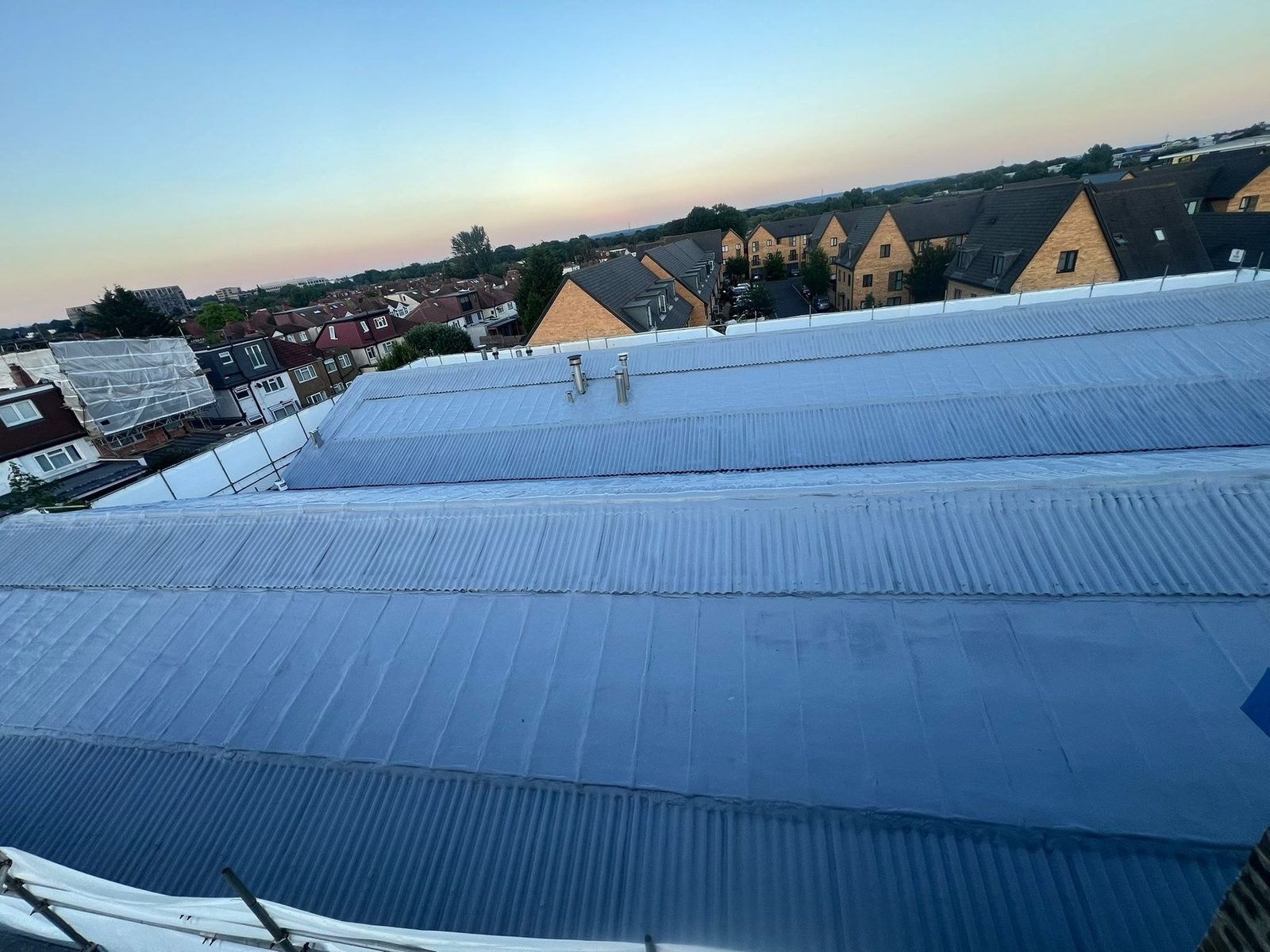 Project recordGlobal House, Surbiton
From the project record
Read the recordGlobal House’s external work covered about 1575 m² of pitched asbestos-cement roofs and an office roof. A biocidal wash prepared the surface for 25 mm roofing foam and an airless silicone finish. Removal had been ruled out with homes and businesses close by. This was one coating system; the wash was not sold on its own.
06Route 4: overclad
Route 4: overcladding
Overcladding takes a different approach: a designed roof assembly sits above the retained sheets. The design needs to cover the supports, fixings, rooflights, junctions, moisture and weathering details, rather than just adding another layer.
The old material stays underneath, so it still needs managing. Ask how the installation affects it and what asbestos advice the work requires. Keeping the roof does not mean the new work leaves every sheet undisturbed.
The new assembly also needs to address condensation. Adding a roof layer is not, by itself, a calculation of how the retained layers will behave. Ask for the moisture and thermal design that supports the proposed arrangement.
To compare overcladding with underside insulation, start with the result each job delivers. Include the external work, access, details and programme in both proposals. Read Spray foam versus overcladding for the questions to put beside the prices.
07Route 5: replace
Route 5: removal and replacement
If the assessment or planned work calls for replacement, price the removal and new roof together. You need to see the finished construction, not just an empty opening after the sheets leave. Our guide to replacing an asbestos cement roof covers that next stage.
Ask the asbestos professional which work category applies to this material and task. HSE distinguishes licensed, non-licensed and notifiable non-licensed work. An asbestos-cement roof is not automatically a licensed-removal job; the assessment establishes the requirements.
HOLVEM never removes asbestos sheets. If the roof is safe to keep, we encapsulate it; if not, removal is a job for asbestos removal professionals, licensed where HSE requires it.
The dutyholder and project team should coordinate the asbestos assessment, roofing work and other responsibilities.
Put removal, waste, access, replacement and handover into one programme. Where different contractors take those stages, name their responsibilities and handovers. A removal-only price leaves the cost of your finished replacement roof unanswered.
Next, look at how each route affects daily work. Agree the areas released to contractors, protection and restrictions for each proposal. Read Asbestos roof removal cost versus encapsulation to compare the work behind the headline figures.
08Compare the routes
Compare what each route actually provides
With the routes understood, use this table to compare what each one leaves you with. Your roof assessment and written proposal decide which entries apply to the building.
| Route | What stays or changes | What you need to check first | Disruption | Building in use |
|---|---|---|---|---|
| Retain and manage | Existing roof remains | Material information, condition and management plan | Assessment and ongoing inspection; no treatment installation | The roof remains in use under the dutyholder’s management plan |
| Encapsulate from below | Roof stays; underside is treated | Suitability, leak repairs, build-up and specified depth | Internal access, protection and working zones; phasing agreed at survey | Operations outside separated working areas can continue under the agreed plan |
| Apply a system from above | Roof stays within an external treatment system | Condition, preparation, system and access controls | External access and system preparation/application | Internal operation can continue where the access and protection plan permits |
| Overclad | A new assembly sits above retained material | Support, fixings, asbestos information, moisture and thermal design | External roof works and junction detailing | Continued use depends on the contractor's weathering and work-area plan |
| Remove and replace | Old roof removed; new roof installed | Asbestos work category and replacement design | Removal, waste handling, roof opening and replacement works | Areas beneath the open roof need protection and agreed restrictions |
Now ask what you will have at handover. Does each proposal meet the same objectives, and what further work will still be needed? That is the basis for a useful cost comparison.
If a quote leaves out repairs or a required finish, ask for them to be listed and priced. You can then compare complete alternatives without discovering missing work after choosing a contractor.
09Condensation beneath
Condensation beneath an asbestos-cement roof
If the concern is water underneath, diagnose that before choosing insulation. Is rain entering through a fault, is condensation forming on the cold sheets, or are both happening? We look at the roof alongside the moisture produced inside the building.
The condition-led sequence is simple: identify the material information, assess the roof, repair existing leaks, then specify the suitable condensation treatment and depth. Where needed, the risk analysis checks the proposed build-up.
Guaranteed to stop condensation when we confirm it is condensation at survey, set the depth, and the roof has no existing leaks.
Leaks are a roofing job, so a roofer repairs them before we treat the underside.
10Fragile roof access
Fragile roof access stays a separate matter
Whatever route you choose, plan access separately. HSE identifies fragile roofs and rooflights as a serious work-at-height risk. Take enquiry photographs from safe positions; competent people must plan and control any work on the roof.
Take accessible photographs from the floor or another safe position. They can show the overall underside and visible wetting without turning a quotation request into roof work.
A treated fragile roof is still a fragile roof. Do not walk on it.
For work above the roof, ask for an access plan for this building. Global House illustrates a treatment system, not an access method you can copy elsewhere. Read HSE’s fragile-surface guidance when planning the inspection and work.
11Plan the work
Plan the work around the premises
Next, plan around the working space. Even when the roof stays on, stock, racks, fixed plant and vehicle routes can restrict underside access. Agree what moves, what stays protected and which areas the team needs released.
Tell us your operating hours and the processes you cannot move. We can explore phasing or work outside those hours, then set out the actual zones and handovers in the proposal. That gives you a programme you can plan around.
Ask the same programme questions for external treatment, overcladding and replacement. Their access and weathering responsibilities differ. If a proposal says the building stays open, ask which areas remain usable and when.
An agreed plan identifies what the client prepares and what the contractor supplies. That clarity helps the insulation or refurbishment specification become a workable project rather than a material choice.
12The quotation
What belongs in the quotation
When you reach the quotation, check the area first. Corrugated sheets have more surface than the flat plan outline. Ask how the roof was measured and which profile allowance has been used so you can follow the total.
Then check what the price buys: the roof information, condition, objective, layers and depth. Preparation, access, protection, junctions, programme and exclusions should be written down alongside them.
Current spray foam rates are in our commercial spray foam insulation cost guide. External coated systems, overcladding and removal or replacement are priced as their own project proposals.
If the treatment is intended to meet a thermal value, ask for the calculated complete build-up. Calculate the complete build-up for a thermal target. The objective and evidence should be stated together.
13The building record
Keep the decision with the building record
At handover, add the agreed work, retained layers and outstanding actions to the building’s asbestos record. The next contractor should be able to see what is there before planning new work.
14Recorded roofs
Commercial roofs in the HOLVEM record
Global House, Surbiton: work from above
Global House’s external work covered about 1575 m² of pitched asbestos-cement roofs and an office roof. A biocidal wash prepared the surface for 25 mm roofing foam and an airless silicone finish. Removal had been ruled out with homes and businesses close by. This was one coating system; the wash was not sold on its own.
Black Hangar Studios, Alton: work from below
From the project record
4000 m² hangar under a corrugated asbestos-cement roof sealed from below.
The studio reported that the drumming and resonance from rain and wind were virtually eliminated; no sound-level readings were published.
A retained 2340 m² commercial roof
An unnamed commercial roof: 2340 m² of asbestos-cement kept in place and sealed from below with 50 mm closed-cell.
The customer reported underside condensation mitigation.
The roof stayed in place and was treated from below. Read the commercial roof project.
A different construction at Nuneaton Signs
Nuneaton's record is about 2924 m² of factory roof of insulated panels over 150 mm of mineral wool, whose original sheets were suspected of containing asbestos, sealed from beneath with 25 mm closed-cell, worked at weekends with production untouched.
That is an insulated panel construction and is not described as bare asbestos-cement. The value of the example here is the need to identify the actual retained layers before specifying treatment. Read Nuneaton Signs.
Backed by our 25 year HOLVEM workmanship warranty, plus the manufacturer's 25 year product warranty issued directly to you.

