Before 3pm on a working day, contacted the same day. After 3pm, the next working day. Contact, not a quotation. Telephone
Start a project brief
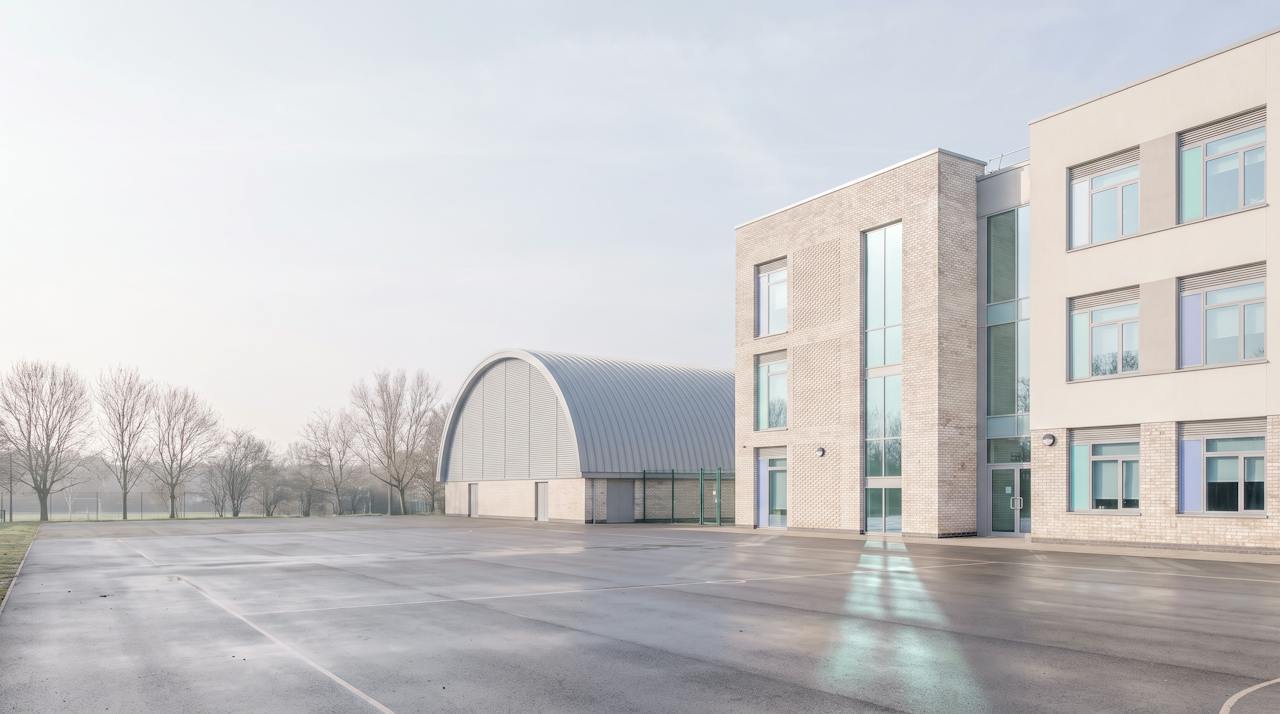
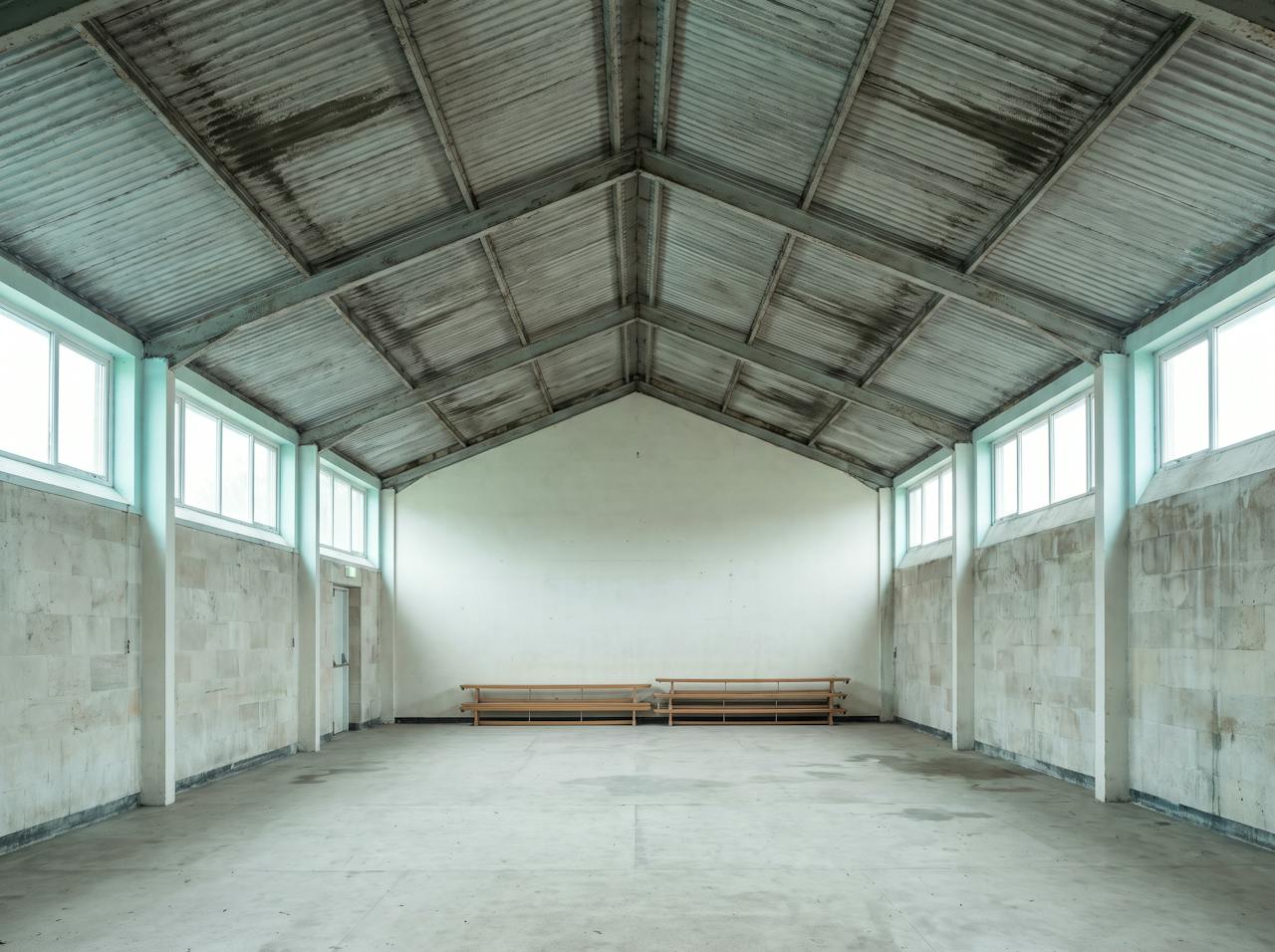
A UK secondary school sports hall interior in morning light: a high profiled steel roof on steel trusses, court markings on a pale floor, tall windows along one wall and folded seating at the far end.

Building type

Schools: warm, dry and quiet, worked around the timetable.

Sports halls that drip, kitchens and changing rooms that steam, classrooms cold under a bare roof and loud under rain. Closed-cell to a cold hall roof or soffit, open-cell within a flat classroom roof, and cavity walls filled where they exist. Applied in the holidays, or in a segregated zone in term time, with fire and safeguarding planned before anyone arrives.

Halls, kitchens, flat-roofed classroom blocks, older blocksHolidays, or a segregated zone in termFrom £16/m² + VAT at 25 mm

Same-day estimator

About a minute · no obligation

Step 1 of 4: your building.

Which building is it?

This page's building is pre-selected. Change it if yours is different.

Takes about 30 seconds. No contact details yet.

01What is happening

Full halls, hot kitchens, cold roofs, and the drips land on the pupils.

A school puts hundreds of people, showers, a kitchen and a sports hall under roofs that were often built cheaply and are now decades old. The roof sheet or the soffit is the coldest surface in the building. On a cold morning water forms on it and drips onto the hall floor, the dining tables and the classroom desks. Rain on a bare metal roof drowns a lesson.

Inside a school sports hall on a cold morning: condensation beaded on the underside of the profiled steel roof between the trusses, a drip mark spreading on the court floor below and equipment stacked against the wall.
The roofBelow the dew point
  • Occupancy sets the load. Thirty people in a classroom, two hundred in a hall, showers after PE: the air is wet and the roof is cold.
  • Older blocks, thinner roofs. Post-war and system-built blocks often carry an uninsulated sheet, sometimes asbestos-cement.
  • Noise as well as water. Rain drumming on a bare metal roof over a teaching space is a problem the timetable cannot solve.

It is not a roof defect. Repairing the roof will not stop it.

It is not solved by heating harder. Warmer air holds more moisture and finds the same cold surface.

It is not always condensation. Water at a lap, a fixing or a rooflight during rain is ingress, repaired first, by someone else.

02What is applied

The right foam for each roof: closed-cell under a cold sheet or soffit, open-cell within a flat classroom roof.

Sports halls and dining halls usually carry a profiled steel roof, treated from below with closed-cell and the sheet kept as the weather line. The single-storey classroom blocks that make up most primary estates sit under flat roofs, where 150 mm of open-cell within the roof construction gives the depth a flat roof needs and lets it breathe. Cavity walls are filled in the same visit where they exist.

Schematic / not to scaleKeyed 1 to 5 below

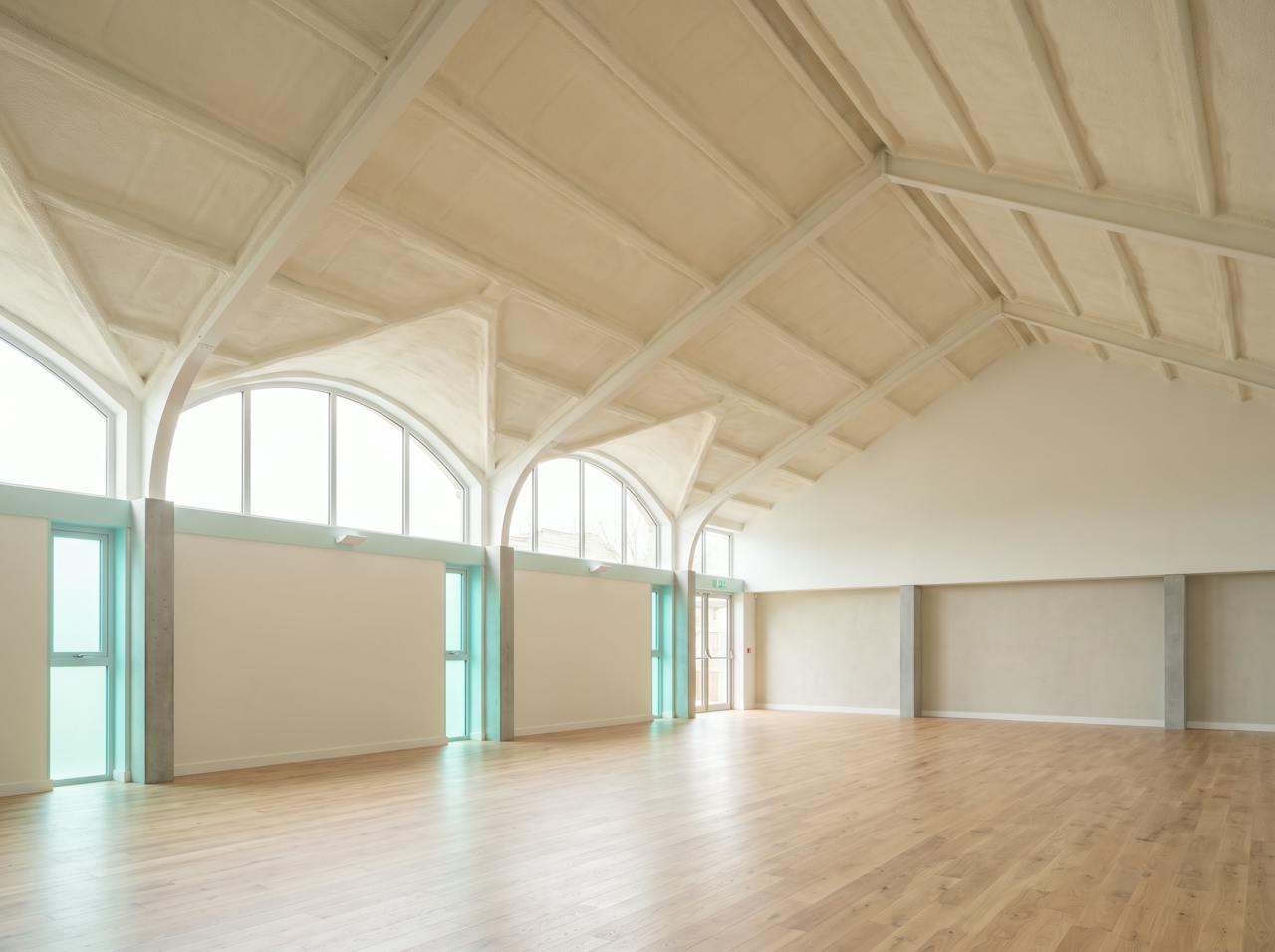
Inside a school sports hall after the work: the profiled steel roof and trusses in a continuous cream closed-cell layer, lighting and ventilation left clear, the court below back in use.
AppliedAbove the hall
The layer stops cleanly at lights, grilles and rooflights, which are masked and left clear. The hall reopens on the first day of term.
1 / Existing roof

Profiled sheet, flat deck, soffit or corrugated sheet. It stays, and we do not make it watertight.

2 / Prepared underside

Dust, loose coating and contamination removed. An asbestos-cement sheet passes a condition survey gate first.

3 / Closed-cell layer, in passes

Follows the profile and closes the laps. λ 0.027 W/mK is the NexSeal LE product figure. A flat classroom roof takes open-cell within the construction instead (see the project record below).

4 / Purlins, trusses and fixings

Encapsulated by the application, and still a thermal bridge in the calculation.

5 / Coating, where the strategy requires

B-s2,d0 belongs to the coated NexSeal LE and DC315 system, as tested. An occupied school space usually asks for it.

03Working around the building

In the holidays, or in a segregated zone in term time.

Most school work sits in the summer, Easter or half-term breaks, when the building is empty. Where term-time work is unavoidable it is done in a zone segregated from pupils and staff, with the arrangements agreed with the school before anyone arrives.

  1. 1 / 3

    Holidays first

    Halls, kitchens and whole blocks are best done empty. The programme is booked to the school calendar, often a year ahead.

  2. 2 / 3

    Term time, segregated

    A zone closed to pupils and staff, its own access route, no contact with the school day. Safeguarding checks for operatives on site follow the school's own requirements.

  3. 3 / 3

    Fire and asbestos planned in

    The fire strategy decides whether the coated system is specified; the asbestos register is consulted before the survey, and an asbestos-cement roof passes its condition gate first.

Cure time before a space is reoccupied, and any ventilation during cure, are set out in the method statement for your school.

04Enverge NexSeal LE

The material we spray, and why it matters.

Enverge NexSeal LE is a two component closed cell polyurethane, spray applied directly onto the prepared substrate. As it cures, it expands and sets into one rigid, continuous layer, bonding into corrugations, laps, fixings and awkward junctions without being cut, jointed or mechanically fixed.

That matters because most insulation problems start at the gaps.

Board systems can leave voids at ribs, laps and junctions, and every gap is a potential cold bridge where warm internal air meets a cold surface and condensation forms, hidden behind the insulation. NexSeal LE is applied as one continuous bonded layer, so there is nowhere for that to start: a sealed, stable building envelope that controls condensation, reduces heat loss and protects the structure underneath.

0.027 W/mKThermal conductivity · aged · BS EN 14315-1
Class 1Surface spread of flame · BS 476-7 · uncoated
B-s2,d0Coated, as tested · BS EN 13501-1
25 yearsWorkmanship warranty, plus the manufacturer’s

HOLVEM also installs open-cell foam. It is a different product with its own data sheet, specified where a build-up needs depth that breathes: the flat roofs of 29 primary and junior schools across Hampshire and Berkshire took 150 mm of it. It is not what goes onto a cold sheet or a cold soffit. Open-cell system data · Closed-cell system data
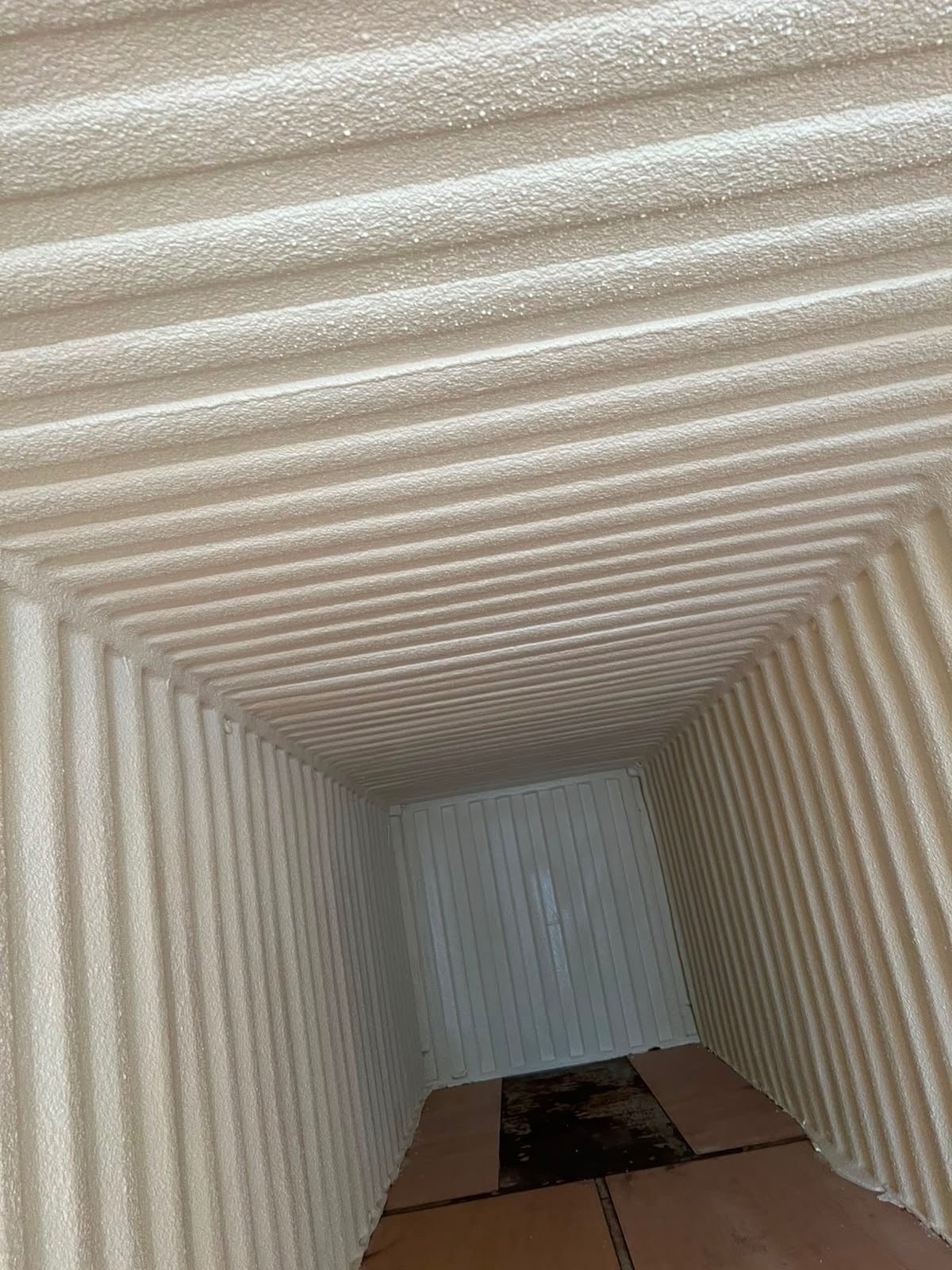
HOLVEM spray rig van with Enverge NexSeal LE A and B component drums plumbed into the proportioner.
HOLVEM rigA and B on board
The HOLVEM rig · Enverge NexSeal LE A and B components on board. HOLVEM's own photograph.

05How we check

We check the moisture before we spray.

A sports hall, a kitchen and a classroom hold very different air. The condensation risk analysis is run for the space, not the school; the U-value calculation carries the purlin bridge; the fire strategy decides the coating. The evidence pack goes to the estates file.

  1. 1 / 3

    Condensation risk analysis, per space

    Each roof build-up is checked against the temperature and humidity the space actually produces, to BS EN ISO 13788 and, where the case warrants it, a transient WUFI analysis. The depth that keeps the surface above the dew point comes out of this.

    How the analysis works
  2. 2 / 3

    U-value, with the purlin in it

    Where a figure has to be met, the calculation is done for this build-up to BS EN ISO 6946 with the purlin bridge included. HOLVEM supplies the calculation; the assessor holds the compliance position.

    U-values and Approved Document L
  3. 3 / 3

    Fire, for an occupied school

    Occupied school space usually carries a reaction-to-fire requirement. The coated NexSeal LE and DC315 system achieves B-s2,d0 to BS EN 13501-1 in the build-up tested; the school's fire strategy decides where it is specified.

    Fire performance and coatings

06The objective sets the depth

Four objectives. Each one sets the depth.

What does the roof need to do? Pick one below and you will see the depth that does it, and just as plainly what it won’t do. Nothing is left to come out later: the survey confirms the right depth for your building.

Four depths, drawn to one scale and measured from the deck. The objective and the calculation set the thickness on your building. A flat classroom roof is a different build-up: 150 mm of open-cell within the construction, priced for the project. The schools programme record below shows it.

Pick an objective above to see the depth that does it, and what it won’t do.

Thickness and objective

Want a figure for your building? It takes about a minute.Building, roof, reading, details. A real figure for your school the same working day; nothing sent to anyone else.

Get my estimate

Project recordSchools programme

Twenty-nine schools, flat roofs and cavity walls, to one specification.

Not every school roof is a pitched hall roof. Across Hampshire and Berkshire we treated the flat roofs of more than 29 primary and junior schools with 150 mm of open-cell foam, and filled the cavity walls at several, booked to the school calendar and repeated school by school.

29+
Schools treated
150mm
SucraSeal open-cell, flat roofs
0.20W/m²K
Flat roof U-value, as recorded
Walls
Cavity walls at several schools
  • Flat roofs, not only pitched ones. The single-storey classroom blocks that make up most primary estates sit under flat roofs. The layer went within the flat roof construction at every school, around joists, services and fixings.
  • Open-cell, for depth that breathes. 150 mm of Enverge SucraSeal open-cell gave the roofs their thermal depth while staying vapour-open, with the build-up checked by condensation-risk analysis so the inner surface stays above the dew point of a full classroom all year. It is a different product from the closed-cell foam that goes onto a cold sheet or soffit, specified for a different objective.
  • Walls as well. Where a school had cavity walls, they were filled in the same visit, so roof and walls stopped leaking heat together.
  • Booked to the school year. Holidays first, where a whole block is involved; a segregated zone with its own access where a term-time visit cannot wait. One specification, surveyed and confirmed at each school before the rig arrived.

What the record states: a flat roof U-value of 0.20 W/m²K and the surface condensation risk eliminated year-round. No metered energy figure was published for the programme, and none is claimed.

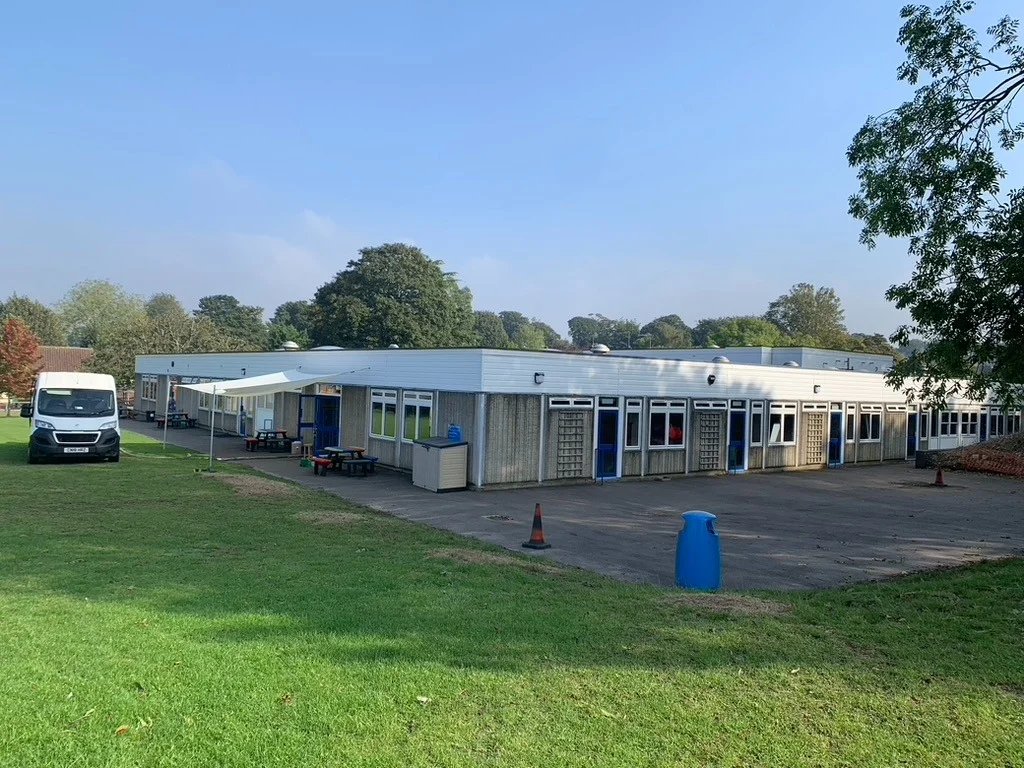
At one of the schools in the Hampshire and Berkshire programme: the insulation work in progress.
Project recordAt one of the schools

At one of the schools. Stoke Park Junior, Shamblehurst Primary, Marchwood Junior and Brockhurst Primary are among the schools named on the record, with more than twenty-five others across the two counties.

07Straight answers

Ask us the hard ones.

The questions bursars, estates managers and heads actually ask on the call, answered the way the specialist answers them. A question we have not answered? Ask it on the call. No obligation.

Can it be done in the holidays?
Yes, and that is the normal way. Halls, kitchens and whole blocks are best treated empty, and the programme is booked to the school calendar, often a year ahead. Where term-time work is unavoidable, it is done in a zone segregated from pupils and staff with the arrangements agreed with the school first.
Our older block has an asbestos-cement roof.
Then it passes a condition survey gate first, with the asbestos register consulted before the survey. Where it passes, the roof stays: 50 mm closed-cell with encapsulation seals the sheet in place from below and thermally upgrades it in the same visit. Where it fails, we say so before anyone spends anything. Fibre-cement and asbestos-cement encapsulation.
Will it help with rain noise in classrooms?
A bonded closed-cell layer on the underside of a metal sheet damps the drumming a bare sheet makes under rain. It is not a full acoustic treatment for a teaching space, and where the acoustic standard for the room is the objective we say so and involve the acoustician. Rain noise and acoustics.
How much does school insulation cost?
It depends on the depth, and the depth depends on the objective. Condensation control starts at 25 mm and retaining heat at 50 mm; the rate falls as the area rises. A U-value target above 75 mm and the coated Euroclass B system most school spaces ask for are priced per project, because the coating sits on top of the foam.
Who deals with fire and safeguarding?
Both are planned before anyone arrives. The school's fire strategy decides where the coated system is specified, and HOLVEM states what the coated system achieves. Safeguarding arrangements for operatives on a school site, and the segregation of any term-time zone, are agreed with the school, to its own requirements.

The next step

Your building.
Your brief.
A specialist.

If you already know the thickness or U-value you need, we price to it and confirm it is right; if not, we work it out with you. Tell us which spaces drip, what the roofs are made of and when the school is empty; the estimator at the top takes about a minute and asks for nothing until the reading is on screen.

Or call . Enquiries received before 3pm on a working day are contacted the same day. After 3pm, the next working day. A commitment to contact, not a quotation, a survey or a price.

Rather write it all down first? Start a project brief · about five minutes, photographs welcome.

Same-day estimate · about a minute Get my estimate