Before 3pm on a working day, contacted the same day. After 3pm, the next working day. Contact, not a quotation. Telephone
Start a project brief
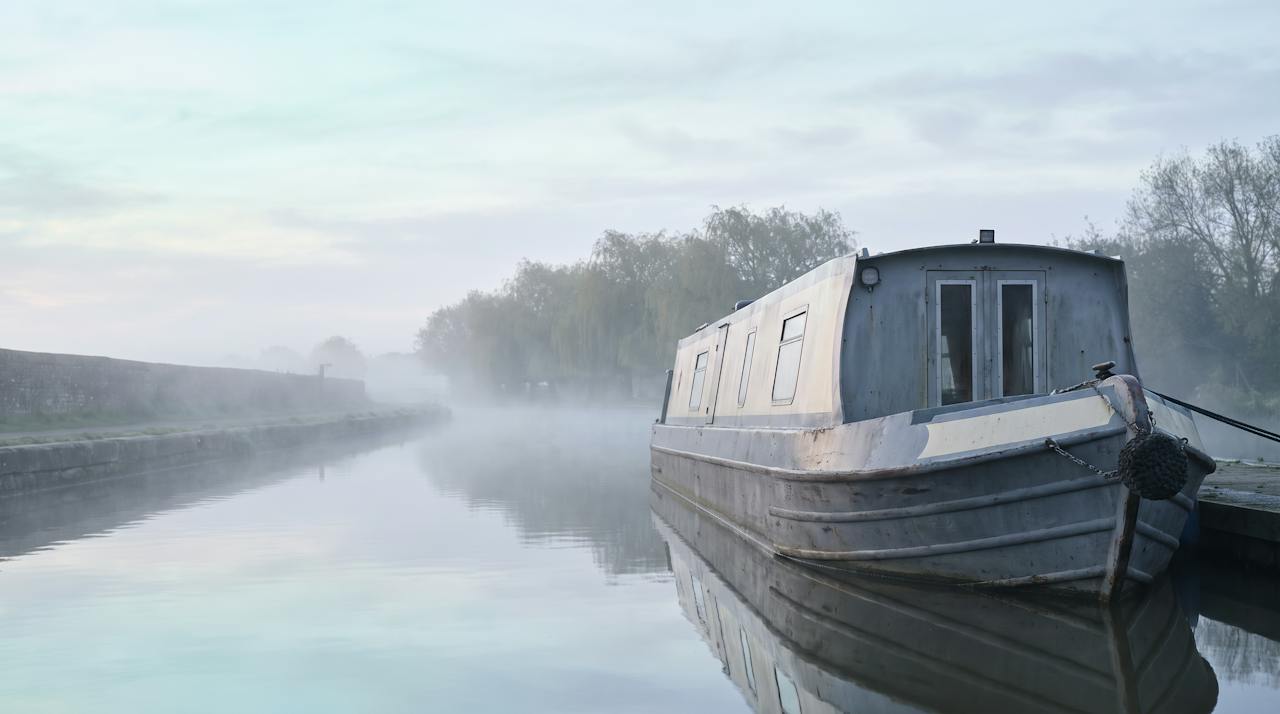
A steel narrowboat moored on a still UK canal at first light, mist on the water, the cabin roof and hull side in pale morning light, no people.

Building type

Marine and boats: a steel hull is the coldest wall you will ever live inside.

A narrowboat hull sits in water that is close to freezing in winter, with a warm stove and people breathing inside it. Every inside face of the steel is below dew point, so the walls run, the roof drips and the bilge fills from above. A sprayed closed-cell layer bonds to the steel, does not take up water, and follows every curve and frame that board cannot.

  • Steel and aluminium hulls, cabin sides and roofs
  • Specialist work, hull condition checked first
  • Priced per boat

Same-day estimator

About a minute · no obligation

Step 1 of 4: your building.

Which building is it?

Boat is pre-selected. Change it if yours is different.

Takes about 30 seconds. No contact details yet.

01Why this building

Cold water outside, a warm stove inside, and steel in between doing what steel does.

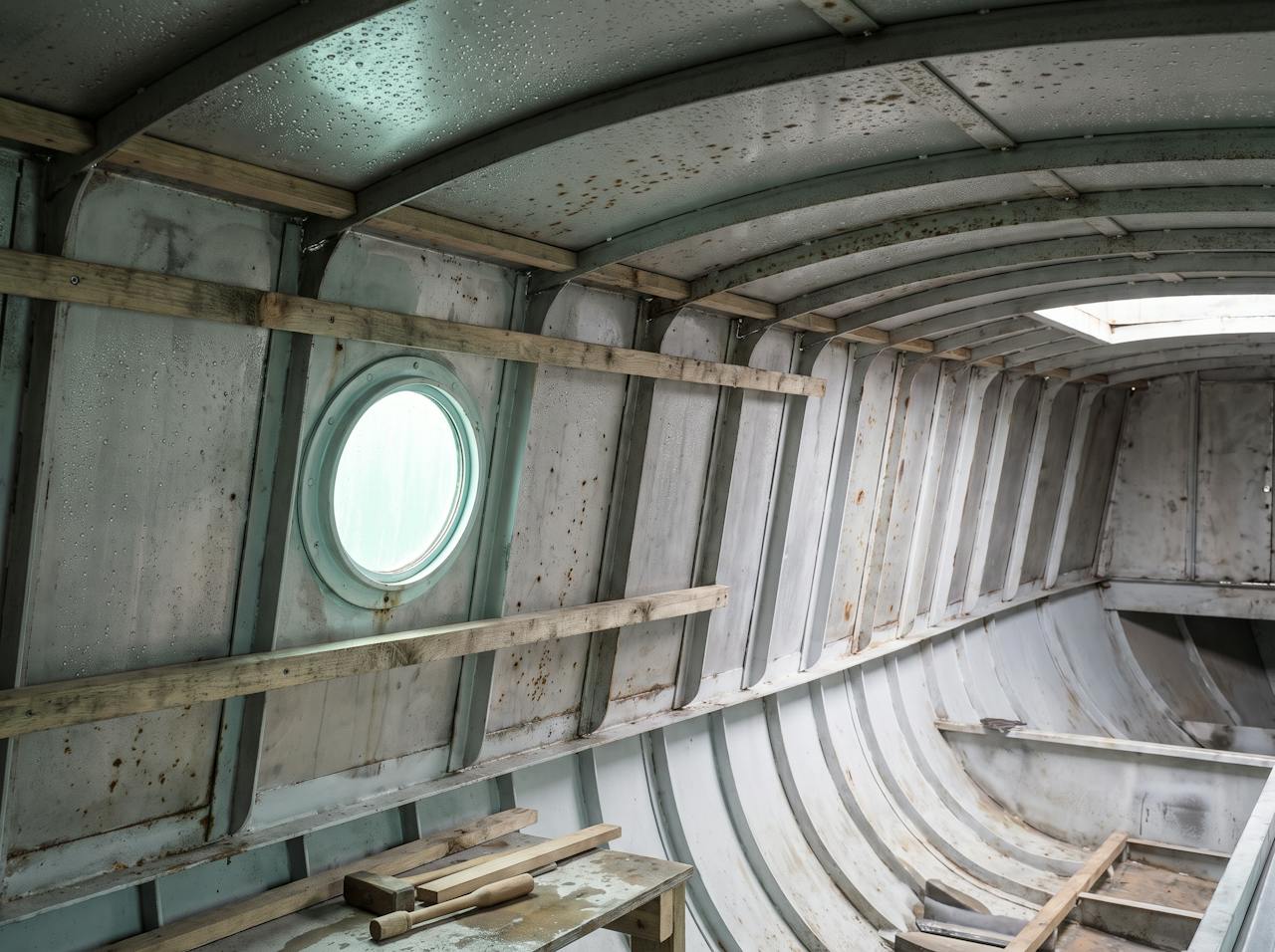
Water carries heat away from a hull far faster than air does, so the steel below the waterline sits at water temperature all winter, and the cabin sides and roof are not much warmer. Inside, cooking, breathing and a stove load the air with moisture. It condenses on every inside face, runs down behind the linings into the bilge, and pits the hull from the inside where nobody sees it until the survey.

Inside a stripped narrowboat cabin: condensation running down the bare inside face of the steel hull side and beading on the cabin roof above the battens.
The hullBelow the dew point
  • Water takes heat from steel fast. The hull is at canal temperature.
  • Living aboard loads the air with moisture all day and all night.
  • The runs go behind the lining and into the bilge, out of sight.
Damp and mould: where it starts and what it does The moisture story, from the air to the steel.

02Recent projects

How the work looks: HOLVEM's own footage of steel sealed from inside.

HOLVEM's own installation footage of closed-cell foam applied to steel in continuous passes. Every item here is HOLVEM's own work and carries the label Project record.

Project recordSteel, from inside
Corrugated steel sealed from insideThe same bonded layer on the same material: steel.
Project recordContinuous passes
Enverge NexSeal LE applied in continuous passesReal installation footage.

All HOLVEM project records

03What is applied

Closed-cell foam to the inside of the hull and cabin, the bilge left clear.

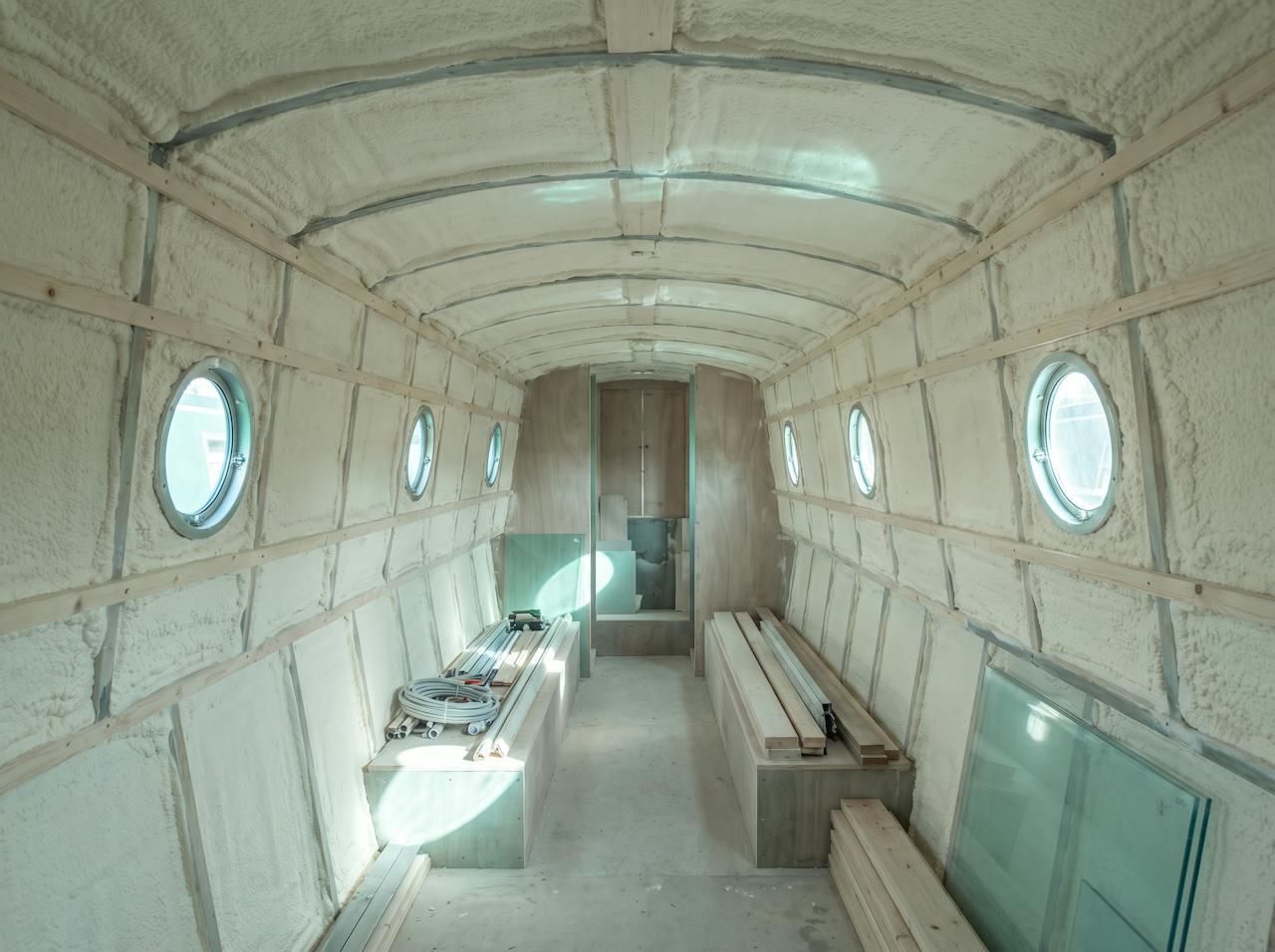
With the boat stripped to the steel, loose paint and rust are removed and the hull is checked for thinning. The layer is sprayed to the inside of the hull sides above the bilge, the cabin sides and the roof, following every frame, stiffener and curve. It bonds to the steel, does not absorb water, and its closed cells do not take up the bilge if it ever fills. Battens for the lining are set before or after, as the fit-out needs.

Schematic / not to scaleKeyed 1 to 4 below

The same cabin after treatment: hull sides, cabin sides and roof lined in a continuous cream closed-cell layer between the battens, the bilge left clear.
AppliedHull, sides and roof
One continuous layer from above the bilge, up the hull, across the cabin side and over the roof. The frames still read through it.
1 / Hull side, above the bilge

The layer bonds to prepared steel and follows the frames. The bilge, ballast and drainage paths are left clear so the boat still drains and can still be inspected.

2 / Cabin side and battens

Sprayed between and over the battens to the depth the cabin allows. Windows and portholes masked; frames left for the lining.

3 / Cabin roof

The coldest, wettest surface on the boat, lined in one continuous run with the sides so there is no cold strip at the gunwale.

4 / Bilge and ballast

Not sprayed. The hull bottom, ballast and limber holes stay as they are, and the survey confirms where the layer stops.

Walls: how the layer is built up on steel

04Enverge NexSeal LE

The material we spray, and why it matters.

Enverge NexSeal LE is a two component closed cell polyurethane, spray applied directly onto the prepared substrate. As it cures, it expands and sets into one rigid, continuous layer, bonding into corrugations, laps, fixings and awkward junctions without being cut, jointed or mechanically fixed.

That matters because most insulation problems start at the gaps.

Board systems can leave voids at ribs, laps and junctions, and every gap is a potential cold bridge where warm internal air meets a cold surface and condensation forms, hidden behind the insulation. NexSeal LE is applied as one continuous bonded layer, so there is nowhere for that to start: a sealed, stable building envelope that controls condensation, reduces heat loss and protects the structure underneath.

0.027 W/mKThermal conductivity · aged · BS EN 14315-1
Class 1Surface spread of flame · BS 476-7 · uncoated
B-s2,d0Coated with DC315, as tested · BS EN 13501-1
25 yearsWorkmanship warranty, plus the manufacturer’s

HOLVEM also installs open-cell foam. It is a different product with its own data sheet, specified for different objectives: hybrid build-ups, sound, and where the layer has to breathe. Open-cell system data · Closed-cell system data

HOLVEM spray rig van with Enverge NexSeal LE A and B component drums plumbed into the proportioner.
HOLVEM rigA and B on board
The HOLVEM rig · Enverge NexSeal LE A and B components on board. HOLVEM's own photograph.

05Applications and problems

The elements a boat puts in front of us, and the problems they bring.

A boat is a hull and a cabin, both steel, both cold. HOLVEM's application pages describe the method on steel and on framed cabins; the problems below are the ones boat owners, fitters and marina operators ring about.

The elements

The problems

06Depth

Four objectives. Each one sets the depth.

Start with what the building has to do; that decides the depth. Below is what each depth is for on this building. The survey confirms the right one, and the price follows from your area and access, never the other way round.

ObjectiveDepthWhat that depth is for here
Control condensation25 mmStops the hull and roof sweating; the linings stay dry.
Retain heat50 mmThe usual cabin band: holds the stove's heat and keeps the steel above dew point on the coldest night.
A calculated U-value75 mm +Rare on a boat, and only where a specification asks for a figure.
Achieve Euroclass BDepth to suit + DC315Where an exposed face aboard needs a reaction-to-fire classification, for example around a solid-fuel stove, agreed with your surveyor.

A boat is priced as a boat, not by the square metre: the hull length, the cabin, the access and the preparation set it. Send the boat and the fit-out plan and we ring you the same working day with a figure. The cost guide, in full · Thickness and objective

Want a figure for your building? It takes about a minute.Building, structure, reading, details. A real figure for your building the same working day; nothing sent to anyone else.

Get my estimate

07The survey

Five things we check before anyone talks about depth.

A survey is one visit, from inside the hull, where the boat is moored or hauled out. Nothing is cut and nothing is removed. It gives us the five things a specification for this hull has to stand on.

  1. Hull material and condition

    Steel thickness, pitting and coatings, from inside. The layer bonds to what is there.

  2. Where the layer stops

    Bilge, ballast, limber holes and drainage paths that must stay clear.

  3. The cabin construction

    Battens, frames, windows and the depth the lining allows.

  4. How the boat is used

    Stove, cooking, ventilation and occupancy. They set the moisture load and the fire question.

  5. Access

    Whether the boat is stripped, where it sits, and how the rig reaches it.

What you get after the survey

Five things in writing, whether or not you go ahead.

  • A specificationWritten for this hull, from what we found, with its assumptions named.
  • The depth, and whySet by the objective and confirmed by calculation for the element as built, bridges included.
  • The condensation-risk positionWhether anything will condense inside the build-up, to BS EN ISO 13788 with the BS 5250 climate.
  • The fire positionWhether your fire strategy calls for a classified surface, and the coated or uncoated build-up that answers it. Confirmed against the strategy, never assumed.
  • A firm priceFor your hull, in writing. What moves it is explained in the cost guide.

Survey, or photographs?Send photographs of the hull

A firm figure starts with the building. Yours takes a minute to describe.Building, hull, what you are seeing, and how to reach you. A real figure for your building the same working day; nothing sent to anyone else.

Get my estimate

08Straight answers

Ask us the hard ones.

The questions boat owners, fitters and marina operators actually ask on the call, answered the way the specialist answers them. A question we have not answered? Ask it on the call. No obligation.

How much does narrowboat insulation cost?
It is priced per boat, not by the square metre: hull length, the cabin, whether the boat is stripped and how the rig reaches it set the figure. Send the boat and the fit-out plan and we ring you the same working day. Published per-metre rates for buildings do not transfer to a hull.
Will the foam trap water against the hull?
Closed-cell foam does not absorb water and is bonded to the steel, so there is no gap for water to sit in. That is the opposite of quilt, which becomes a wet sponge against the hull. The bilge below the layer stays clear and inspectable.
Does it add buoyancy or weight?
Closed-cell foam is light and its cells do not take up water, so a flooded bilge does not turn the insulation into ballast. The weight for the depth specified is taken from the product data sheet and given to your surveyor. Trim and ballast are the surveyor's call, not ours.
What about the stove?
Clearances around a solid-fuel stove and the classification of any exposed face near it are set by your surveyor and the boat safety scheme. Where a classification is required, the DC315 coating is applied to the cured layer.
How do you prove it was installed correctly?
Applied thickness checked and recorded around the cabin, coverage logged, all compiled into a QA evidence pack handed over at completion, which is what the next buyer's surveyor asks for.

The next step

Your building.
Your brief.
A specialist.

If you already know the thickness or U-value you need, we price to it and confirm it is right; if not, we work it out with you. Tell us the boat, the hull and whether it is stripped; the estimator takes about a minute. “Not sure” is a useful starting point.

Or call . Enquiries received before 3pm on a working day are contacted the same day. After 3pm, the next working day. A commitment to contact, not a quotation, a survey or a price.

Rather write it all down first? Start a project brief · about five minutes, photographs welcome.

Same-day estimate · about a minute Get my estimate