The short answer
Five photographs from the floor are enough for a direction and a same-day estimate on the published rates, and often enough to decide whether to go further. A survey is needed before a firm price and a specification, because the fixings, the condition of the sheet, the access and the way the building is used are the things a photograph tells us least about. The survey is free and carries no obligation.
You want to know whether spray foam will fix the roof and roughly what it costs, without waiting for a site visit that might not be needed. That is the right instinct. Most of the time the phone in your pocket gets you a straight answer the same working day, and this guide says exactly what to point it at.
01What photographs settle
Five pictures from the floor, and what each one tells us.
Stand on the floor, look up, and take these five. Daylight helps and a cold morning shows condensation best. Phone photographs are fine; we would rather have five ordinary pictures today than a good set next week.
The five photographs, from where you stand
Looking up from the floor. Each number is a picture we can read; together they are most of what a first visit would establish.
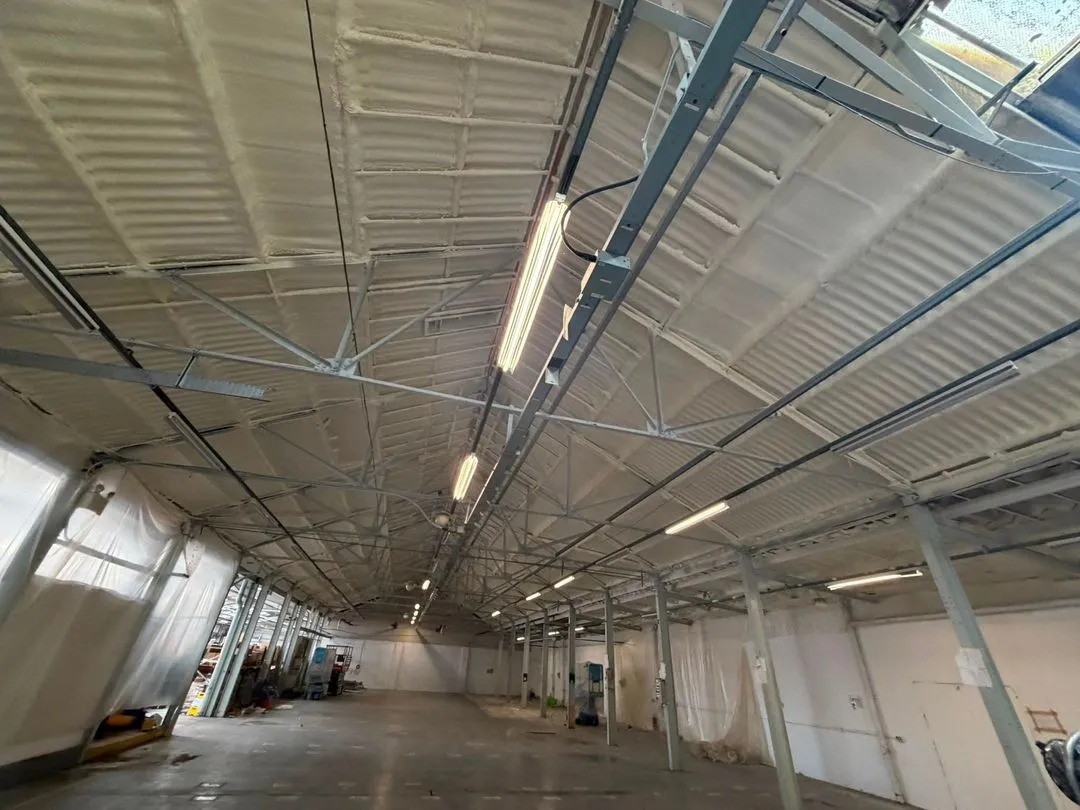
- The whole underside, wide. From one end of the building looking along the roof. It shows the sheet type, the purlin spacing, the rooflights, the lights and services, and how high the work is.
- The sheet, close. One bay between two purlins, as close as you can get from the floor. It shows the profile and whether the sheet is steel, fibre cement, concrete or timber.
- A purlin and its fixings. Where the sheet meets the frame. It tells us how the layer will wrap the purlin and whether anything is loose.
- Any drip, stain or wet patch. Where the water is, and what is under it. Even beads across the whole sheet say condensation; one stained run from one place says a leak.
- A rooflight, vent or opening. Anything the layer has to stop at cleanly. Each one is a detail, and the count matters.
Add the rough size of the roof, length by width or a plan if you have one, and you have sent us most of what a first visit would establish. Send photographs takes them straight to a specialist; nothing else is needed.
Even beads across the whole sheet say condensation. One stained run from one place says a leak.
02What they cannot settle
Photographs settle the direction. The survey settles the price.
A specification has to establish a handful of things before anyone talks about depth or a firm figure. Some of them are in your photographs already. The rest need someone on your floor, and this is which is which.
| What has to be established | Settled by | How |
|---|---|---|
| Whether it is condensation, a leak, or both | Photographs | From where and when the water appears, and the pattern on the sheet. |
| The sheet type and its profile | Photographs | Profiled steel, fibre cement, concrete or timber; the profile shows in the picture. |
| The roof area, roughly | Photographs | Length by width, or a plan, is enough for an estimate on the published rates. |
| The purlin layout, rooflights and services the layer stops at | Photographs, usually | Usually visible in the wide shot; counted properly on site. |
| The fixings, the laps and the coating, up close | Survey | Read from a ladder, not the floor. |
| The condition of a fibre-cement or asbestos-cement sheet | Survey | A condition check before anything is recommended. |
| Access from below, and the bays that can be released | Survey | Walked with you, around your shift pattern. |
| The building's use: heating, doors, vehicles, stock | Survey | Sets the moisture load; asked on site, not guessed from a picture. |
Read the middle column: photographs carry the top of the list, the survey carries the bottom, and the line between them is where an estimate becomes a quotation.
This is why a same-day estimate comes from photographs and a firm price does not. The estimate is your area on the rates published in the cost guide, with a direction on depth. The firm price needs the fixings, the condition, the access and the use of the building, and those are read from a ladder and a conversation, not a picture.