Before 3pm on a working day, contacted the same day. After 3pm, the next working day. Contact, not a quotation. Telephone
Start a project brief
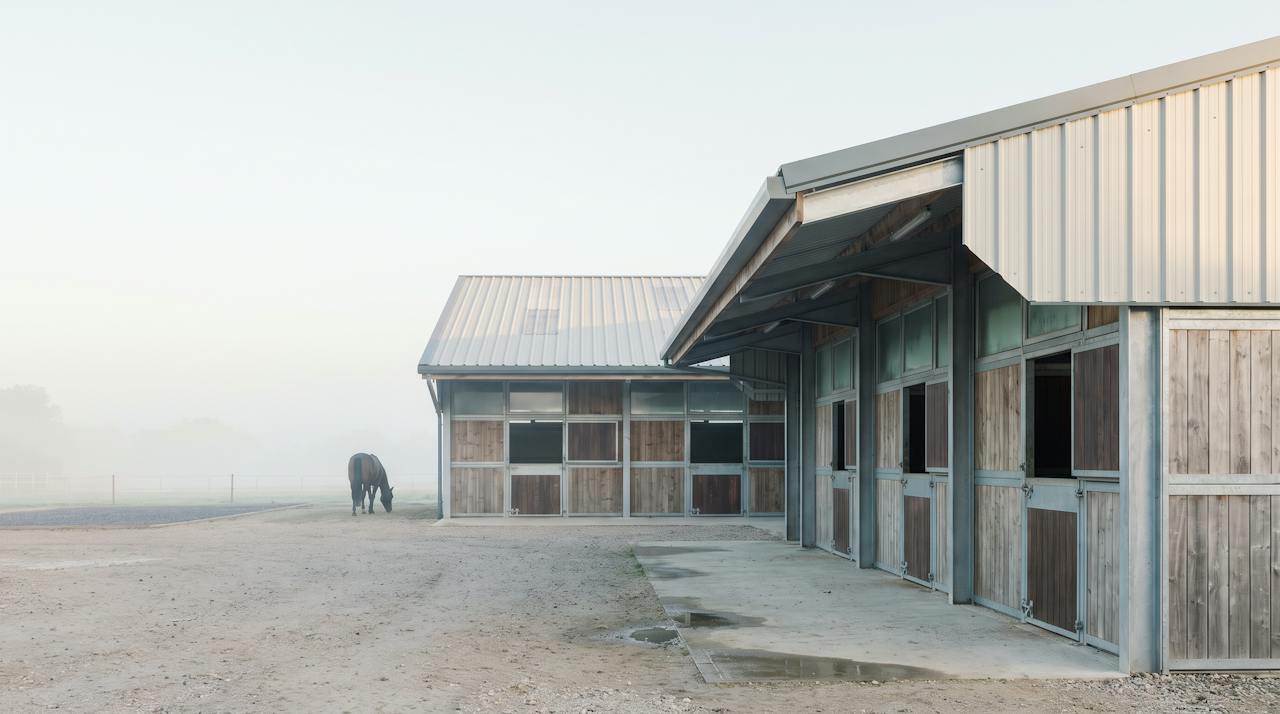
A UK stable yard at first light: a long timber and corrugated-roofed stable block with stable doors open onto a gravel yard, soft pale daylight, no people.

Building type

Stables and equestrian buildings: dry above the horse, and still ventilated.

A stable block breathes: horses, bedding, muck and washing put a lot of moisture into the air, and welfare says that air has to move. On a cold night the roof sheet is below dew point and it drips onto the animals. A sprayed layer stops the sheet sweating while the ridge and eaves keep ventilating.

  • Corrugated or profiled roofs on timber or steel
  • Ventilation kept open, condensation stopped
  • From £16/m² + VAT at 25 mm

Same-day estimator

About a minute · no obligation

Step 1 of 4: your building.

Which building is it?

Stables is pre-selected. Change it if yours is different.

Takes about 30 seconds. No contact details yet.

01Why this building

Warm, wet air from the animals, a cold sheet above them, and drips where they stand.

Horses give off heat and a great deal of moisture; bedding and muck add ammonia to it. All of that rises to a roof sheet at outside temperature, condenses, and falls back as drips onto coats, bedding and feed. The instinct is to close the building up to keep it warm, and that makes it worse: the air gets wetter, the sheet is just as cold, and the horses breathe the result.

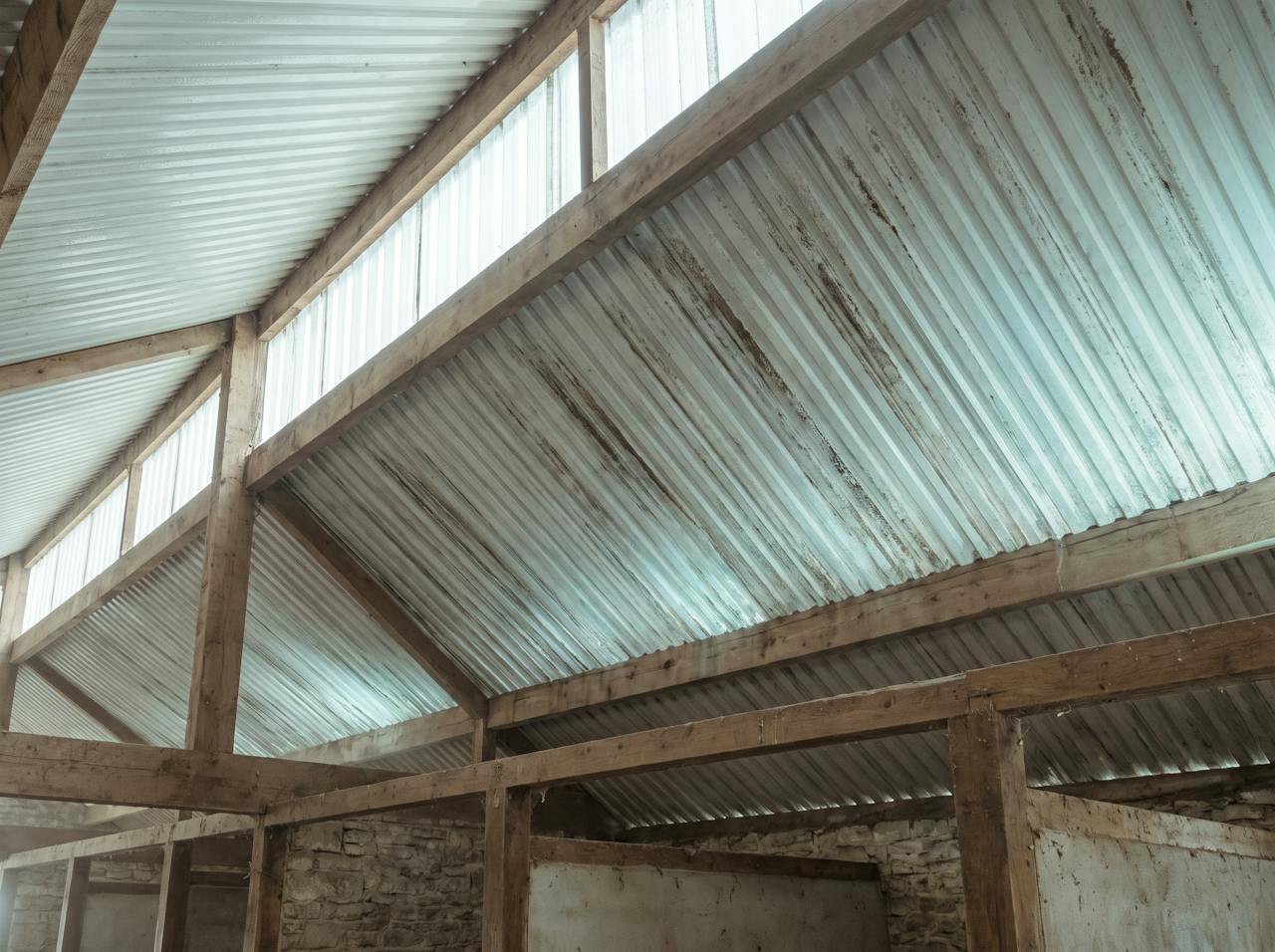
Looking up inside a stable on a cold morning: condensation beading on the underside of a corrugated roof sheet above the stall partitions and bedding.
The roofBelow the dew point
  • Animals load the air with moisture all night, every night.
  • The sheet is at outside temperature whatever the block is doing beneath it.
  • Closing the vents makes it worse. Wetter air, same cold sheet.
Damp and mould: where it starts and what it does The moisture story, from the air to the sheet.

02Recent projects

Timber-framed and agricultural roofs HOLVEM has lined.

Corrugated sheet on timber rafters, sprayed from below by HOLVEM, and installation footage from HOLVEM's agricultural work. Every item here is HOLVEM's own work and carries the label Project record.

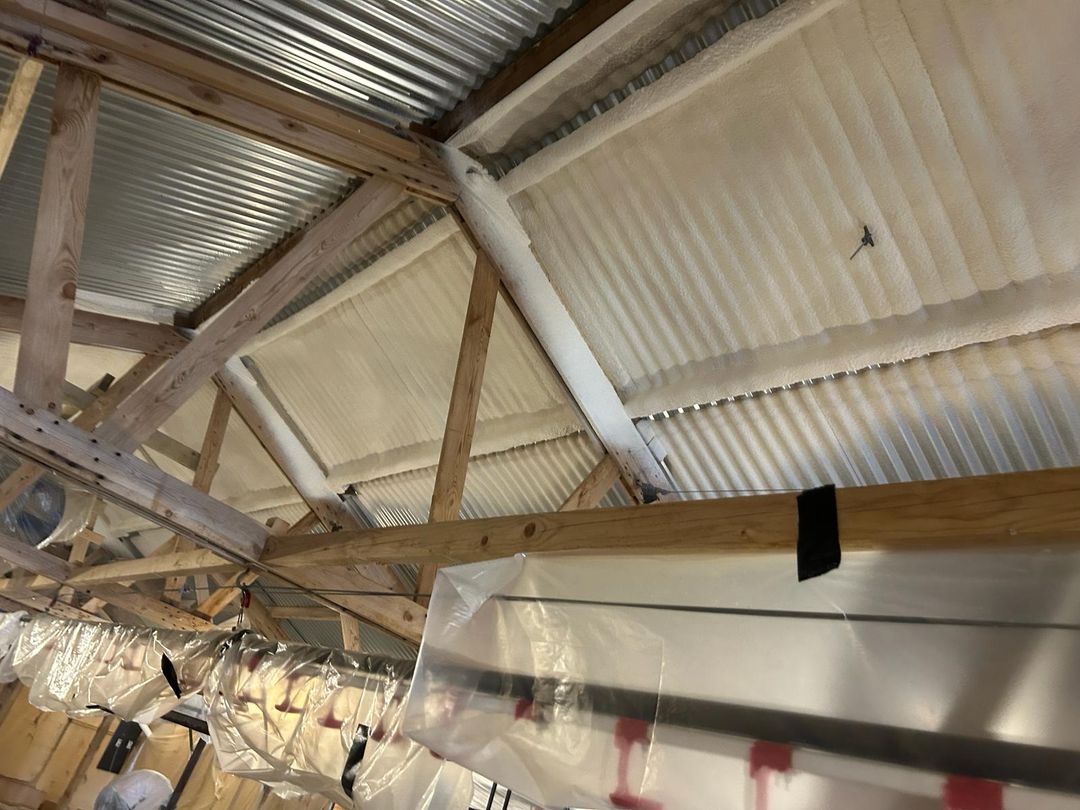
A corrugated metal roof on timber rafters sprayed from beneath in a cream closed-cell layer, polythene masking hung below the work.
Project recordSheet on timber
Corrugated roof on timber rafters, sprayed from belowThe layer follows the sheet; the rafters stay exposed.
Project recordAgricultural roof
Agricultural roof sprayed in continuous passesClosed cell, from below, livestock out of the bay.

All HOLVEM project records

03What is applied

A layer on the sheet, the vents left open. Welfare first.

The roof sheet stays as the weather line. The layer goes on from below in passes, following the corrugations and wrapping the rafters or purlins, and it stops short of the ridge vent and the eaves gap so the air path the horses need is untouched. Stalls are emptied bay by bay; horses are never under the work. The block is back in use the same day the bay is finished.

Schematic / not to scaleKeyed 1 to 3 below

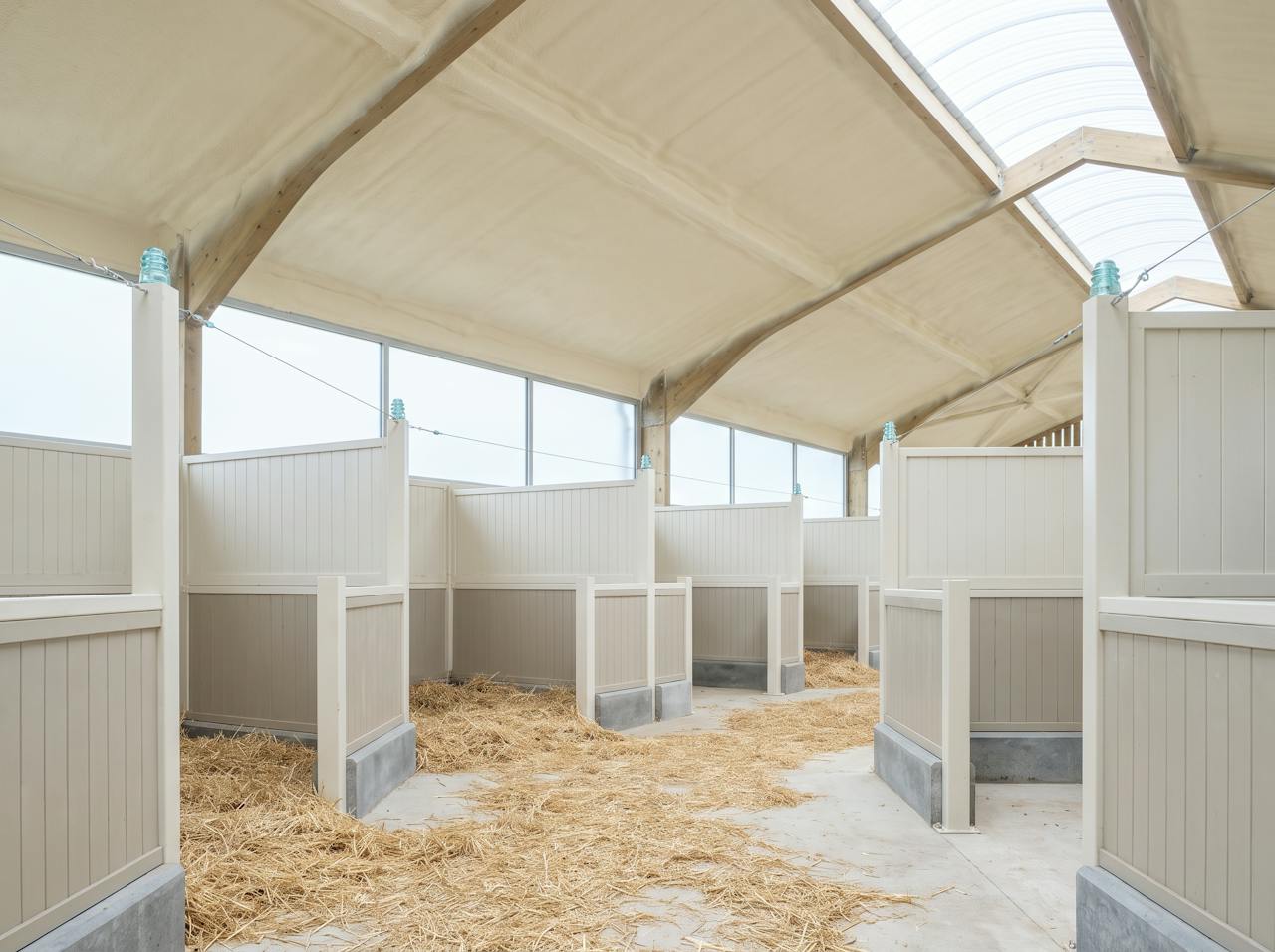
Inside the same stable after treatment: the corrugated roof sheet lined in a continuous cream closed-cell layer between the timber rafters, the ridge vent still open.
AppliedSheet lined, vents open
The layer follows the sheet between the rafters and stops at the ridge. The air path is exactly what it was.
1 / Roof sheet

Corrugated or profiled, on timber rafters or steel purlins. It stays, and the rafters are wrapped where they meet it.

2 / Ventilation kept

Ridge and eaves openings are left as they are. The layer stops the sheet sweating; the ventilation still moves the moisture out.

3 / Stall level

Horses out of the bay in hand, bedding and feed sheeted or removed, then the bay handed back. Nothing is sprayed over an occupied stall.

Corrugated roof underside: the build-up in sequence

04Enverge NexSeal LE

The material we spray, and why it matters.

Enverge NexSeal LE is a two component closed cell polyurethane, spray applied directly onto the prepared substrate. As it cures, it expands and sets into one rigid, continuous layer, bonding into corrugations, laps, fixings and awkward junctions without being cut, jointed or mechanically fixed.

That matters because most insulation problems start at the gaps.

Board systems can leave voids at ribs, laps and junctions, and every gap is a potential cold bridge where warm internal air meets a cold surface and condensation forms, hidden behind the insulation. NexSeal LE is applied as one continuous bonded layer, so there is nowhere for that to start: a sealed, stable building envelope that controls condensation, reduces heat loss and protects the structure underneath.

0.027 W/mKThermal conductivity · aged · BS EN 14315-1
Class 1Surface spread of flame · BS 476-7 · uncoated
B-s2,d0Coated with DC315, as tested · BS EN 13501-1
25 yearsWorkmanship warranty, plus the manufacturer’s

HOLVEM also installs open-cell foam. It is a different product with its own data sheet, specified for different objectives: hybrid build-ups, sound, and where the layer has to breathe. Open-cell system data · Closed-cell system data

HOLVEM spray rig van with Enverge NexSeal LE A and B component drums plumbed into the proportioner.
HOLVEM rigA and B on board
The HOLVEM rig · Enverge NexSeal LE A and B components on board. HOLVEM's own photograph.

05Applications and problems

The elements an equestrian building puts in front of us, and the problems they bring.

Stable blocks, American barns, indoor arenas and feed stores share the same roofs as farm buildings: corrugated sheet on timber, profiled steel on purlins, fibre-cement or asbestos-cement. Each has its own application page. The problems below are the ones yard owners ring about.

The elements

The problems

06Depth

Four objectives. Each one sets the depth.

Start with what the building has to do; that decides the depth. Below is what each depth is for on this building. The survey confirms the right one, and the price follows from your area and access, never the other way round.

ObjectiveDepthWhat that depth is for here
Control condensation25 mmStops the sheet sweating over the stalls; bedding and coats stay dry.
Retain heat50 mmHolds warmth in a tack room, feed store or heated block without closing the vents.
Reach a calculated U-value75 mm and aboveA figure to meet where a block or arena is being brought to a calculated standard.
Achieve Euroclass BDepth to suit + DC315 coatingWhere the exposed face needs a reaction-to-fire classification, for example over hay and bedding storage.

Prices are in the cost guide. A firm figure needs your building, and a coated system is always priced for the project. · Thickness and objective

Want a figure for your building? It takes about a minute.Building, structure, reading, details. A real figure for your building the same working day; nothing sent to anyone else.

Get my estimate

07The survey

Five things we check before anyone talks about depth.

A survey is one visit, from inside the stables, fitted around feeding and turnout. The horses stay where they are and nothing is opened up. It gives us the five things a specification for this building has to stand on.

  1. Condensation, or a leak

    Where the water shows, when it shows and what your photographs say. Condensation and ingress look alike from the floor and need different answers.

  2. Sheet, fixings and rafters

    Condition, fixings and rafters, from below. Asbestos-cement passes a condition gate first.

  3. Ventilation

    Ridge, eaves, doors and windows. The layer must not close any of it, so we map it before anything is specified.

  4. Stocking and use

    How many horses, the bedding, washing down and heating. Together they set the moisture load.

  5. Access and welfare

    Which stalls can be emptied when, and where the horses go while the work is on.

What you get after the survey

Five things in writing, whether or not you go ahead.

  • A specificationWritten for this roof, from what we found, with its assumptions named.
  • The depth, and whySet by the objective and confirmed by calculation for the element as built, bridges included.
  • The condensation-risk positionWhether anything will condense inside the build-up, to BS EN ISO 13788 with the BS 5250 climate.
  • The fire positionWhether your fire strategy calls for a classified surface, and the coated or uncoated build-up that answers it. Confirmed against the strategy, never assumed.
  • A firm priceFor your roof, in writing. What moves it is explained in the cost guide.

Survey, or photographs?Send photographs of the roof

A firm figure starts with the building. Yours takes a minute to describe.Building, roof, what you are seeing, and how to reach you. A real figure for your building the same working day; nothing sent to anyone else.

Get my estimate

08Straight answers

Ask us the hard ones.

The questions yard owners and equestrian managers actually ask on the call, answered the way the specialist answers them. A question we have not answered? Ask it on the call. No obligation.

How much does stable insulation cost?
It depends on the depth, and the depth depends on what you are trying to fix. 25 mm is the condensation control specification and 50 mm retains useful heat as well. The rate falls as the area rises: a single block costs more per square metre than an arena roof. Send the building and we ring you the same working day.
Is the foam safe around horses?
Horses are never under the work: stalls are emptied bay by bay and the bay is handed back once the layer has cured. The cured product is inert and does not shed; product data: closed-cell system data. Re-occupation timing for each bay: the manufacturer's application guide allows re-entry about an hour after spraying with ventilation and occupation after 24 hours of ventilation; the method statement sets it for your yard.
Will it stop the roof drumming in the rain?
A bonded layer damps the sheet, so a corrugated roof is noticeably quieter in heavy rain, which matters over nervous animals. Where sound is the main objective, open-cell foam is the different product with its own data sheet.
Can horses chew or kick it?
The layer is on the roof sheet, above reach. Where walls are treated, the layer is boarded or kicked-boarded to the height horses can reach, agreed at survey.
How do you prove it was installed correctly?
Applied thickness checked and recorded, coverage logged, all compiled into a QA evidence pack handed over at completion. You hold the evidence, not our word.

The next step

Your building.
Your brief.
A specialist.

If you already know the thickness or U-value you need, we price to it and confirm it is right; if not, we work it out with you. Tell us the block, the roof and how many horses; the estimator takes about a minute. “Not sure” is a useful starting point.

Or call . Enquiries received before 3pm on a working day are contacted the same day. After 3pm, the next working day. A commitment to contact, not a quotation, a survey or a price.

Rather write it all down first? Start a project brief · about five minutes, photographs welcome.

Same-day estimate · about a minute Get my estimate