Before 3pm on a working day, contacted the same day. After 3pm, the next working day. Contact, not a quotation. Telephone
Start a project brief
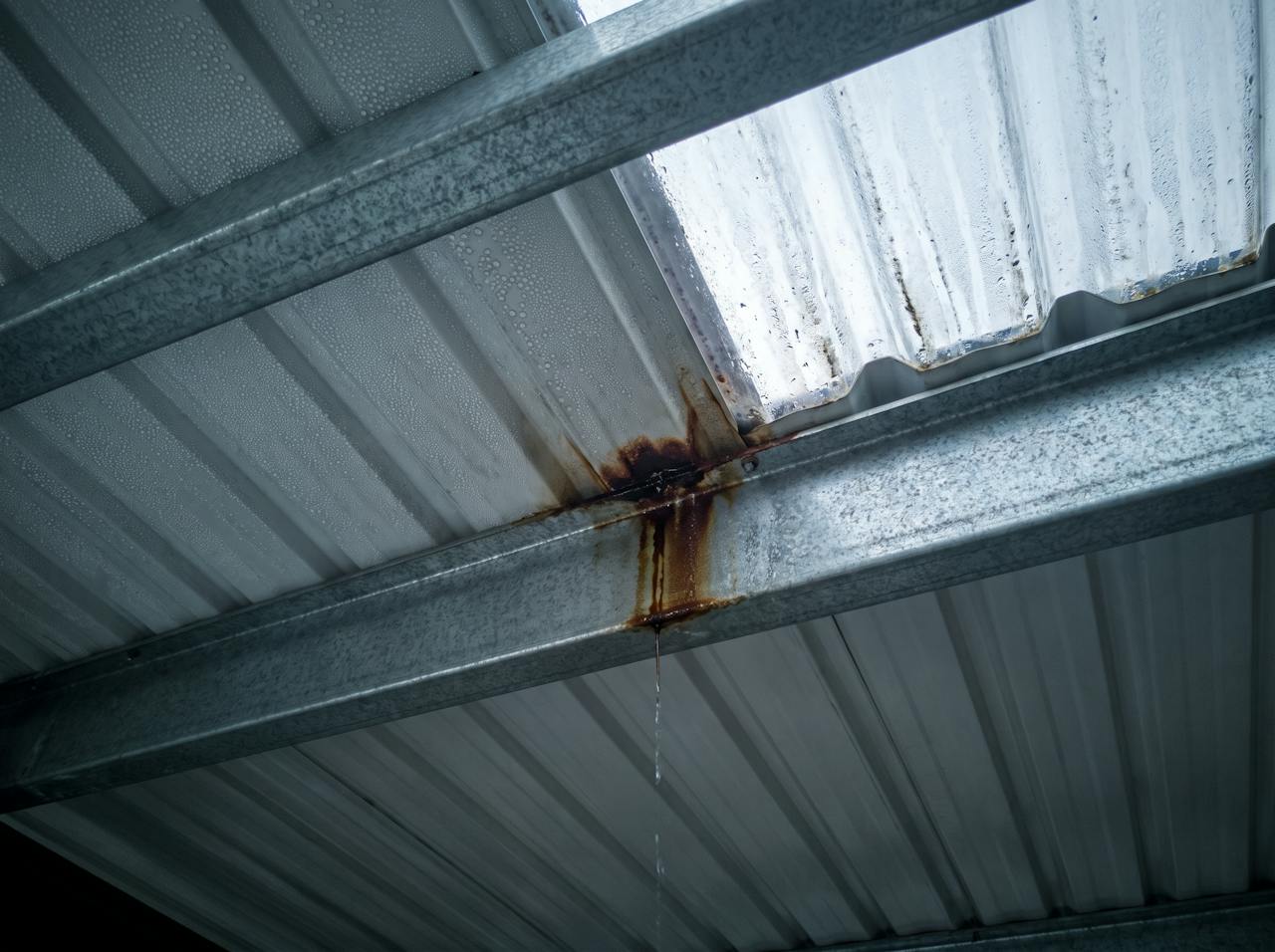
Looking up at the underside of a profiled steel roof on a wet, cold morning: a fine mist of condensation across the whole sheet, and separately one lap beside a rooflight with a dark stain and a heavier wet run.

Building problem

Condensation, or a roof leak?

Water is coming from the roof and it is not obvious why. Three observations separate the two, and the answer changes who you call. If it is a leak, we are not the people to call, and this page says so.

  • Three observations, about thirty seconds
  • No contact details
  • Nationwide coverage

01The differential

From the floor, both are drips. From under the sheet, they look nothing alike.

Condensation forms on the underside of a sheet that is colder than the dew point of the air beneath it. It follows cold, not rain, and it covers the field of the sheet. Ingress follows rain and sits at the details that let it in: laps, fixings, rooflights, gutters.
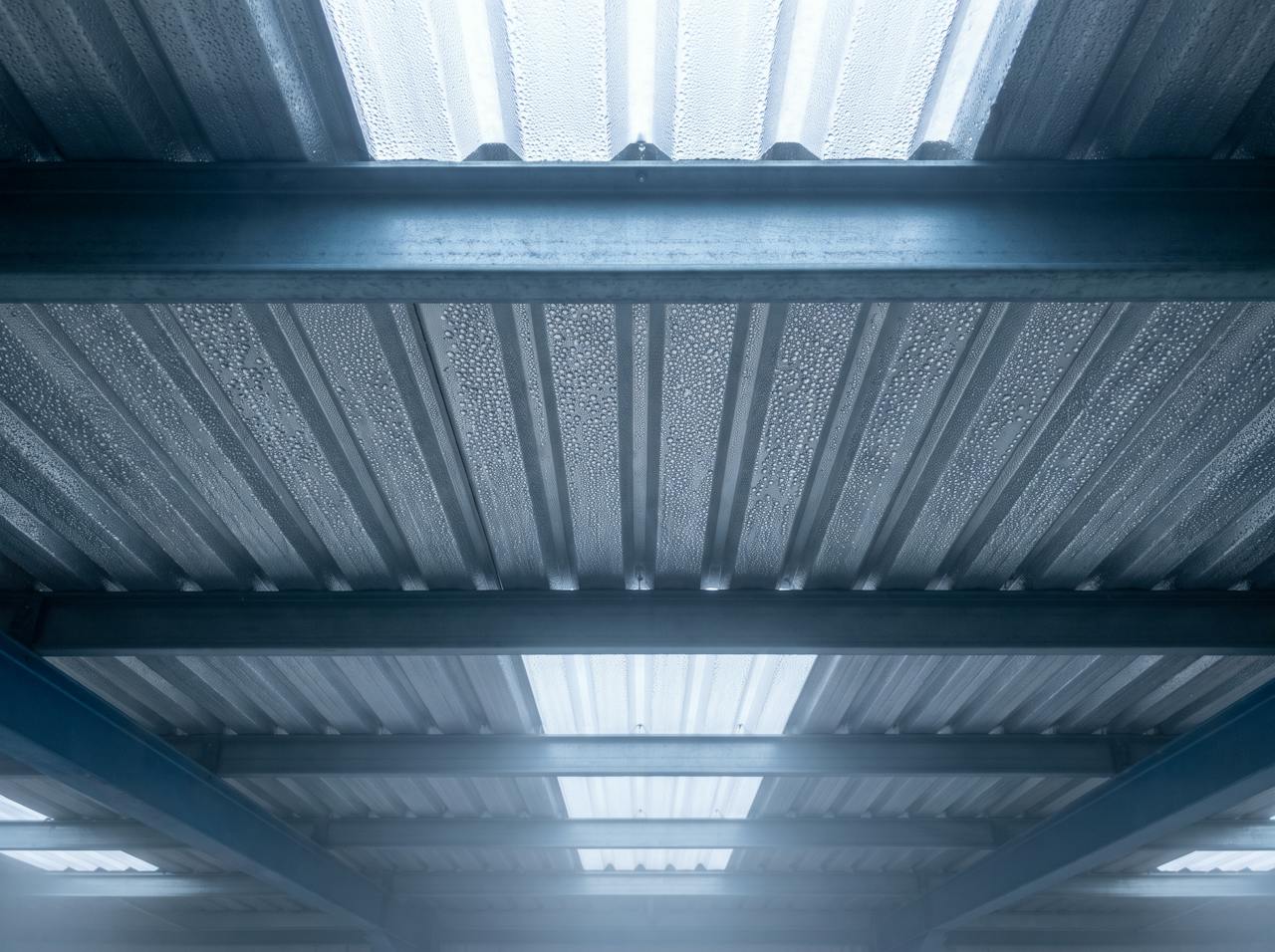
Looking up at the underside of a profiled steel roof on a cold morning. Fine, even beads of condensation cover the whole sheet from purlin to purlin, with no dry patches.
Follows coldCondensation
  • Worst on a cold, still morning. Wet before it rains, often dry by mid-morning.
  • Covers the field of the sheet. Uniform across a bay, not at one place.
  • Fine, even beads. Drip lines fall under the valleys, not at laps.
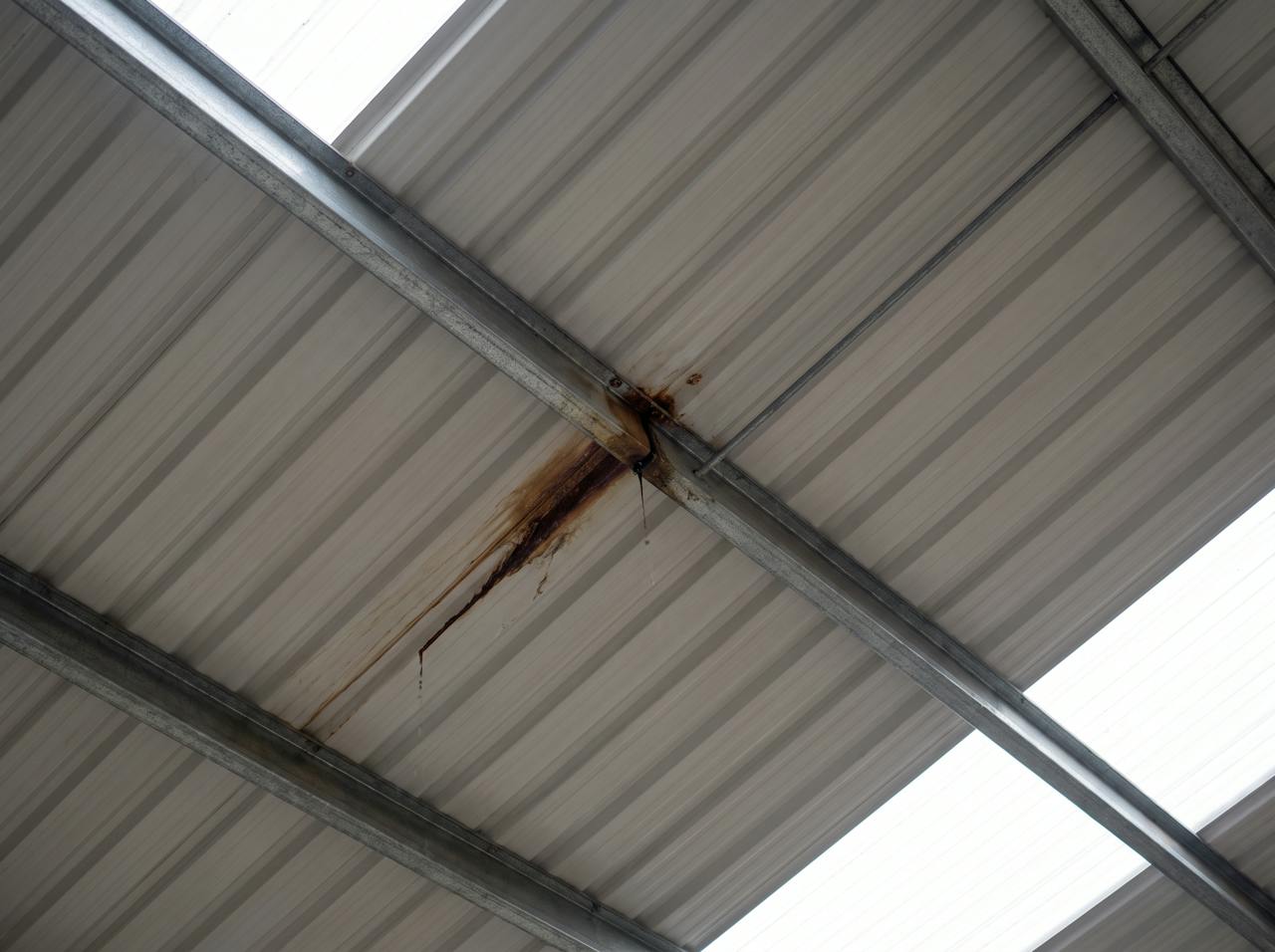
Looking up at the underside of a profiled steel roof after rain. The sheet is dry except for one rust-brown stain around a single fixing, with a wet track running down from that point.
Follows rainWater ingress
  • During or after rain. Dry weather, dry sheet.
  • Sits at a detail. A lap, a fixing, a rooflight edge, a gutter.
  • A stain and a run from one point. Tracking marks, dry all around.

Repairing the roof does not stop condensation.Insulating the underside does not stop a leak.Only one of these is a roof defect.

Both at once

If it is both, that is a real outcome, not a failure to answer.

Local water entry and condensation coexist on many roofs. What distinguishes them is timing and place: ingress follows rain and sits at details; condensation follows cold and covers the field of the sheet. When you can see both in one bay, there are three ways to find out which is doing what.

Looking up at the underside of a profiled steel roof on a wet, cold morning. A fine mist of condensation covers the whole sheet, and separately one lap beside a rooflight shows a dark stain with a heavier wet run and an active drip.
Both at onceCondensation and ingress
A misted sheet with one heavier, stained run at a lap. The field is condensation; the run is a route in.
  1. Timing

    One week

    Is it there on a dry, cold morning? Then at least part of it is condensation. Does it only appear during or after rain? Then at least part of it is ingress. Watch the same bay across one week of mixed weather.

  2. Place

    Follow it up

    Follow the water up to where it starts. Where it runs down a wall or a column it is a route, not a cause. A run that begins at a lap, a fixing or a rooflight is ingress; a wet field with drips under the valleys is condensation.

  3. Photographs

    Two frames

    The underside on a dry cold morning, and again during rain, with the same bay in frame. Those two photographs usually settle it. Send them with a postcode and a specialist will say which it looks like and what it would take to be sure.

Answer the three observations About thirty seconds. No contact details.

02Three observations

Three observations. About thirty seconds.

Pick what you have actually seen. The reading builds as you go. Every output names its assumptions; none is a determination, and one of the three outcomes is that HOLVEM is not the contractor you need.

When does it appear?

1 / 3When does it appear?

Where is the water?

2 / 3Where is the water?

What does the surface look like?

3 / 3What does the surface look like?

No contact details. Nothing you pick here is sent anywhere.

03Why the two are confused

Both put water on the floor. Only one is a roof defect.

From the floor, both are drips. The section below is the same bay on two different days. Switch between them and watch where the water comes from.

Warm, moist air rises to a sheet colder than its dew point. Water forms across the whole underside, then drips.

Schematic / not to scaleTemperatures shown are example values, not a measured building.

04If it is condensation

Then the roof is the right roof, and the sheet is the wrong temperature.

A closed-cell layer applied to the underside puts the cold face outside the layer instead of in the room. The mechanism, what it costs to leave, and what resolves it are on the condensation page; how deep a layer, and why not a rate per square metre, are on the thickness page.

The next step

Your building.
Your brief.
A specialist.

If you already know the thickness or U-value you need, we price to it and confirm it is right; if not, we work it out with you. Tell us what you know. “Not sure” is a useful starting point.

Telephone . Enquiries received before 3pm on a working day are contacted the same day. After 3pm, the next working day. A commitment to contact, not a quotation, a survey or a price.