Before 3pm on a working day, contacted the same day. After 3pm, the next working day. Contact, not a quotation. Telephone
Start a project brief
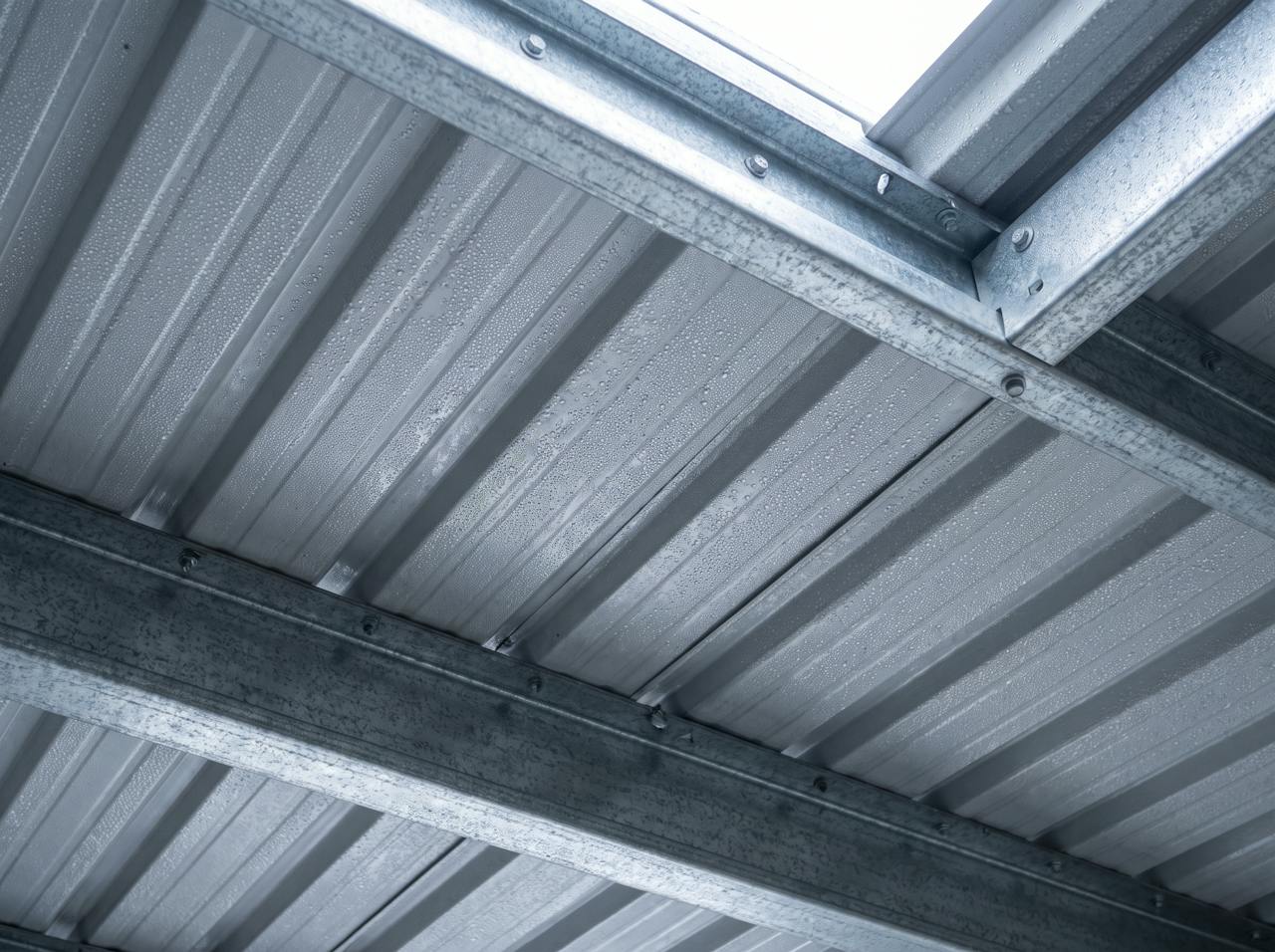
Looking up at the underside of a profiled steel roof on a cold morning: fine, even condensation across the whole sheet between the purlins, under a rooflight.

Building problem

Roof condensation: the roof is sound, and it still rains inside.

On a cold, clear morning the underside of a metal or fibre-cement sheet is the coldest surface in the building. The air beneath it gives up its water onto the sheet, and the sheet gives it back as drips. Nothing is leaking. This page is what is happening, what it costs you, and what stops it.

  • Metal and fibre-cement roofs
  • Checked before anything is specified
  • Nationwide coverage

01What you see

Wet on a dry morning. Dry again by lunch.

Condensation has a timetable, and the timetable is the giveaway. It follows cold, not rain; it covers the whole sheet rather than sitting at one detail; and it is worst after a clear night, when the sheet has radiated its heat to the sky.

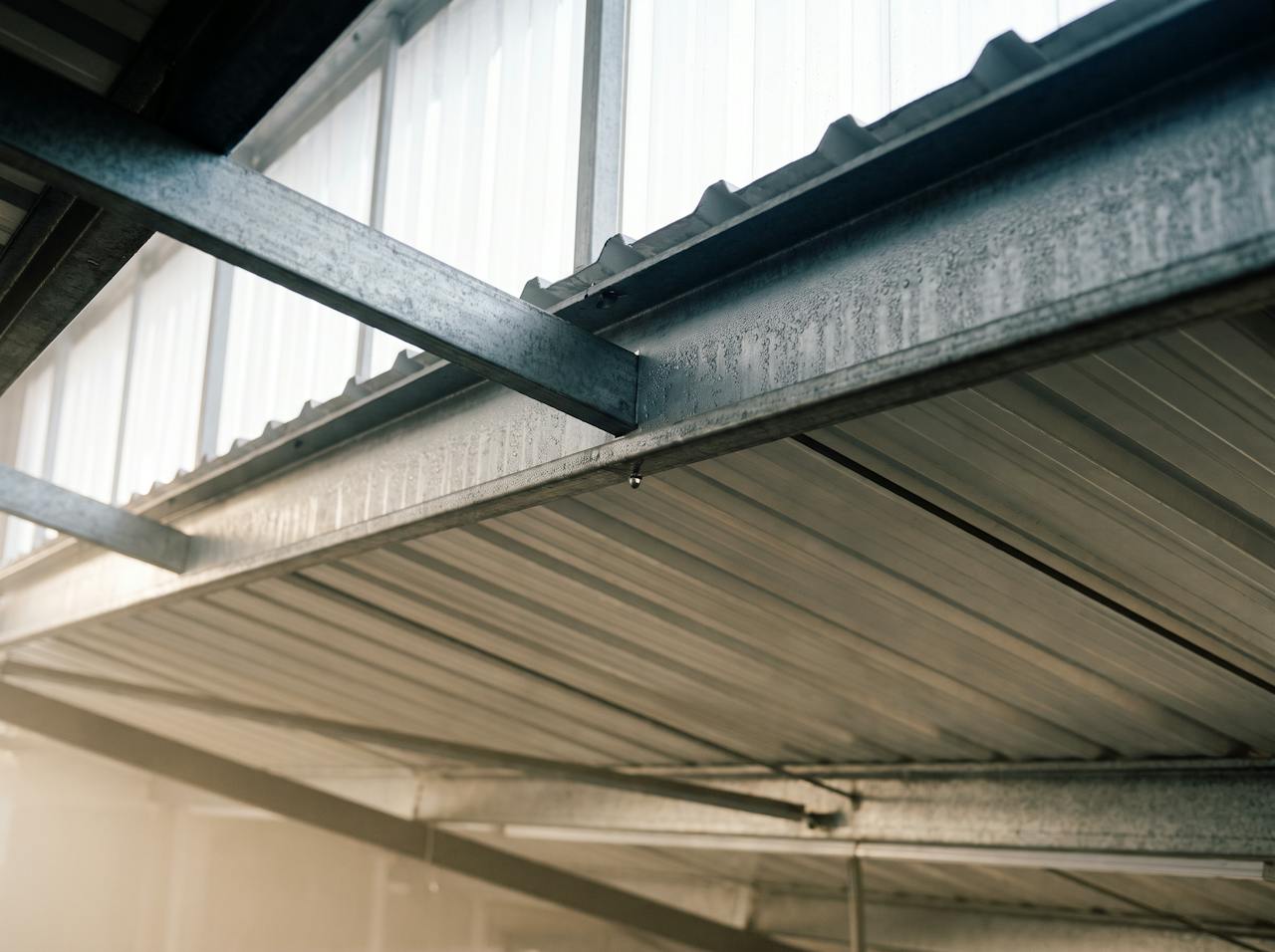
Looking up at the underside of a cold steel roof at first light: condensation beads along the sheet, a drip forming at a purlin, and the soft glow of a rooflight.
Follows coldCondensation
  • Worst on a cold, still morning after a clear night. Wet before it rains; often dry again by mid-morning as the sheet warms.
  • Covers the field of the sheet. Fine, even beads from purlin to purlin, not a stain at one place.
  • Drip lines under the valleys. Water runs to the low points of the profile and falls from there, in rows.

Nothing is leaking.Repairing the roof would not stop it.The roof is the right roof; the sheet is the wrong temperature.

02Why it happens

Warm, moist air meets a sheet below its dew point.

Air holds water as vapour up to a limit set by its temperature. Cool that air against a surface below its dew point and the water comes out of it as liquid. A single skin of steel or fibre cement, with almost no thermal mass, drops below that point on a clear night faster than anything else in the building.

A clear night. The sheet radiates its heat to the sky and falls below the dew point of the air beneath it. Water forms across the whole underside, then drips.

Schematic, not to scaleTemperatures shown are example values, not a surveyed building.

03What it costs you

Water where it should not be, every cold morning, for years.

The damage is rarely dramatic on any one day. It is the same drips landing in the same places through every winter, and it adds up in stock, in steel and in the fabric of the building.

  1. The goods

    Beneath the valleys

    Cardboard softens, labels lift, packaging is rejected, pallets swell. Food, paper, feed and anything stored in cardboard suffer first. Where racking runs under a valley, the top pallet takes it every morning.

  2. The steel

    Fixings and purlins

    Water sits longest where the profile is lowest and where a fixing breaks the coating. That is where the corrosion starts: rust streaks down the sheet, weeping fixings, purlins that never dry.

  3. The building and the people in it

    Floors, liners, the bill

    Slippery floors under the drip lines. Stained ceilings and liners that hold water and grow mould. Heaters and dehumidifiers running to dry air that the roof wets again the next night.

04The usual remedies

Ventilation and dehumidifiers work on the air. The problem is the surface.

Each of the usual remedies helps a little and stops at the same place: the sheet is still cold, and on a clear night the air still gets to it. That is why so many buildings have fans, vents and a dehumidifier, and still have drips.

  1. More ventilation

    Ventilation dilutes the moisture in the air and helps, right up until a clear night. Then the sheet drops below the dew point of even the drier outdoor air, and the vents bring in cold as well. Roof vents on their own rarely keep a bare sheet dry through a UK winter.

  2. Dehumidifiers and heaters

    They work on the air, and the air in a warehouse is a very large volume that changes every time a door opens. They treat the symptom each day while the cold surface stays exactly where it was, and they cost every day they run.

  3. Anti-condensation fleece

    A fleece bonded to the underside of a new sheet holds a limited amount of water until the sheet warms and it can evaporate. It is applied to new sheets at the factory, not to a roof that is already in place, and it does nothing for heat loss.

05What fixes it

Move the cold face out of the room.

Closed-cell spray foam applied to the underside of the sheet from below, in passes, following the profile. It bonds to the metal or the fibre cement, closes the side laps, the end laps and every fixing, and puts a continuous, vapour-closed layer between the moist air and the cold sheet. The face the air now touches is the foam face, above the dew point.

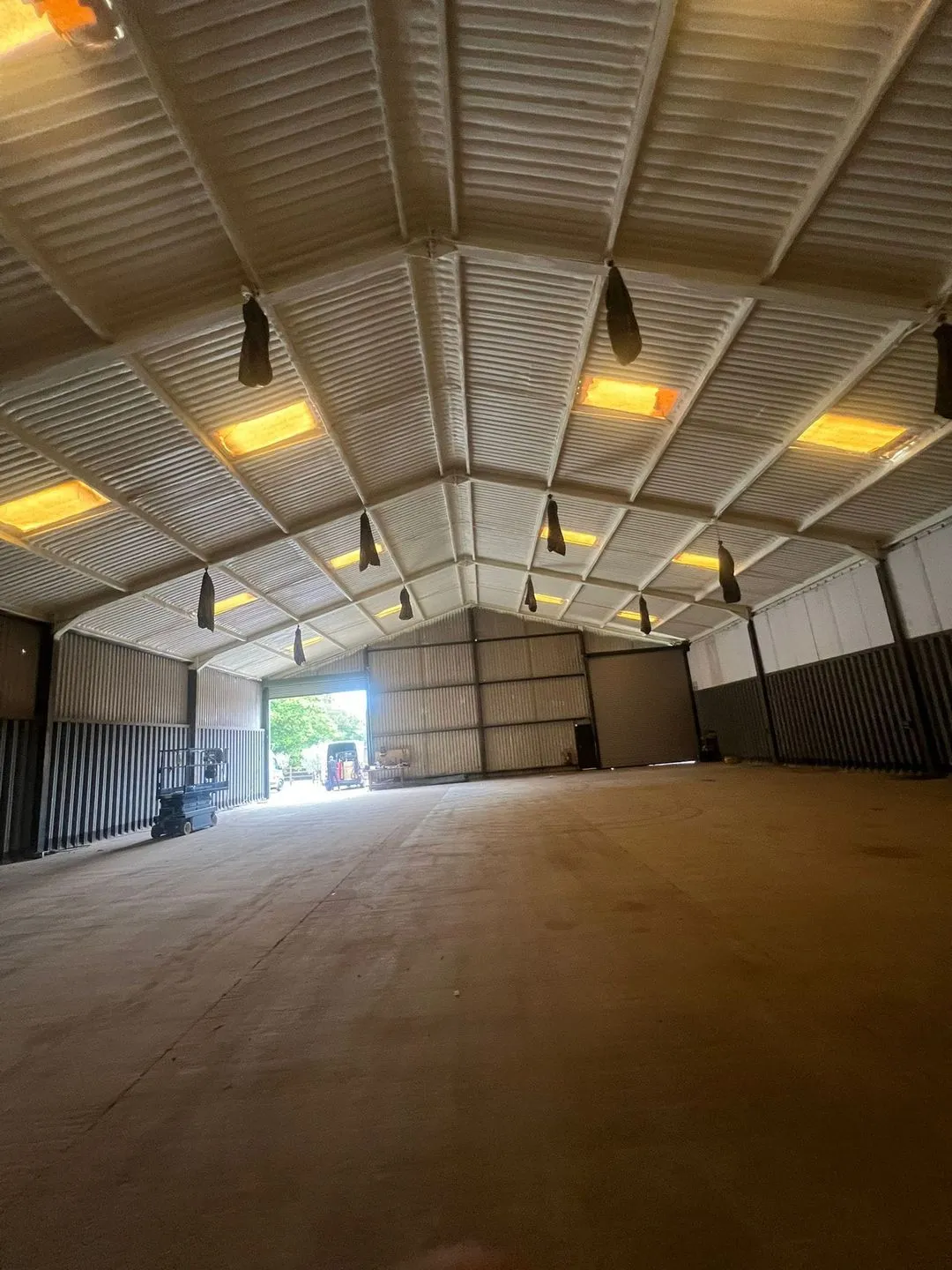
An empty warehouse floor looking towards an open roller-shutter door: the whole profiled steel roof and its purlins sprayed from beneath in a continuous pale closed-cell layer, rooflights and high-bay lights left exposed.
Project recordWarehouse roof, sealed from beneath
One of HOLVEM's own roofs after the work: a continuous closed-cell layer following the profile across the whole underside, stopped cleanly at each rooflight. The face the air now touches is the foam.

06How HOLVEM checks

The moisture risk is checked before a depth is named.

Putting a vapour-closed layer on a roof changes where moisture can and cannot go. So before HOLVEM specifies one, the build-up is run through a condensation risk analysis and the roof is looked at from below. The recommendation follows the result, not the other way round.

  1. Photographs, then a survey from below

    Two photographs with a postcode tell a specialist whether it looks like condensation. The survey then records the substrate, its coating and corrosion, the fixings, the moisture on the day, and whether the roof is letting water in.

    Survey, or photographs?
  2. Condensation risk analysis

    The build-up is assessed to BS EN ISO 13788 and, where that simple method is inconclusive, with a dynamic hygrothermal model to BS EN 15026. The result decides whether the layer is right for this roof, and at what depth.

    How the analysis is done
  3. Applied thickness recorded

    The depth is checked and recorded as the work proceeds and compiled into the completion pack you hold at handover. You hold the evidence, not our word.

07From our own jobs

The layer on, the roof kept, and one customer who reported back.

Footage and photographs from HOLVEM's own projects, and the one written record whose customer reported on the condensation afterwards. Everything here carries the label it has earned.

Project record · LE12

Commercial single-storey building, profiled asbestos-cement roof: 2340 m² at 50 mm closed-cell.

2340m²Treated at 50 mm closed-cell
≈ 0.53W/m²KTreated-roof U-value, calculated for that build-up
15 June2026Completion pack issued

Reported by the customer: condensation on the roof underside was mitigated following installation. That is the customer's account of the outcome, and it is published as such, not as a hygrothermal assessment.

Read the record
Project recordContinuous passes
Enverge NexSeal LE applied in continuous passesReal installation footage, from below.
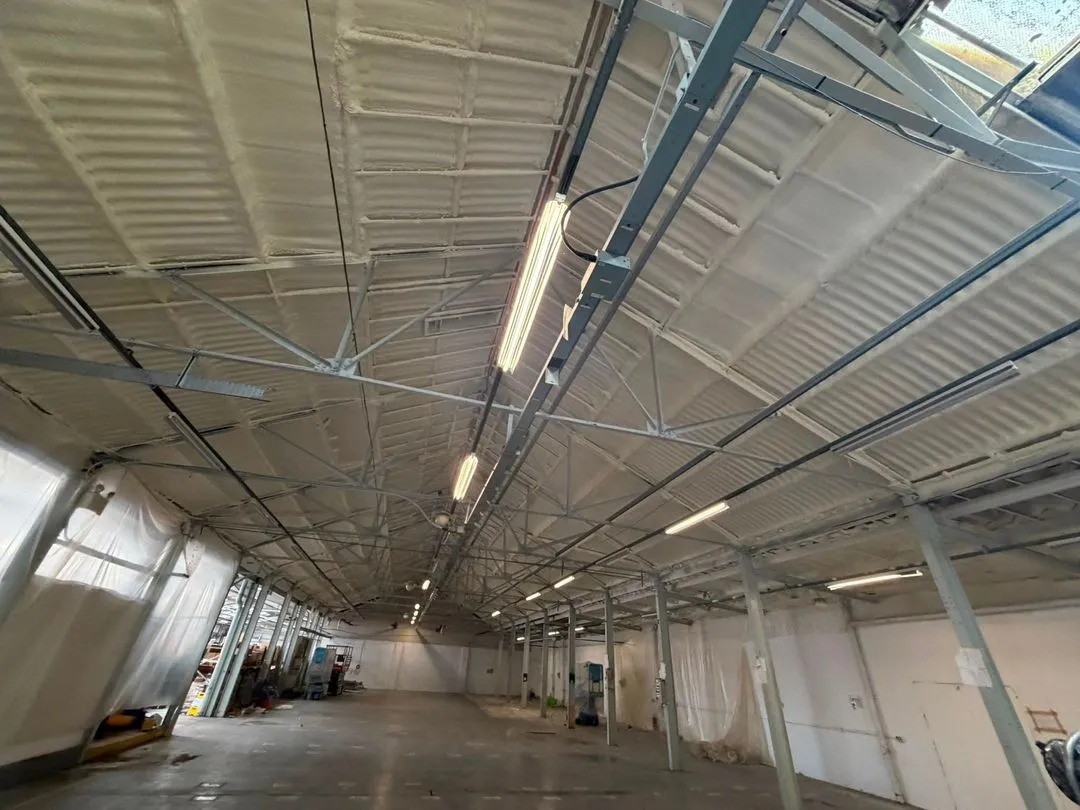
A long industrial unit seen along its length: lattice steel roof trusses and a profiled metal roof sprayed from beneath, strip lights hung below, the floor cleared for the work.
Project recordLattice trusses
Industrial unit roof insulatedClosed cell between the lattice trusses, the floor cleared for the work.

Written records, with their figures and the basis each one rests on, live on the project pages.All project records

Your next step

Your building.
Your brief.
A specialist.

You do not need to know the depth or the system. Tell us what you see, when it appears and what the building holds; if something is uncertain, say so. Someone who does this every day reads it and comes back to you.

Start a project brief About five minutes. Photographs help; nothing else is needed.

Or pick up the phone

Telephone . Before 3pm on a working day, you are contacted the same day. After 3pm, the next working day. A commitment to contact, not a quotation.

Two photographs first? The underside on a cold morning, and again during rain. Send photographs of the roof