Before 3pm on a working day, contacted the same day. After 3pm, the next working day. Contact, not a quotation. Telephone
Start a project brief
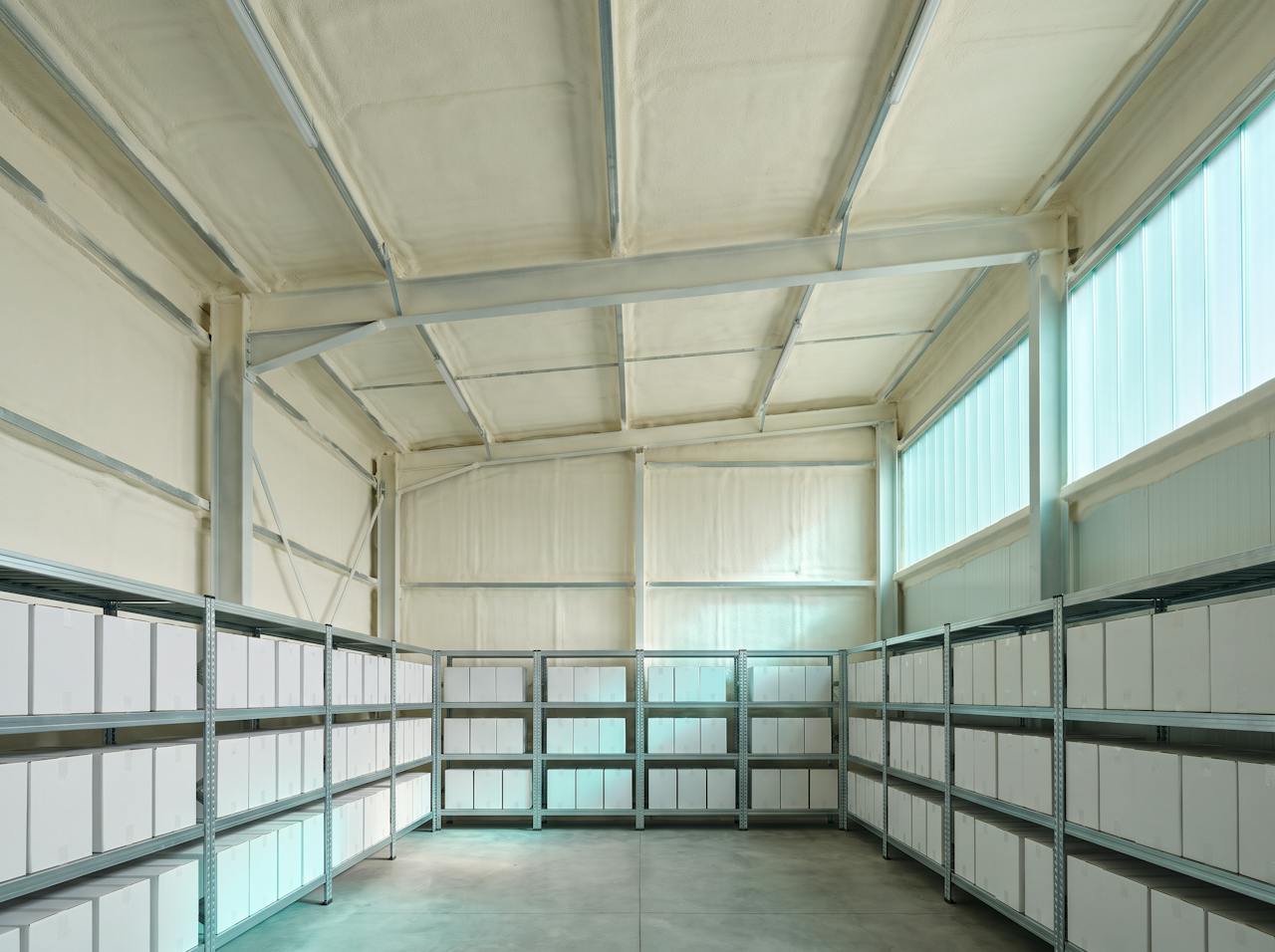
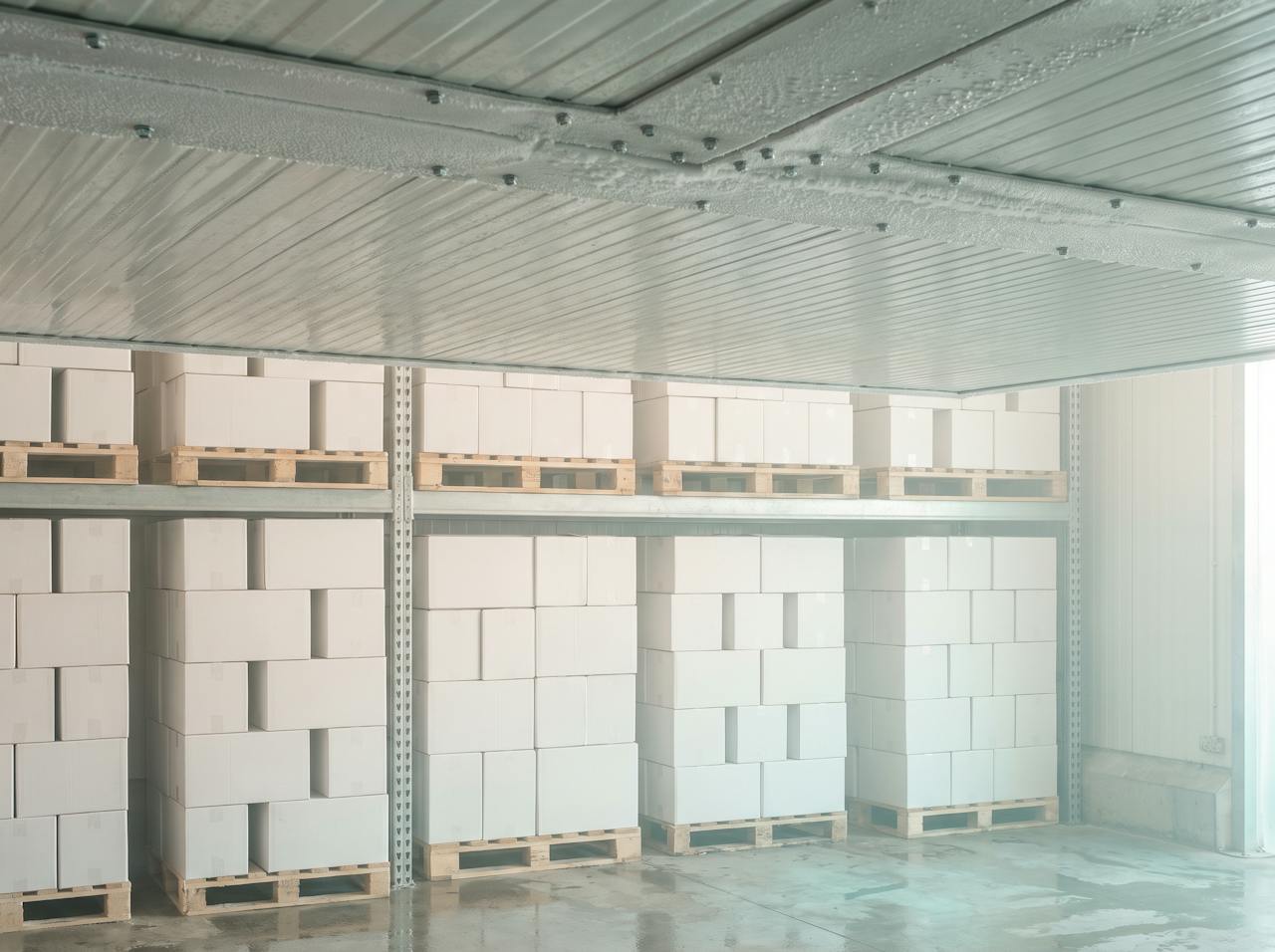
Inside a UK cold store: a long aisle of pallet racking under a pale insulated panel ceiling, frost haze in the cold air, strip lighting and a sliding chill door at the far end.

Building type

Cold stores and chill rooms: seal the envelope the refrigeration is fighting.

In a cold store the physics runs backwards: warm, humid air outside drives vapour inwards through every joint, purlin and penetration, and it freezes where it lands. One continuous bonded layer closes the gaps.

Panel joints, purlins, penetrations, roof voidsAround defrost windows, stock held coldFrom £16/m² + VAT at 25 mm

Same-day estimator

About a minute · no obligation

Step 1 of 4: your building.

Which building is it?

This page's building is pre-selected. Change it if yours is different.

Takes about 30 seconds. No contact details yet.

01What is happening

Warm outside, cold inside, and every gap is a place for ice.

A heated building loses heat outwards. A cold store gains it, and gains moisture with it: warm, humid air outside the box drives vapour inwards through every panel joint, cut edge, fixing, purlin and penetration. Where the vapour meets a cold surface it condenses, then freezes. Cut-and-fit insulation fights the shape of the store; every purlin and fixing is a gap waiting to leak.

Inside a chill room: frost and ice built up along the joint between two insulated ceiling panels and around a penetration, a drip stain on the floor beneath, boxed stock on racking to one side.
The jointWhere the vapour lands
  • Vapour drive runs inwards. The pressure is from the warm side in, the opposite of a heated shed, so the sealing has to face that way.
  • Joints fail before panels. Cut edges, fixings, laps and penetrations are where warm air reaches cold steel.
  • Ice is the evidence. Frost at a joint or a purlin is condensation that has frozen in place.

It is not a refrigeration fault. The plant is working against the envelope; fixing the envelope lets it work less.

It is not solved by more panel. Adding board adds joints. The failure is at the joint, not in the panel.

It is not always the store. Condensation on the warm side of the box, in the roof void above it, is the same physics one layer out.

02What is applied

One continuous layer across the joints, purlins and penetrations.

Closed-cell foam is sprayed as one bonded layer over the panel face, across every joint and around every purlin, fixing and penetration, so there is no gap for vapour to reach cold steel. It is applied to the warm side of the envelope where possible, and to the roof void above the box, so the store's own panels stop carrying the whole load.

Schematic / not to scaleKeyed 1 to 5 below

Inside a cold store roof void after the work: the underside of the roof sheet, its purlins and the top of the panel ceiling in one continuous cream closed-cell layer, chilled pipework passing through and sealed around.
AppliedJoints and purlins, one layer
The layer runs across the joints and wraps the purlins and penetrations, so the vapour has nowhere left to land.
1 / Existing panel

Composite panel, sheet or concrete. It stays, and we do not replace it.

2 / Rail, purlin and fixings

Encapsulated by the application, and still a thermal bridge in the calculation.

3 / Closed-cell layer, in passes

One continuous bonded layer, over 90 per cent closed cell, its own vapour control. λ 0.027 W/mK is the NexSeal LE product figure.

4 / The joint

The line where warm air reached cold steel and froze. The layer runs straight across it.

5 / Finish, where specified

A coating over the cured foam for hygiene, cleanability or fire, specified for food areas where the store needs one.

03Working around the building

Around the defrost window, with the stock held cold.

A cold store cannot warm up for us. The work is planned around defrost cycles, stock movements and the plant, zone by zone, with the temperature held and the product protected. Where the treatment is on the warm side or in the roof void, the store barely notices.

  1. 1 / 3

    Plan it with the plant

    Defrost windows, stock rotation and the refrigeration engineer's constraints set the programme. Zones are agreed before anyone arrives.

  2. 2 / 3

    Hold the product

    Stock under the spray zone is moved or sheeted; doors stay shut; containment keeps overspray out of the cold chain.

  3. 3 / 3

    Hygiene from day one

    Cleanable finish, masking of evaporators and sensors, and a QA record of what went where. Re-entry and cure at low temperature are set out in the method statement.

Application temperature limits for the foam and the coating in a running store, and any need to treat from the warm side only, are set out in the specification for your store.

04Enverge NexSeal LE

The material we spray, and why it matters.

Enverge NexSeal LE is a two component closed cell polyurethane, spray applied directly onto the prepared substrate. As it cures, it expands and sets into one rigid, continuous layer, bonding into corrugations, laps, fixings and awkward junctions without being cut, jointed or mechanically fixed.

That matters because most insulation problems start at the gaps.

Board systems can leave voids at ribs, laps and junctions, and every gap is a potential cold bridge where warm internal air meets a cold surface and condensation forms, hidden behind the insulation. NexSeal LE is applied as one continuous bonded layer, so there is nowhere for that to start: a sealed, stable building envelope that controls condensation, reduces heat loss and protects the structure underneath.

0.027 W/mKThermal conductivity · aged · BS EN 14315-1
Class 1Surface spread of flame · BS 476-7 · uncoated
B-s2,d0Coated, as tested · BS EN 13501-1
25 yearsWorkmanship warranty, plus the manufacturer’s

HOLVEM also installs open-cell foam. It is a different product with its own data sheet, specified for different objectives: hybrid build-ups, sound absorption, or where the layer has to breathe. It is not what goes onto a cold sheet or a cold soffit. Open-cell system data · Closed-cell system data
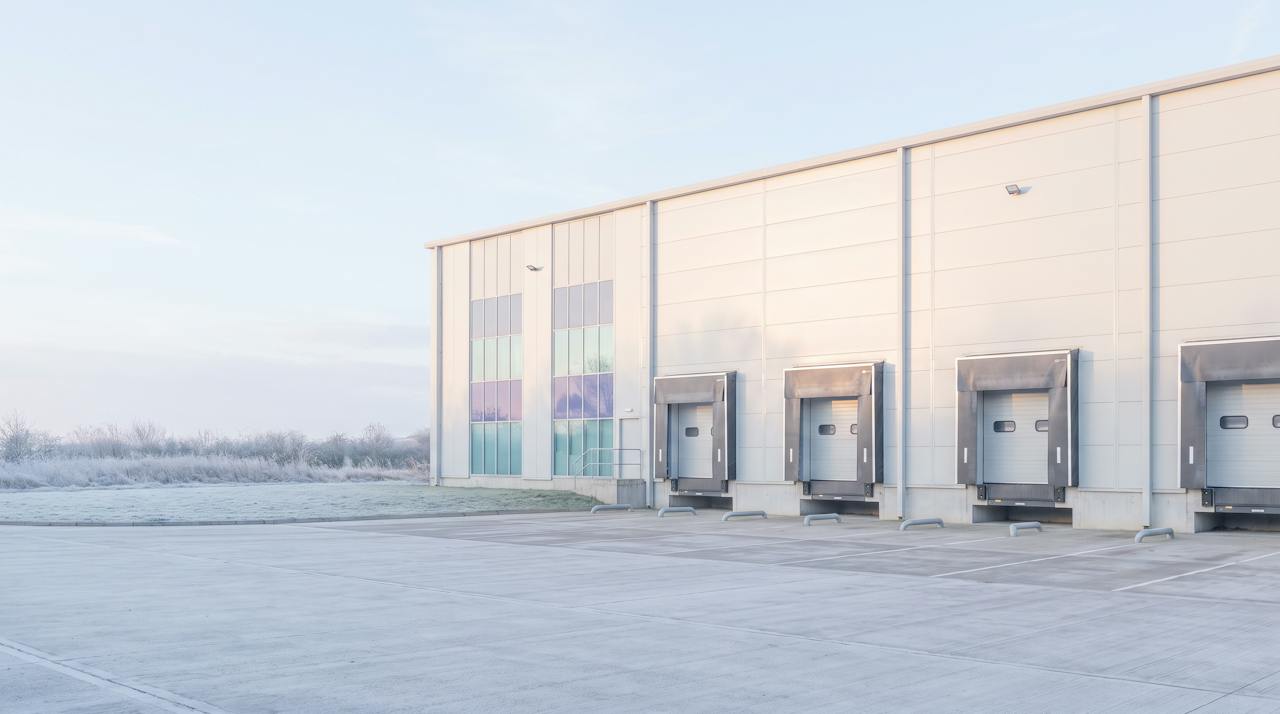
HOLVEM spray rig van with Enverge NexSeal LE A and B component drums plumbed into the proportioner.
HOLVEM rigA and B on board
The HOLVEM rig · Enverge NexSeal LE A and B components on board. HOLVEM's own photograph.

05How we check

We check the vapour drive before we spray.

This is the building where the condensation risk analysis matters most. The direction of vapour drive, the store's set point and the humidity outside the box all go into it; the depth and, more than the depth, the sealing come out of it. Guessing at a cold store is how ice ends up in a roof void.

  1. 1 / 3

    Condensation risk analysis, run backwards

    The build-up is checked with the store's actual set point inside and the warm, humid side outside, to BS EN ISO 13788 and, where the case warrants it, a transient WUFI analysis to BS EN 15026. It states where vapour would condense and what the layer has to do to stop it.

    How the analysis works
  2. 2 / 3

    U-value against the refrigeration load

    Where the objective is energy, the calculation is done for this build-up to BS EN ISO 6946 with the rails and purlins in it, so the reduction in heat gain is a figure your refrigeration engineer can use.

    U-values and Approved Document L
  3. 3 / 3

    The survey establishes the gaps

    Where the ice is, where the vapour gets in, which side can be treated and what has to be held cold. The specification is written to the store, not to a rate card.

    Survey, or photographs?

06The objective sets the depth

Four objectives. Each one sets the depth.

What does the roof need to do? Pick one below and you will see the depth that does it, and just as plainly what it won’t do. Nothing is left to come out later: the survey confirms the right depth for your building.

Four depths, drawn to one scale and measured from the panel face. The objective and the calculation set the thickness on your building.

Pick an objective above to see the depth that does it, and what it won’t do.

Thickness and objective

Want a figure for your building? It takes about a minute.Building, roof, reading, details. A real figure for your store the same working day; nothing sent to anyone else.

Get my estimate

07Straight answers

Ask us the hard ones.

The questions cold chain operators and food businesses actually ask on the call, answered the way the specialist answers them. A question we have not answered? Ask it on the call. No obligation.

We have insulated panels already. Why is there ice?
Because the failure is at the joint, not in the panel. Warm, humid air on the outside of the box drives vapour inwards through cut edges, fixings and penetrations; where it meets cold steel it condenses and freezes. One continuous bonded layer across those lines is what the panels cannot give you.
Do we have to empty the store?
Not usually. The work is zoned around defrost windows and stock movements with the temperature held, and where the treatment is on the warm side or in the roof void the store barely notices. What has to move, and whether any zone can only be treated from outside the box, is established at survey.
Is the foam suitable for a food area?
The cured layer is rigid, bonded and does not shed. Where the surface is inside a food area it is finished with a cleanable coating specified for that use, with the product and its certification for your assurance scheme named in the specification.
How much does cold store insulation cost?
It depends on the depth, and in a cold store the sealing matters as much as the depth. Condensation control starts at 25 mm and retaining temperature at 50 mm; the rate falls as the area rises. A U-value target for the refrigeration load and any hygiene or fire coating are priced per project, because the coating sits on top of the foam.
Will it cut our refrigeration bill?
Every sealed gap is heat gain the plant no longer has to remove, so the direction is clear. A percentage is published only with its basis named: a calculated reduction in heat gain for a given build-up is not a meter reading. HOLVEM supplies the calculation; your refrigeration engineer can put it against the plant.

The next step

Your building.
Your brief.
A specialist.

If you already know the thickness or U-value you need, we price to it and confirm it is right; if not, we work it out with you. Tell us the set point, where the ice is and roughly how big the store is; the estimator at the top takes about a minute and asks for nothing until the reading is on screen.

Or call . Enquiries received before 3pm on a working day are contacted the same day. After 3pm, the next working day. A commitment to contact, not a quotation, a survey or a price.

Rather write it all down first? Start a project brief · about five minutes, photographs welcome.

Same-day estimate · about a minute Get my estimate