Building problem
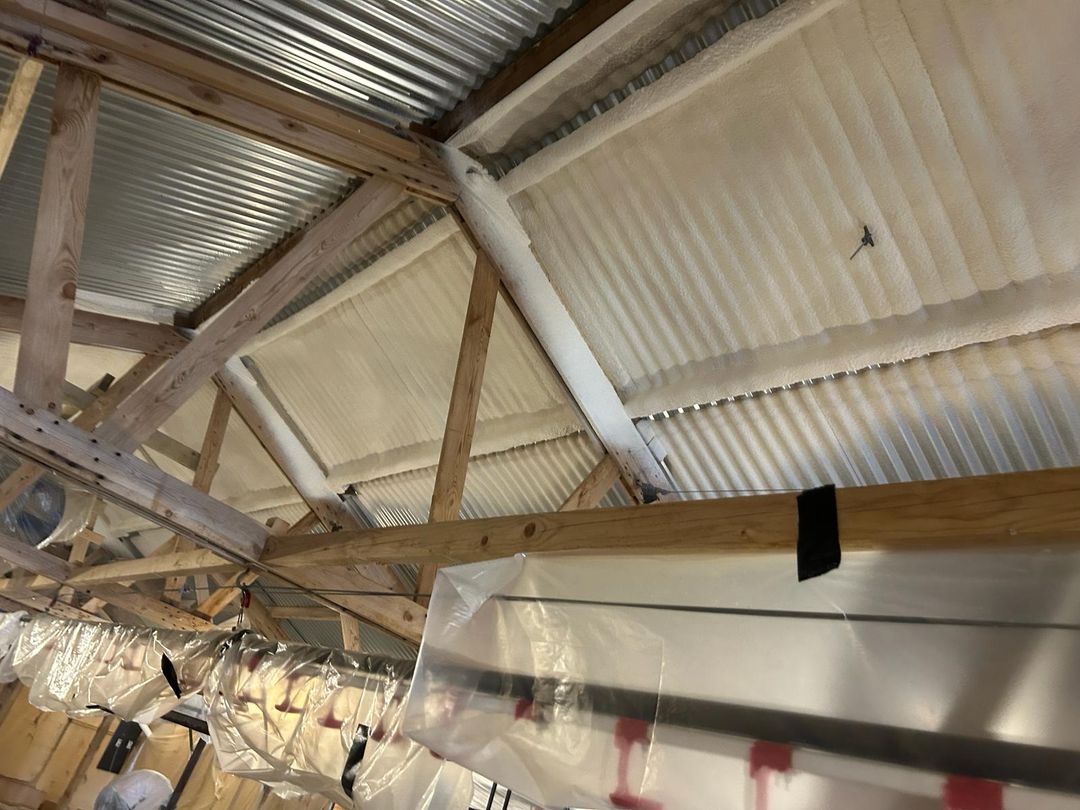
Summer overheating: the roof that loses heat in January collects it in July.
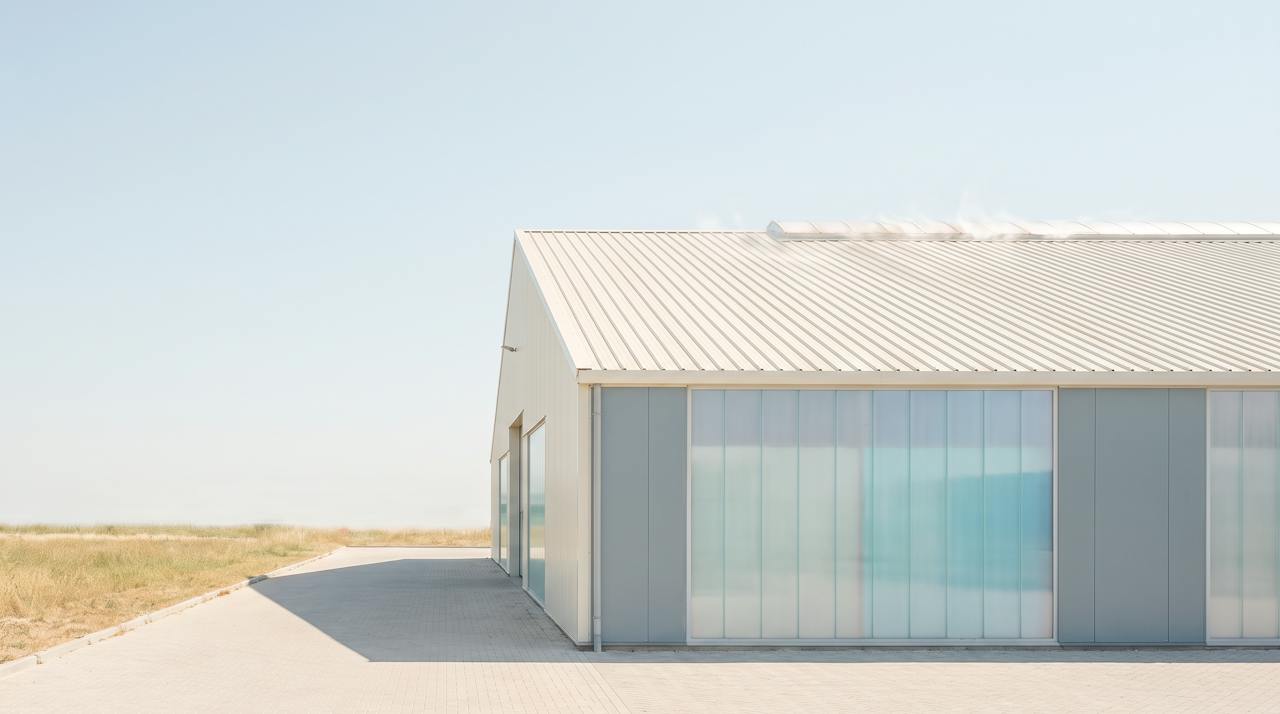
A bare metal sheet in full sun gets far hotter than the air around it, and it radiates that heat straight down onto the people, stock and animals beneath. The same thin sheet that lets heat out all winter lets the sun in all summer. This page is why, what it costs, and what a layer on the underside changes.
- Metal and corrugated roofs
- One layer, both seasons
- Nationwide coverage
01What you see
Hottest under the roof, in the afternoon, on the top pallet.
Summer overheating follows the sun, not the air temperature. It is worst under dark sheets and rooflights, on mezzanines and top pallets, in the afternoon, and it fades quickly after sunset because a thin sheet stores nothing.
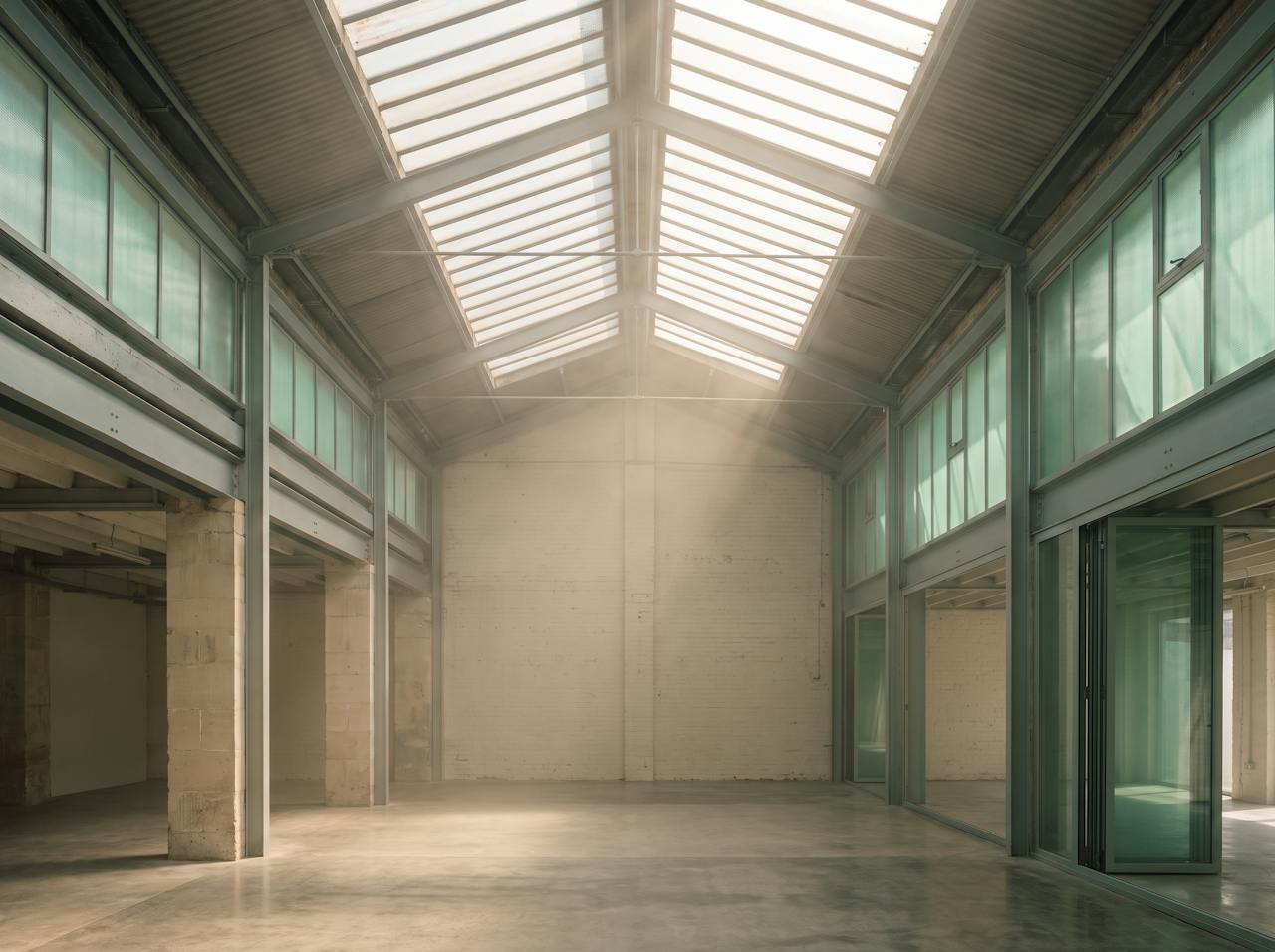
- Follows the sun, not the thermometer. The air in the shade may be pleasant while the space under the sheet is not. What you feel is radiant heat from above.
- Worst high up. Mezzanines, top pallets and roof-level plant sit closest to the hot underside.
- Gone by evening. A millimetre of steel holds no heat. When the sun goes the sheet cools within the hour, and in winter the same lack of mass works against you.
Not the outside temperature.Not fixed by moving the air.The sheet absorbs the sun and radiates it down. Change what the room sees.
02Why it happens
Solar gain through the sheet, then radiant heat from it.
Sun on a dark sheet is absorbed and becomes heat. The sheet, a millimetre thick, conducts it straight through, and its hot underside radiates into the room like a low-hanging heater. Shade-air temperature tells you little; the radiant heat is what you feel on your head.
A summer afternoon. The sun heats the sheet well above the air temperature, the heat conducts through a millimetre of steel, and the hot underside radiates down onto everything and everyone beneath it.
Schematic, not to scaleArrows show radiant heat, not measured temperatures.
03What it costs you
Heat stress, spoiled stock, and cooling bought to fight the roof.
An overheated building costs in the afternoons: people slow down, temperature-sensitive stock and animals suffer, and fans, cooling and open doors are bought to fight a roof that goes on radiating.
The people
Afternoons, mezzaninesWorkplace regulations require a reasonable indoor temperature, and radiant heat from the roof is what makes a space unreasonable. Productivity falls before anyone complains; the mezzanine empties first.
The stock and animals
Top pallets, pensChocolate, chilled goods, pharmaceuticals, feed and livestock all take the radiant load from above. Write-offs and welfare problems that follow the weather forecast.
The cooling
Fans, doors, plantFans move hot air, open doors bring in dust and security risk, and cooling plant runs against a roof that is radiating into the space. All of it is bought to fight the roof, every summer.
04What usually gets tried
Fans move the air. The roof is radiating onto you regardless.
Each usual remedy works on the air, and radiant heat does not care about the air. Fans and open doors help a little at the cost of dust and security; cooling plant is sized to fight the roof. One usual remedy does work on the sheet: a pale, reflective coating on top of it.
Fans and open doors
Moving air helps sweat evaporate and that is all. The hot underside radiates onto people and stock just the same, and open doors bring dust, birds and a security problem.
Cooling plant
Sized against a roof that radiates all afternoon, it runs hard and costs every hour. It treats the symptom in the air while the source stays above it.
A pale, reflective roof coating
Applied to the top of a sound roof, a pale silicone coating absorbs far less sun, so the sheet does not get as hot in the first place. It is a genuine lever on the source, and it waterproofs the roof at the same time. It is a topside job on a roof that is sound.
Roof coatings and waterproofing