1The shell
Thin, conductive, and the whole surface is exposed.
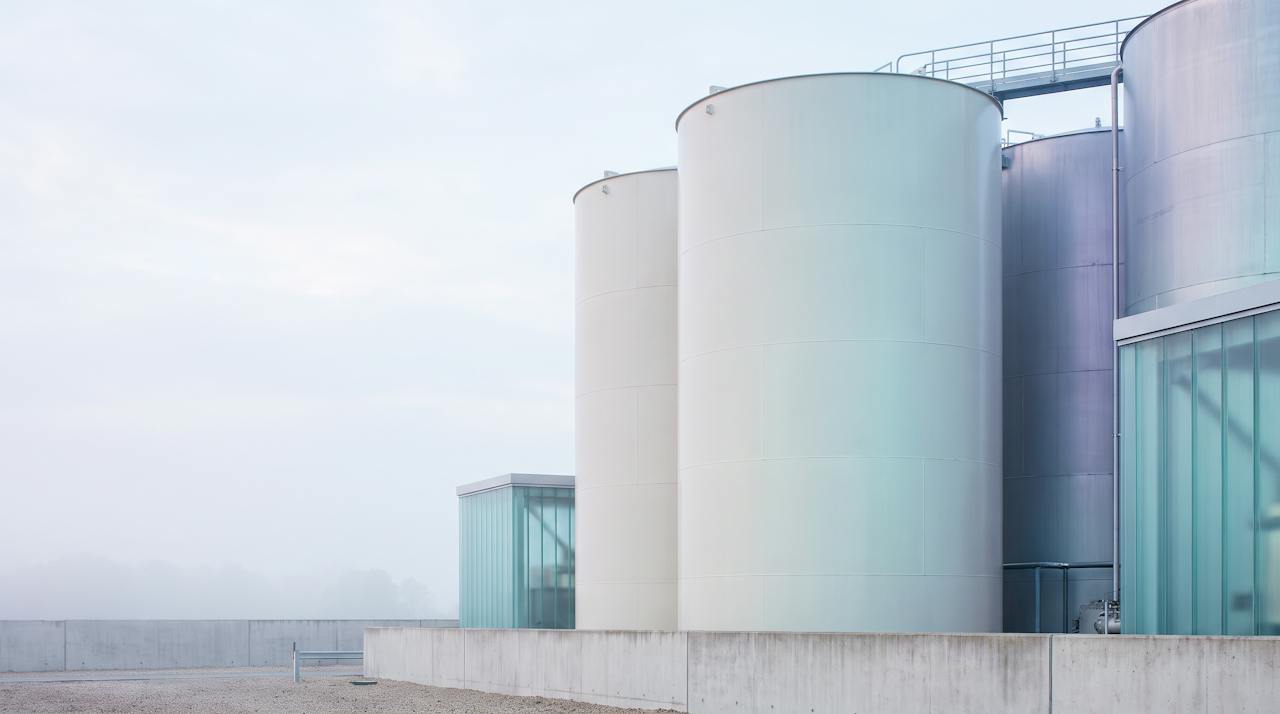
A steel or GRP shell has almost no thermal resistance. Heated contents lose heat through all of it, all the time; chilled contents gain it. The energy bill is the shell area.
Application
Cylindrical, spherical or irregular, steel, GRP or plastic: closed-cell foam is sprayed onto the outside of the shell and takes its shape without cutting or fitting, then a protective coating goes over the foam so the weather never touches it.
Is this your job?
01The build-up
A bare tank does two things it should not: it loses or gains heat through every square metre of shell, and when its contents are colder than the air, it sweats. Switch the drawing between the bare vessel and the jacketed vessel.
Two states. Switch between them; the marks and the reading follow.
Swipe across to see the whole section.
BARE SHELL · HEAT OUT, CONDENSATION ONSection, schematic, not to scale. Three marks in each state; the cards beneath read them.
Cold shell · below the dew pointThe dew point · water formsAbove the dew point · dry
1The shell
A steel or GRP shell has almost no thermal resistance. Heated contents lose heat through all of it, all the time; chilled contents gain it. The energy bill is the shell area.
2Condensation on the shell
When the contents are colder than the air, the shell sits below the dew point and water forms on it, runs down and pools at the base. Corrosion starts under the drips. Cladding with open joints does nothing about the air behind it.
3The fittings
Every fitting is a break in any pre-formed insulation and a path for heat and moisture. Fitting boards or sections around them is slow, and the joints are where the failures start.
1The foam jacket
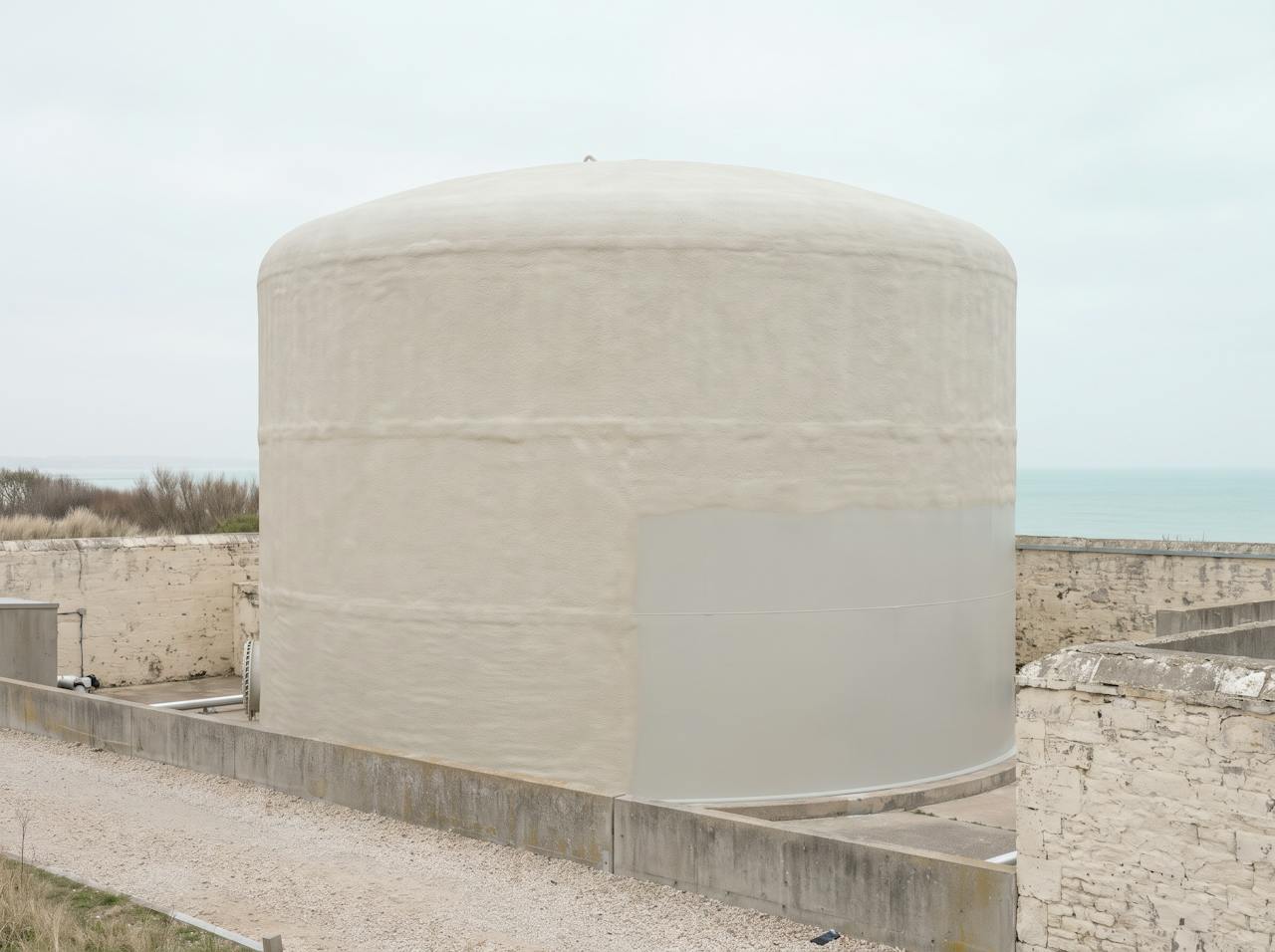
Closed-cell foam is sprayed onto the shell in passes and takes the form of the vessel, cylindrical, spherical or irregular, with no cutting, fitting or joints. It bonds to steel, GRP and plastic.
2The protective coating
Exposed foam degrades under UV, so a protective elastomeric coating goes over the whole jacket. It is the finished face: weatherproof, and inspectable.
3Cut back at the fittings
The jacket is cut back and closed around nozzles, manways, legs and supports, and the coating carried over the edge. Fittings that need access are stopped short of, not buried.
The short version: a vessel is a shape, and spray foam is the one insulation that takes the shape of what it is sprayed on. Jacket, then coat, then cut back and finish at the fittings: the sequence is the page.
02Project record
Installation footage from HOLVEM's own projects. This item is a project record, played on request; nothing on this page that is not real footage carries that label.
The jacket is trimmed cleanly where it meets the vessel's fittings and edges, and the edge is closed before the coating goes over it. What you see is the detail that decides whether a jacket lasts.
03The order of work
The work is done externally, normally with the vessel in service and the site working around it. Each step is checked before the next begins.
The shell is inspected: material, corrosion, coatings, leaks at seams and fittings, and the operating temperature of the contents. A leaking vessel is repaired first, by someone else. Closed-cell foam is not a repair.
HOLVEM checksSound shell, no leaks; operating temperature recorded.
Loose coating, corrosion product, oil and contamination come off the shell. Fittings, gauges, ladders and the ground around the vessel are masked and protected. Access is set up around the vessel.
HOLVEM checksClean, dry, keyed shell; every fitting protected.
Closed-cell foam is sprayed onto the shell in passes, following its curvature, to the specified depth. The top of a vertical vessel is sprayed too, so the jacket is continuous.
HOLVEM checksApplied thickness measured and recorded around the vessel.
Once the foam has cured, a protective elastomeric coating is applied over the whole jacket, to the specified thickness and in the specified colour. This is not optional on an external vessel: the coating protects the foam from UV and weather.
HOLVEM checksCoverage and film thickness logged.
The jacket is cut back cleanly around nozzles, manways, legs, supports and the base, the edges closed and the coating carried over them. Anything that needs future access is left accessible.
HOLVEM checksEvery fitting closed and finished.
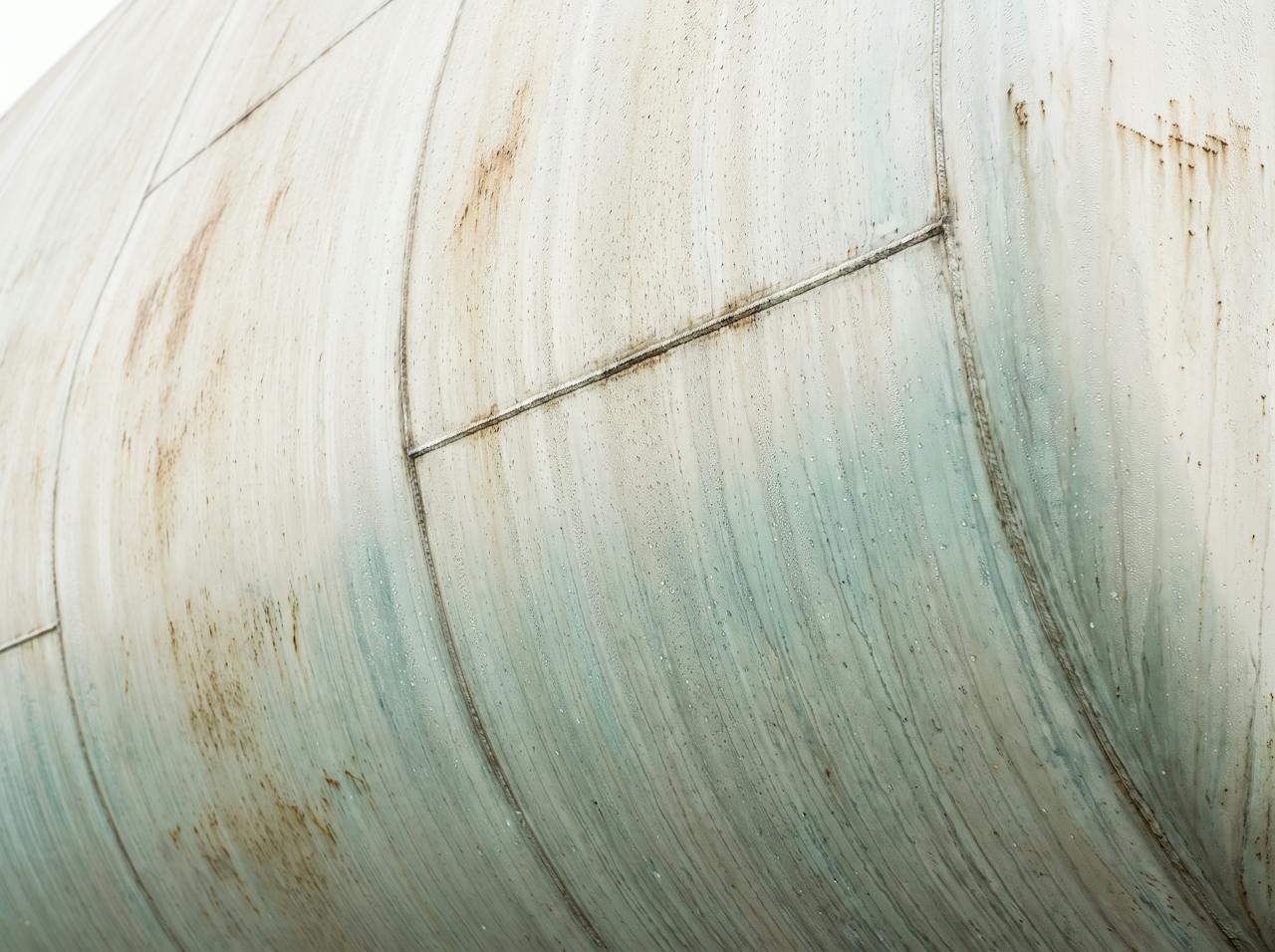
Every step is checked before the next. Thickness measured, coverage logged, compiled into a QA record at completion.
04Preparation
Vessels are working plant, not empty buildings. Three things HOLVEM establishes first.
Sound and sealed
Foam over a weeping seam traps the product and hides the fault. Leaks are repaired first; the jacket goes on a shell that is doing its job.
Clean and dry
Old coatings that are failing come off; sound coatings are checked for compatibility. The shell is dry at the time of application, and its temperature is within the range the foam can be applied to.
Planned around the plant
What stays accessible, where the jacket stops, how the site works around the vessel while the foam and coating cure: agreed and drawn before the first pass.
Survey, or photographs?How HOLVEM works: we understand your project before we price it
05Thickness and objective
Three objectives, three directions for the depth, each confirmed for your vessel and its contents. What it costs is on the cost guide, not here.
25 mmCondensation control
Enough on most chilled or cold-water vessels to put the outer face above the dew point of the surrounding air, so the shell stays dry and corrosion under the drips stops.
50 mmHeat retention
Cuts the heat lost from heated contents or gained by chilled contents, so the plant that holds the temperature works less. The depth is calculated from the temperature of the contents and the loss you want to cut.
75 mm and aboveA specified heat loss
Set by the heat-loss or hold-time figure the process needs, calculated for the vessel, its contents and the site conditions. Specified per project and confirmed by the calculation.
06Where it suits
Tanks and vessels stand on farms, in factories and in process plant across the UK. Three building pages where this application is common.
Building
Steel silos and bins where condensation on the inner face spoils the grain, jacketed and coated from outside.
Read the building pageBuilding
Process and storage vessels on working sites, insulated in place without stopping the line.
Read the building pageBuilding
Water, feed and slurry tanks on farms, insulated to hold temperature and to stop sweating.
Read the building page07What HOLVEM checks
HOLVEM does not quote a depth from a photograph. The vessel is understood first: what its contents do to the shell, what the coating has to withstand, and what heat loss the process can accept.
Condensation risk analysis
For a cold vessel, the operating temperature of the contents and the humidity of the site set the dew point the jacket has to clear. HOLVEM calculates the depth that clears it, rather than assuming one.
The coating
UV, rain, temperature cycling, and anything the site throws at the vessel: the protective coating system is chosen for it and its film thickness specified. Exposed foam is never left as the finished face.
Heat loss
For a heated or chilled vessel, the heat lost through the jacket at the specified depth is calculated for the shell area and the site conditions, so the depth is a number the process can check, not a guess.
Condensation risk analysisU-values and Approved Document LFire performance and coatings