Before 3pm on a working day, contacted the same day. After 3pm, the next working day. Contact, not a quotation. Telephone
Start a project brief
An old corrugated industrial roof seen from the ridge, weathered sheets with moss at the laps, yellowed rooflights and a rusted fixing line, under a pale sky.

Building problem

Ageing roofs: before you replace it, find out whether you need to.

Old profiled roofs fail in stages. Fillers crumble, fixings loosen, laps open, sheets thin and rooflights craze. Long before the roof is beyond saving it is cold, draughty and wet with condensation. A bonded layer from below keeps a sound roof in service; where the roof is not sound, we say so.

  • Metal and fibre-cement roofs
  • The roof kept, not replaced
  • Nationwide coverage

01What you see

Loose fixings, open laps, a roof that moves in the wind.

An ageing roof tells you in stages. First the fillers and the rooflights go, then the fixings loosen and the laps open, then the sheets themselves begin to thin. Most roofs that get a replacement quote are somewhere in the middle.

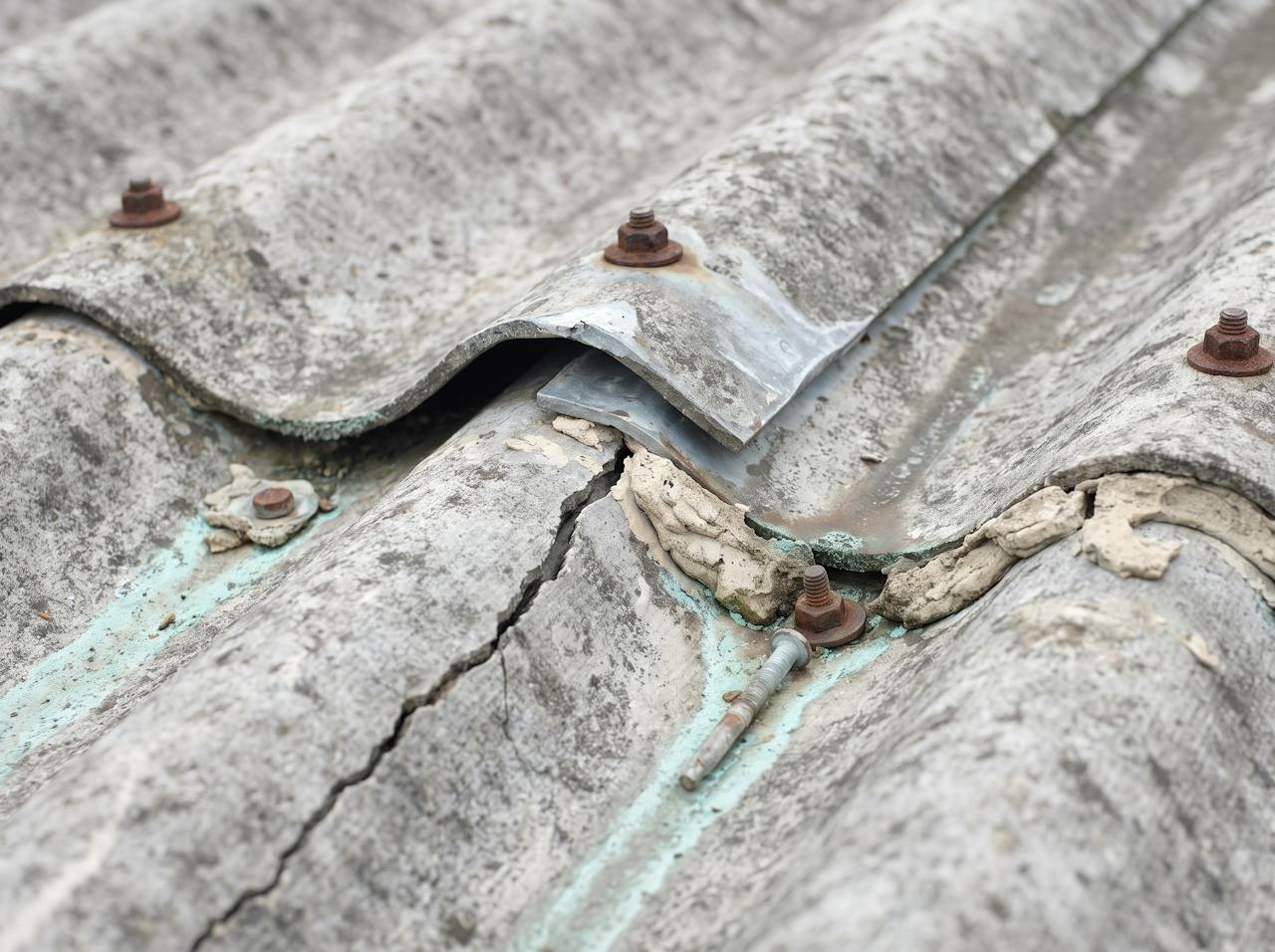
Looking up at the underside of an old profiled roof: a raised, rusted fixing head, a side lap that has opened, a yellowed rooflight and a crumbled ridge filler.
Stage by stageAn old roof from below
  • Fillers and rooflights first. Foam fillers crumble and rooflights yellow and craze. The roof starts to breathe, and daylight shows at the ridge.
  • Then fixings and laps. Fixings rust and lift; laps that were tight work open with wind and thermal movement. The sheets rattle in a gale.
  • Then the sheets. Steel thins at the laps and valleys; fibre cement goes brittle and grows moss. This is the stage where replacement becomes a real conversation.

Not necessarily beyond saving.Not a decision to take from a quote.Whether the roof can be kept is established from below, sheet by sheet.

02Why it happens

Every weak point on an old roof is one of the same three details.

Laps, fixings and closures. Age loosens all three: thermal movement works the laps open, wind lifts the fixings, and fillers and sealants simply wear out. Condensation from below attacks the same three places every cold night, so the roof ages fastest where it is already weakest.

Switch between the two states

The roof as found. Fixings have lifted, a side lap has opened, the sheet is cracked at a crown and moves in the wind, and condensation wets every one of those details each cold morning.

Schematic, not to scaleMovement and cracks shown schematically.

03What it costs you

The decision, the disruption, and the winters in between.

An ageing roof costs three ways: the decision it forces, the disruption a replacement brings, and every winter it goes on losing heat and dripping while the decision waits.

  1. The decision

    Replace, overclad, or keep

    A replacement quote is easy to get and hard to judge. Overcladding is a second roof on top; replacement empties the building. Whether the roof can be kept is a question about the sheets, and it deserves an answer from below before a price from above.

  2. The disruption

    Weeks, not days

    Replacement opens the building to the weather and moves the stock out. Fibre cement adds licensed removal. The cost of the roof is often smaller than the cost of not trading beneath it.

  3. The meantime

    Every winter you wait

    An ageing roof is cold, draughty and wet with condensation while the decision is made. Each winter takes something from the fixings, the stock and the heating bill.

04What usually gets tried

Patching buys years. Replacement buys a new roof and an empty building.

The usual remedies sit at the two ends of the scale. Fillers and mastic buy a few years at a time; replacement and overcladding solve the roof at the cost of the biggest spend and the biggest disruption the building will see. Between them is a roof that is sound enough to keep and needs sealing, stiffening and insulating.

  1. Fillers, mastic and fixings

    Cheap, quick and repeated. Each round lasts a little less than the last, and none of it touches the condensation that is ageing the roof from below.

  2. Overcladding

    A new sheet over the old one, with insulation between. It solves the weather face and adds weight to an old frame; it is a second roof, priced as one.

    Spray foam versus overcladding
  3. Replacement

    The right answer when the sheets are beyond keeping. An empty building, weeks of weather exposure and, for fibre cement, licensed removal and disposal.

05What fixes it

Repair what is letting water in. Then seal, stiffen and insulate from below.

Closed-cell spray foam applied to the underside from inside the building, in passes, following the profile. It bonds across the corrugations, closes the laps and fixings and stiffens the sheet, with the building in use beneath it. Where the top face needs sealing, a silicone coating over the sound roof completes the job from above.

  1. Ingress repaired first

    Where the roof is letting water in, that is fixed first, by a roofing contractor. Sheets beyond keeping are replaced. The layer goes on a roof that is sound and dry.

  2. The layer, from below

    Bonded across every corrugation, into the laps and around every fixing, from eaves to ridge. The sheet is stiffened and sealed, and the building stays in use while it happens.

    The application on metal roofs
  3. The top face, where needed

    A pale silicone coating over a sound roof seals laps, fixings and cut edges from above and reflects the summer sun. On asbestos-cement it encapsulates the sheet without disturbing it.

    Roof coatings and waterproofing

06How HOLVEM checks

Whether the roof can be kept is decided from below, sheet by sheet.

The question an ageing roof asks is whether it is sound enough to keep. HOLVEM answers it from below before pricing anything, checks the moisture risk of the build-up, and records the depth as the layer goes on. Where the honest answer is replacement, that is the answer you get.

  1. Photographs, then a survey from below

    Two photographs with a postcode tell a specialist the stage the roof is at. The survey records the sheets, the fixings, the laps and the closures, and which areas need repair or replacement first.

    Survey, or photographs?
  2. Condensation risk analysis

    The build-up is assessed to BS EN ISO 13788 and, where inconclusive, with a dynamic model to BS EN 15026, before the depth is confirmed.

    How the analysis is done
  3. Applied thickness recorded

    The depth is checked and recorded as the work proceeds and compiled into the completion pack you hold at handover.

07From our own jobs

A roof kept in place, and the record that goes with it.

A photograph from HOLVEM's own project and the written record it belongs to. Everything here carries the label it has earned.

Project record · LE12

Commercial single-storey building, profiled asbestos-cement roof: 2340 m² at 50 mm closed-cell.

2340m²Treated at 50 mm closed-cell
≈ 0.53W/m²KTreated-roof U-value, calculated for that build-up
≈ 9°CHigher internal roof-surface temperature under representative winter conditions, calculated

Reported by the customer: condensation on the roof underside was mitigated following installation. The figures are calculated for that roof element from the survey and the completion record; nothing was metered, and none of it transfers to another roof.

Read the record
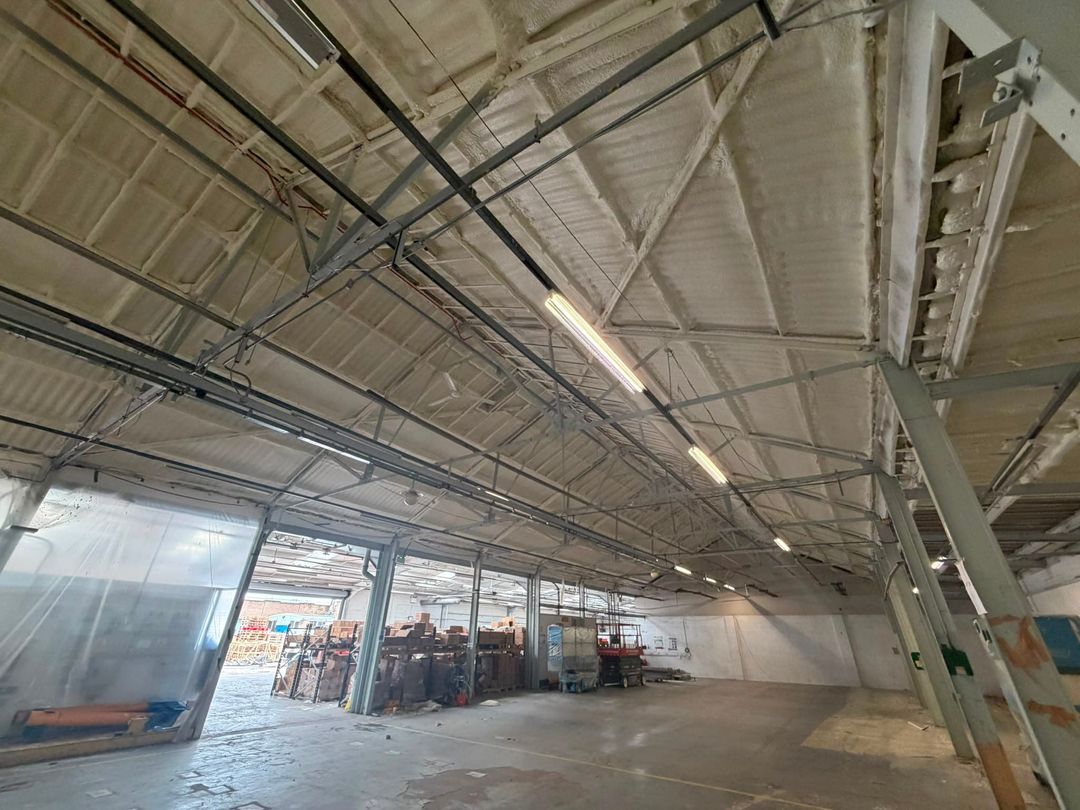
A large warehouse truss roof sprayed from beneath in closed-cell foam, polythene screening and stock at the far end.
Project recordAsbestos-cement roof kept
A 2340 m² asbestos-cement roof, kept and treatedThe roof stayed in place; the layer went on from below around the stock.

Written records, with their figures and the basis each one rests on, live on the project pages.All project records

Your next step

Your building.
Your brief.
A specialist.

You do not need to know the depth or the system. Tell us how old the roof is, what has been done to it and what the building holds; if something is uncertain, say so. Someone who does this every day reads it and comes back to you.

Start a project brief About five minutes. Photographs help; nothing else is needed.

Or pick up the phone

Telephone . Before 3pm on a working day, you are contacted the same day. After 3pm, the next working day. A commitment to contact, not a quotation.

Two photographs first? The roof from outside, and a lap or fixing from below. Send photographs of the roof