Before 3pm on a working day, contacted the same day. After 3pm, the next working day. Contact, not a quotation. Telephone
Start a project brief
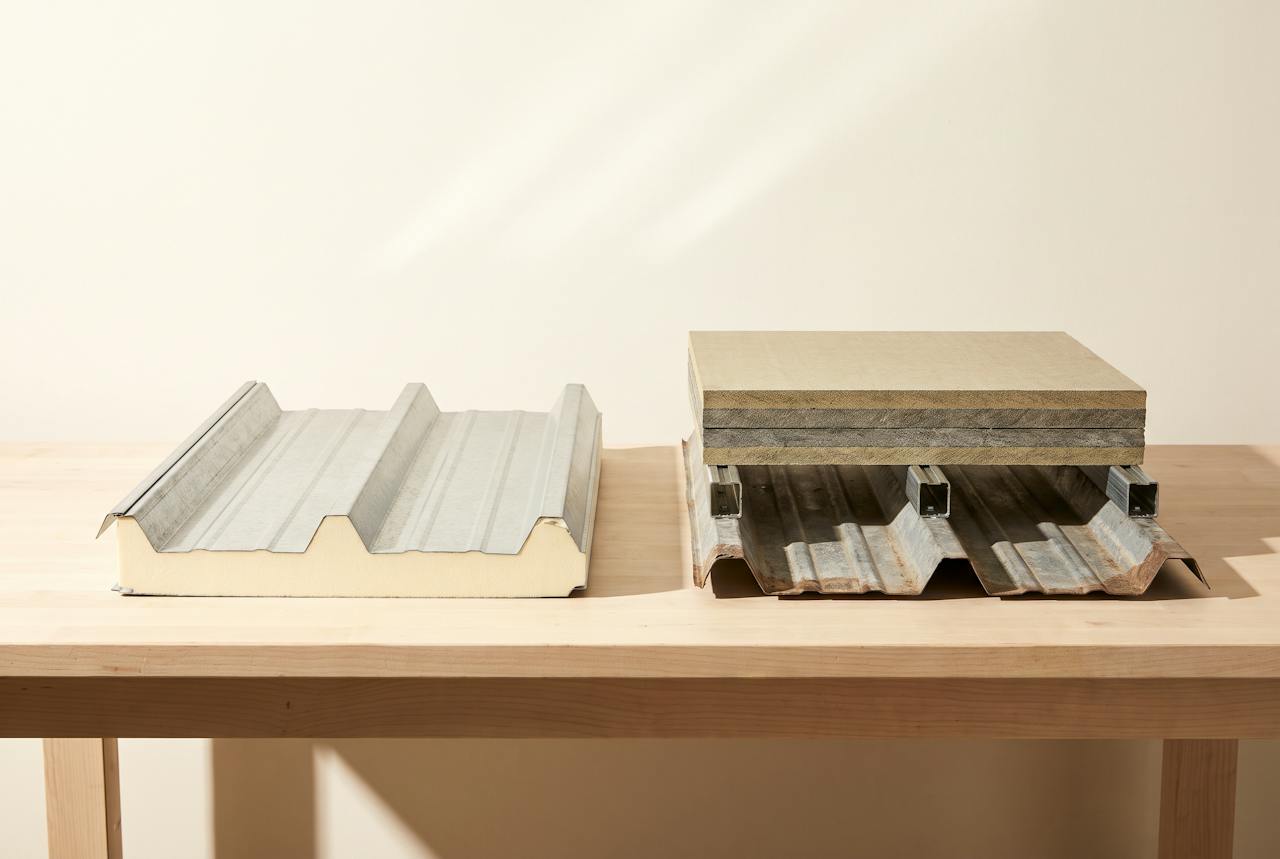
Two roof build-up samples side by side on a bench: one with a closed-cell foam layer sprayed to the underside of the sheet, the other overclad with a new outer skin above the old one.

Guide · Comparison9 min read

Spray foam or overcladding: which one your roof is actually asking for.

A new skin over the old roof from outside, or closed-cell foam sprayed to the underside from inside: they are not the same job. The reasons that lead people to spray foam, what overcladding asks of you, and the two cases where overcladding is right.

The short answer

Spray foam is the answer when the roof is sound, the problem is on the underside (condensation, heat loss, a cold sheet over a working floor), and the floor has to keep running: from £16/m² + VAT, applied from inside, with the roof you already have. Overcladding is the answer when the outer skin has failed or is at the end of its life and the roof cannot come off. Sometimes the honest answer is both, outside first.

Foamfrom £16/m²+ VAT at 25 mm, from inside, published
Overclada new roofpriced as a roof system, by a roofing contractor

You have two very different quotations on the table, or you are about to. One is from a roofing contractor for a new skin over the old roof. One is for closed-cell foam sprayed to the underside from inside. They are easy to confuse in a quotation and impossible to confuse on site, and the right one depends on three things about your roof that this guide helps you settle.

01What each one is

Spray foam goes on the underside. Overcladding goes on top.

Spray foam is applied from inside the building, to the underside of the roof you already have; when you look up afterwards, this is what you see. Overcladding is a new roof built over the old one, from outside, and inside nothing changes.
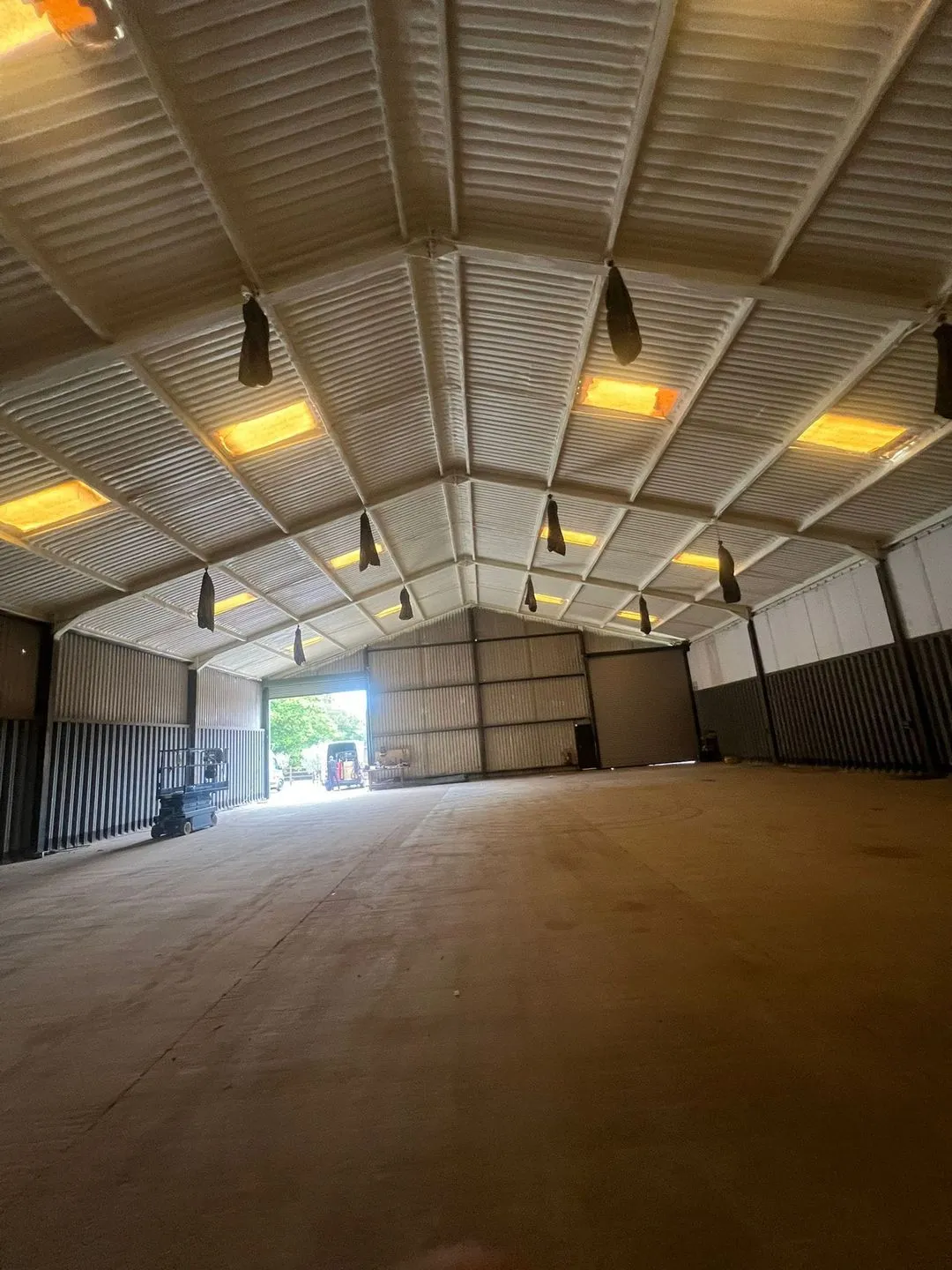
An empty warehouse floor looking towards an open roller-shutter door: the whole profiled steel roof and its purlins sprayed from beneath in a continuous pale closed-cell layer, rooflights and high-bay lights left exposed.
Project recordSpray foam, the underside
  • Applied from inside, looking up. The pale, continuous layer is the foam: it follows the profile of the sheet and wraps the purlins, with rooflights and lights left clear.
  • The roof outside is untouched. The existing sheet stays as the weather line; the foam seals and insulates it from beneath.
  • Bay by bay under a working floor. Sprayed in passes from below; the rest of the floor keeps operating.
HOLVEM's own photograph: a warehouse roof sealed from beneath.
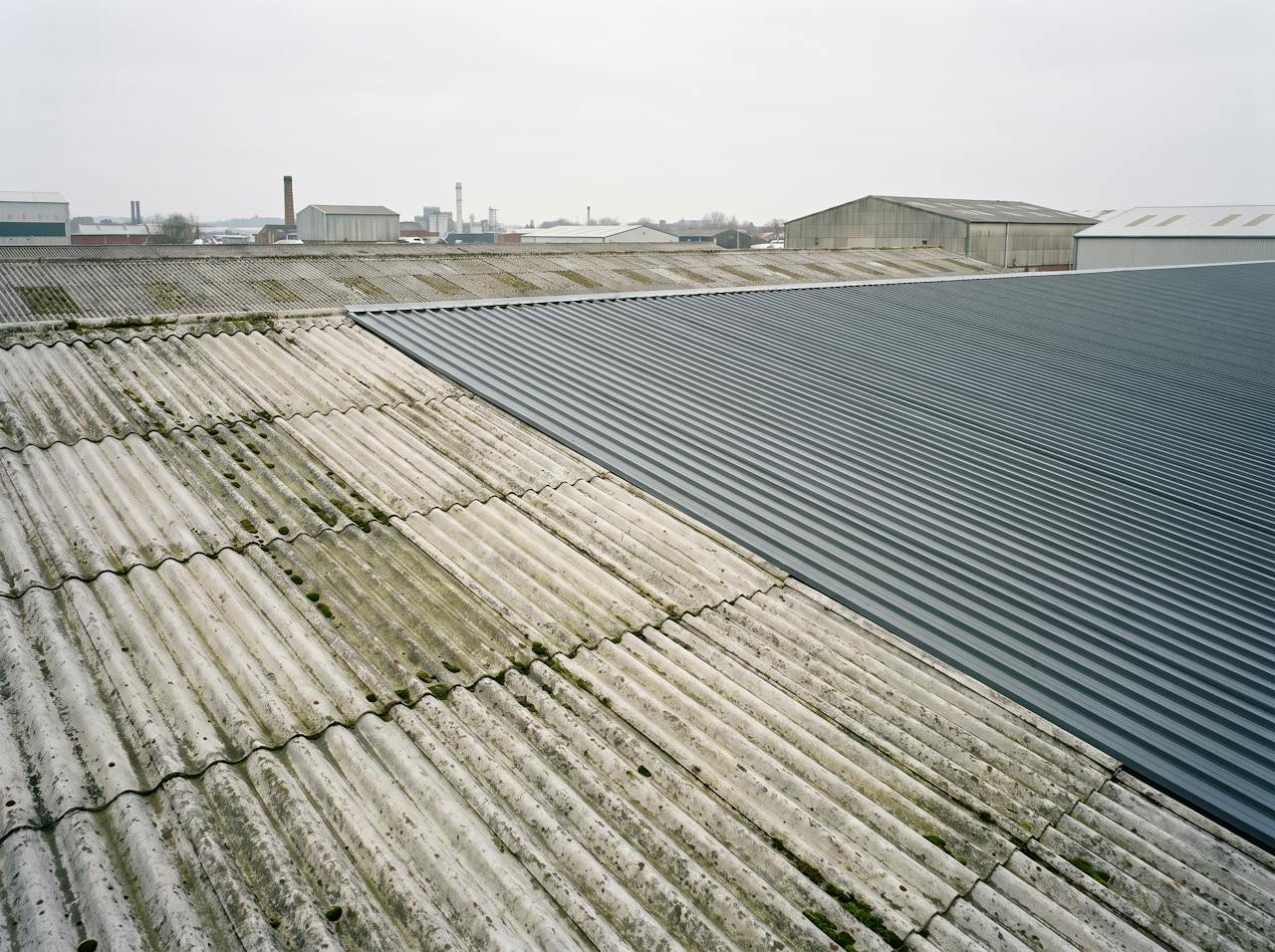
Across the roof of a large single-storey industrial building on an overcast day: an old profiled fibre-cement roof, weathered with moss in the troughs, meeting a bay overclad in new dark grey profiled steel at a straight line.
OvercladdingThe outside
  • Built from outside, on top. A new outer sheet with insulation, fixed over the existing roof on a new spacer system; the old roof stays underneath.
  • Roof-level work. Access, edge protection and lifting; every rooflight, gutter, ridge and penetration is re-detailed to the new height.
  • Renews the weather line. That is its job, and it is why it costs what it costs.
An old fibre-cement roof meeting a bay overclad in new profiled steel.

Where each one goes

The same roof, drawn twice. Left: closed-cell foam sprayed to the underside of the sheet you already have. Right: a new insulated skin fixed over the old sheet on spacers.

Not to scale. Purlins, fixings and spacers drawn as a type, not as a specification.

The same roof can have both. Overcladding renews the outside; foam seals and insulates the inside. Where a roof is being overclad for the weather and still condenses beneath, foam to the underside is the usual second step, once the weather line is sound.

02Why people choose spray foam

Five reasons lead people to the underside, and they are the same five every time.

The comparison we are asked for most is the cost one, so here it is without hedging, followed by the four reasons that usually sit behind it.

Publishedfrom £16/m²

plus VAT, installed, at 25 mm; deeper layers in the cost guide. Overcladding is priced as a new roof system over the whole area, by a roofing contractor. Ask for that figure and compare it per square metre against the published rates; the gap is the point.

  1. Cost. No new outer skin, no roof removed, no spacer system, no roof-level access. The lowest up-front cost of the interventions on this page, and not by a little.
  2. Worked from inside. No scaffold on the yard, no crane, no weather window. Bay by bay, under a floor that keeps operating around the crew.
  3. It treats the surface the problem is on. Condensation forms on the cold underside of the sheet. The foam bonds to that underside and keeps it above the dew point, so the water stops forming where it was forming.
  4. The roof is kept as it is. No added load on a frame that was not designed for it, no re-detailing at height, no second roof to maintain.
  5. Speed. A crew, a floor and a programme measured in days on most commercial roofs, rather than a roof-level programme that waits on the weather.

Condensation forms on the cold underside. The foam bonds to that underside and keeps it above the dew point.


Looking up inside a working warehouse: a steel portal frame roof with its underside sprayed in a continuous off-white closed-cell layer, lattice trusses and lighting beneath it, and loaded blue pallet racking in the corner of the frame.
Project recordSteel portal frame
Steel portal frame warehouseContinuous closed-cell air and vapour seal, racking in place beneath it.
Project recordEncapsulated
Asbestos-cement roof encapsulated in placeClosed cell from beneath; the roof retained where replacement had been considered.

03What overcladding asks of you

A second roof, built on top of the first. Here is what that involves.

We are honest about this because you will find it out anyway, and we would rather you heard it here. Overcladding does a job that spray foam cannot do, which is renew the weather line. It also asks for six things that spray foam does not.

  • The up-front cost of a new roof system. New sheets, insulation, spacers and fixings over the whole area, plus roof-level access and edge protection for the duration.
  • Weight on a structure that was not designed for it. The existing frame and purlins have to be checked for the added load before anything is ordered.
  • Everything at roof level re-made. Rooflights, gutters, ridges, flashings, vents and every penetration are re-detailed to the new height; each one is a new place for the roof to fail later.
  • The old roof stays underneath. Fibre-cement and asbestos-cement sheets are covered, not removed, and stay part of the building's file.
  • The longest programme after replacement. Weather-dependent, at height, across the whole roof at once.
  • The inside is unchanged. A cold inner sheet that condensed before can still condense; the overclad solves the weather line, not the underside on its own.

05The four things people weigh

Five ways to fix a cold, wet roof, ranked on the four things people actually weigh.

Up-front cost, whether the floor can keep working, how long it lasts, and what it does for compliance. Each option is ranked first to fifth on each, on the scope of works, not on a quotation and not on a survey of your roof. Where spray foam does not come first, the table says so.

OptionUp-front costDisruptionLongevityCompliance
Doing nothing1st1st5th5th
Closed-cell foam to the underside (HOLVEM)2nd3rd3rd3rd
Internal boards or liner3rd4th4th4th
Overcladding4th2nd2nd2nd
Roof replacement5th5th1st1st

1st is best on that criterion. Cost is ordered by scope of works; disruption on where the work happens; longevity on what renews the weather line; compliance on how much of the element the calculation route covers. Indicative, and the same arithmetic for all five.

Read across the foam row and the pattern is the reason people choose it: second on cost behind doing nothing, and mid-table on everything else without a weakness. Read down the overcladding column and the pattern is the reason people choose that: it renews the weather line, and it pays for it in cost. Doing nothing is cheapest today and worst on longevity and compliance; its real cost is the running cost and the stock.

06Which fits your roof

Three questions settle most roofs.

Answer the three below and the guide tells you which of the two your roof is asking for, or whether it is asking for both. Nothing you choose is sent anywhere; it changes the answer on the page and that is all it does.

Which fits your roof

Your roof, in three answers.

1Is water getting in from outside?
2Does the floor have to keep working?
3What has to change?

The next step

Send the roof. A specialist tells you which one it needs.

Where the building is and how to reach you. Photographs of the underside, sent afterwards, turn the answer into a figure the same working day.

Enter your name.

Enter a UK postcode.

Enter an email address or a telephone number.

Enter an email address or a telephone number.

Before 3pm on a working day, contacted the same day.

07In five lines

Spray foam versus overcladding, in five lines.

  1. Spray foam is applied from inside to the underside of the roof you have; overcladding is a new roof built over the old one from outside. Inside, overcladding changes nothing.
  2. People choose spray foam for the cost (from £16/m² + VAT at 25 mm), the floor that keeps working, the surface it treats, the roof it keeps and the speed.
  3. Overcladding asks for a new roof system, added load, everything at roof level re-made, the old roof left underneath and the longest programme after replacement.
  4. Overcladding is right when water is getting in or the outer skin is at the end of its life and the roof cannot come off; sometimes the answer is both, outside first.
  5. A leak is repaired first, by a roofing contractor; spray foam seals and insulates a sound roof and does not make a failing one watertight.

The next step

If the answer looks like spray foam, the next step is a figure for your roof.

The cost guide has the published rates and a rough budget that takes your area. The project brief takes about five minutes. If the answer looks like overcladding or replacement, that is a roofing contractor's conversation, and this page has done its job.

Back to the three questions

Your next step

Your building.
Your brief.
A specialist.

If you already know the thickness or U-value you need, we price to it and confirm it is right; if not, we work it out with you. Tell us what you know about the building and the problem; if something is uncertain, say so. Someone who does this every day reads it and comes back to you.

Start a project brief About five minutes. Photographs help; nothing else is needed.

Or pick up the phone

Telephone . Before 3pm on a working day, you are contacted the same day. After 3pm, the next working day. A commitment to contact, not a quotation.

Want a figure before you talk to anyone? Pick your building for a same-day estimate