Before 3pm on a working day, contacted the same day. After 3pm, the next working day. Contact, not a quotation. Telephone
Start a project brief
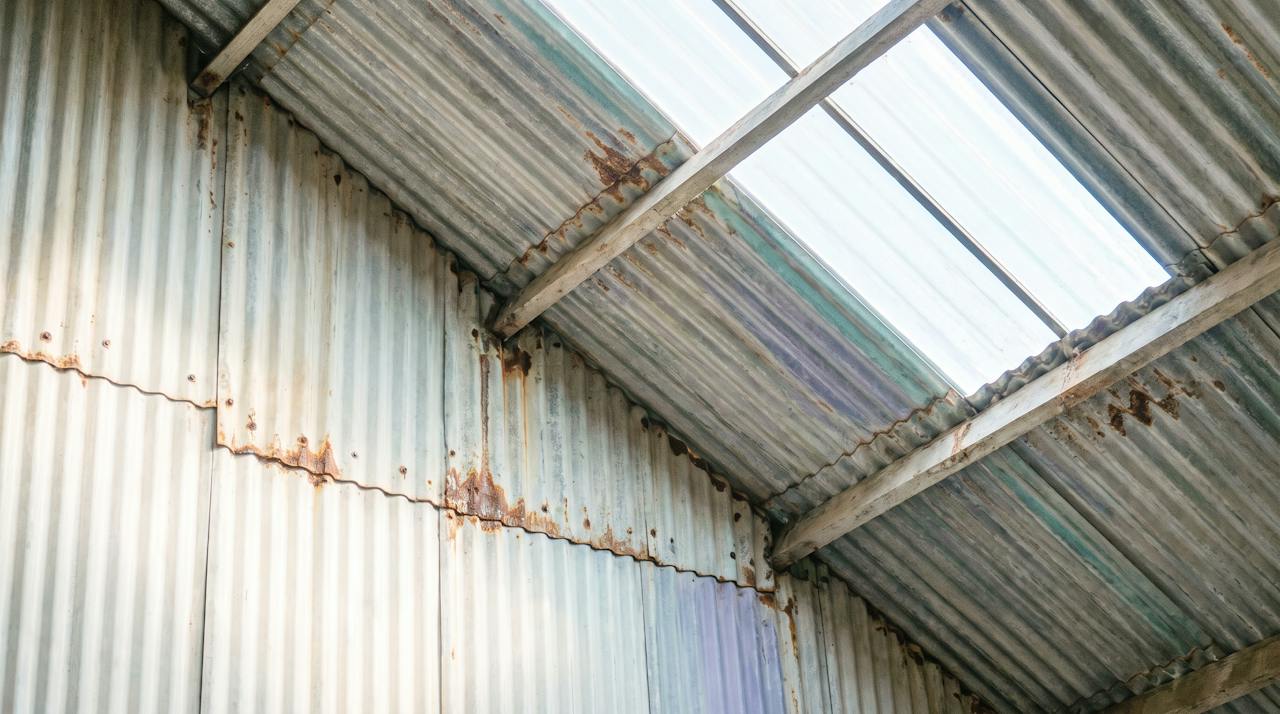
The underside of a profiled steel roof seen from below in cold morning light, rust streaks running from the fixings down the sheet between the purlins.

Building problem

Corrosion of metal roofs: the rust starts underneath, where the water sits.

A coated steel sheet is protected on both faces until the coating is broken. Fixings break it, cut edges expose it, and condensation keeps it wet from below through every cold night. Rust streaks at the fixings are the first sign; a sheet you can push a screwdriver through is the last.

  • Coated steel and galvanised sheets
  • Condensation stopped at source
  • Nationwide coverage

01What you see

Rust streaks at the fixings, brown lines along the laps.

Underside corrosion starts where the coating is broken and the steel stays wet longest: at the fixings, along the cut edges of the laps, and in the valleys of the profile above the purlins. It shows as streaks first, then as bloom, then as holes.
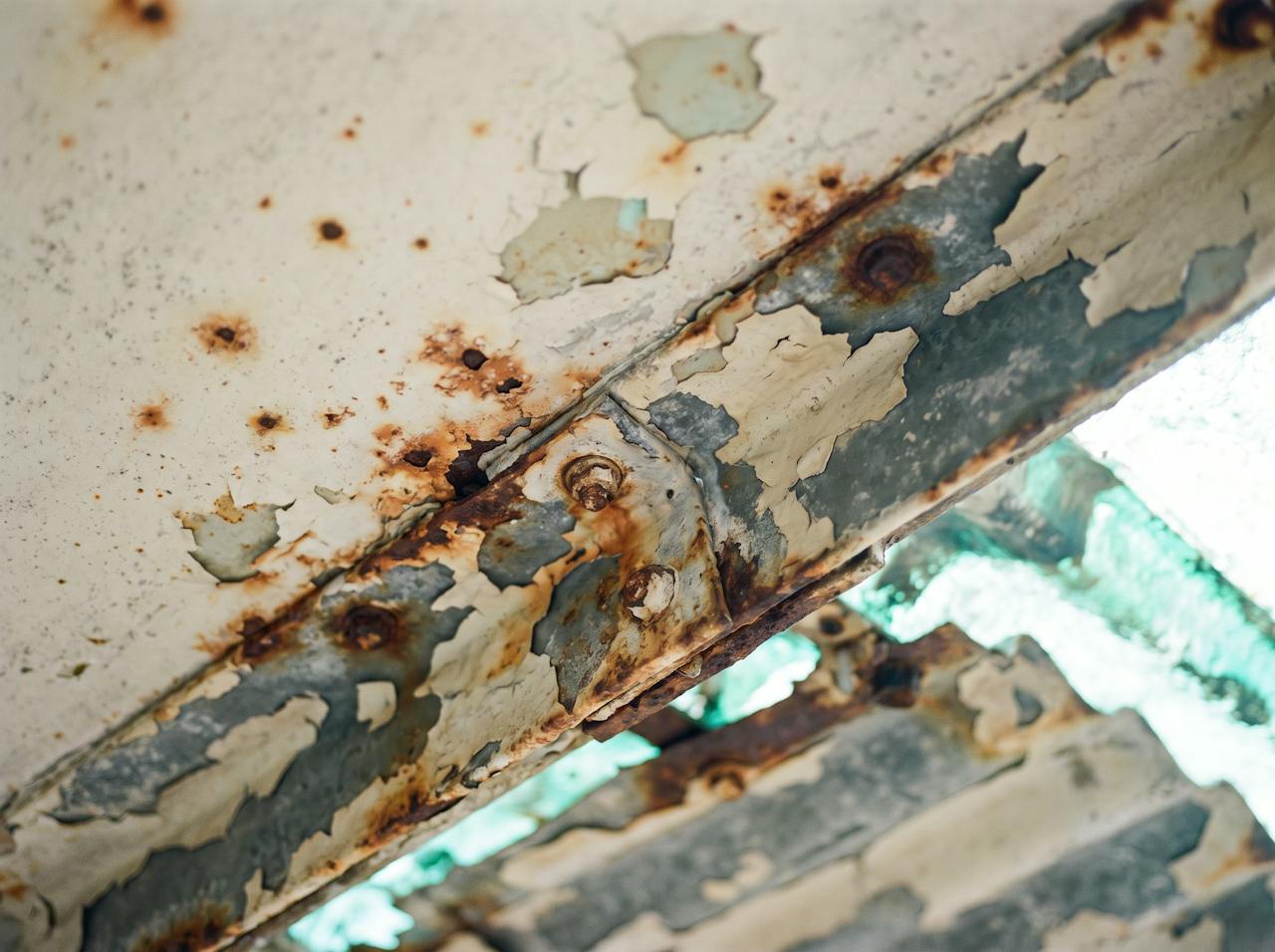
Close view of the underside of a profiled steel roof: rust streaks running from a fixing, white zinc bloom along a lap edge, and a purlin flange stained brown.
Starts at the fixingsUnderside corrosion
  • At the fixings first. Every fixing hole is a break in the coating, and the washer that once sealed it has hardened. Water sits there every cold morning.
  • Along the laps and cut edges. The coating stops where the sheet was cut. Side laps and end laps expose bare edges to the same wet.
  • Where the water sits longest. The valleys of the profile and the flanges of the purlins hold water after the rest of the sheet has dried.

Not a leak from outside.Not cured by paint alone.The water arrives from the room every cold night. Stop it arriving.

02Why it happens

Wet steel, a broken coating, and no chance to dry.

Steel rusts when it is wet and its protective layer is broken. Condensation supplies the water every cold night; fixings and cut edges supply the breaks; and because the underside is shaded and still, it dries slowly. Cut-edge corrosion at the sheet ends and laps is the same mechanism seen from the top.

Switch between the two states

A cold night. Condensation forms across the underside, runs to the fixings and the lap edges where the coating is broken, and sits there. Rust streaks follow, then bloom, then thinning.

Schematic, not to scaleValues shown are example values, not a surveyed building.

03What it costs you

Fixings that lose their grip, sheets that thin, and rust-stained water below.

Corrosion is slow and then sudden. Fixings rust until they no longer hold or seal; sheets thin until they hole; and everything beneath takes rust-stained water in the meantime. The end of that road is a roof replacement.

  1. The fixings

    Grip and seal

    A fixing that rusts loses both its grip on the purlin and its seal against the weather. Sheets loosen in wind, and every rusted fixing is a new place for rain to enter from above.

  2. The sheets

    Laps and valleys

    Steel that thins along its laps and in its valleys eventually holes. Patching a holed sheet is a stopgap; enough of them and the roof is replaced, with everything that involves.

  3. Below the roof

    Stock, plant, floors

    Rust-coloured drips stain stock and packaging, and corrode plant and vehicles parked beneath. In a hangar or a workshop the things under the roof can be worth more than the roof.

04What usually gets tried

Paint on wet steel does not hold. New fixings make new breaks.

Each usual remedy addresses the coating or the fixing and leaves the water supply where it was. Paint applied over a sheet that wets every night fails at the same places it was meant to protect, and replacing fixings adds fresh breaks in the coating.

  1. Repainting the underside

    A coating needs clean, dry, prepared steel and a surface that stays dry afterwards. Under a bare sheet neither holds for long: condensation returns the next cold night and gets behind the paint at every edge.

  2. Replacing the fixings

    New fixings hold better for a while. Each one is a new hole in the coating, and the condensation that rusted the old ones is still arriving.

  3. Overcladding or replacement

    A new roof over or instead of the old one removes the corroded steel. It is also the largest spend the building will see, and on many roofs it is not yet necessary.

    Spray foam versus overcladding

05What fixes it

Sound steel kept dry, from below.

Closed-cell spray foam applied to the underside from inside the building, in passes, following the profile. It bonds to prepared steel, closes the side laps, the end laps and every fixing, and puts a continuous, vapour-closed layer between the moist air and the sheet. The face the air now touches is the foam face, above the dew point.

  1. Condition first

    Loose rust and flaking material are removed so the layer bonds to sound steel. Sheets that are holed or too thin to keep are identified and replaced first, by a roofing contractor.

  2. The layer, following the profile

    Applied in passes into the laps and around every fixing, so the breaks in the coating end up sealed inside the layer rather than open to the room.

    The application, step by step
  3. The top face

    Cut-edge corrosion at the sheet ends and laps is a topside matter. Where the roof needs it, a silicone coating system over a sound roof seals those edges from above.

    Roof coatings and waterproofing

06How HOLVEM checks

Whether the steel is worth keeping is established before anything is specified.

A layer bonded to a corroded sheet is only as good as the steel behind it, so HOLVEM looks at the condition from below first, checks the moisture risk of the build-up, and records the depth as it goes on. Where sheets should be replaced, we say so before we price.

  1. Photographs, then a survey from below

    Two photographs with a postcode tell a specialist how far the corrosion has gone. The survey records the sheet, its coating, the fixings, the laps and which areas, if any, are beyond keeping.

    Survey, or photographs?
  2. Condensation risk analysis

    The build-up is assessed to BS EN ISO 13788 and, where inconclusive, with a dynamic model to BS EN 15026. The result confirms that the layer keeps the steel dry at the depth proposed.

    How the analysis is done
  3. Applied thickness recorded

    The depth is checked and recorded as the work proceeds and compiled into the completion pack you hold at handover.

07From our own jobs

Steel roofs sealed from beneath, from our own jobs.

Photographs from HOLVEM's own projects. Everything here carries the label it has earned.

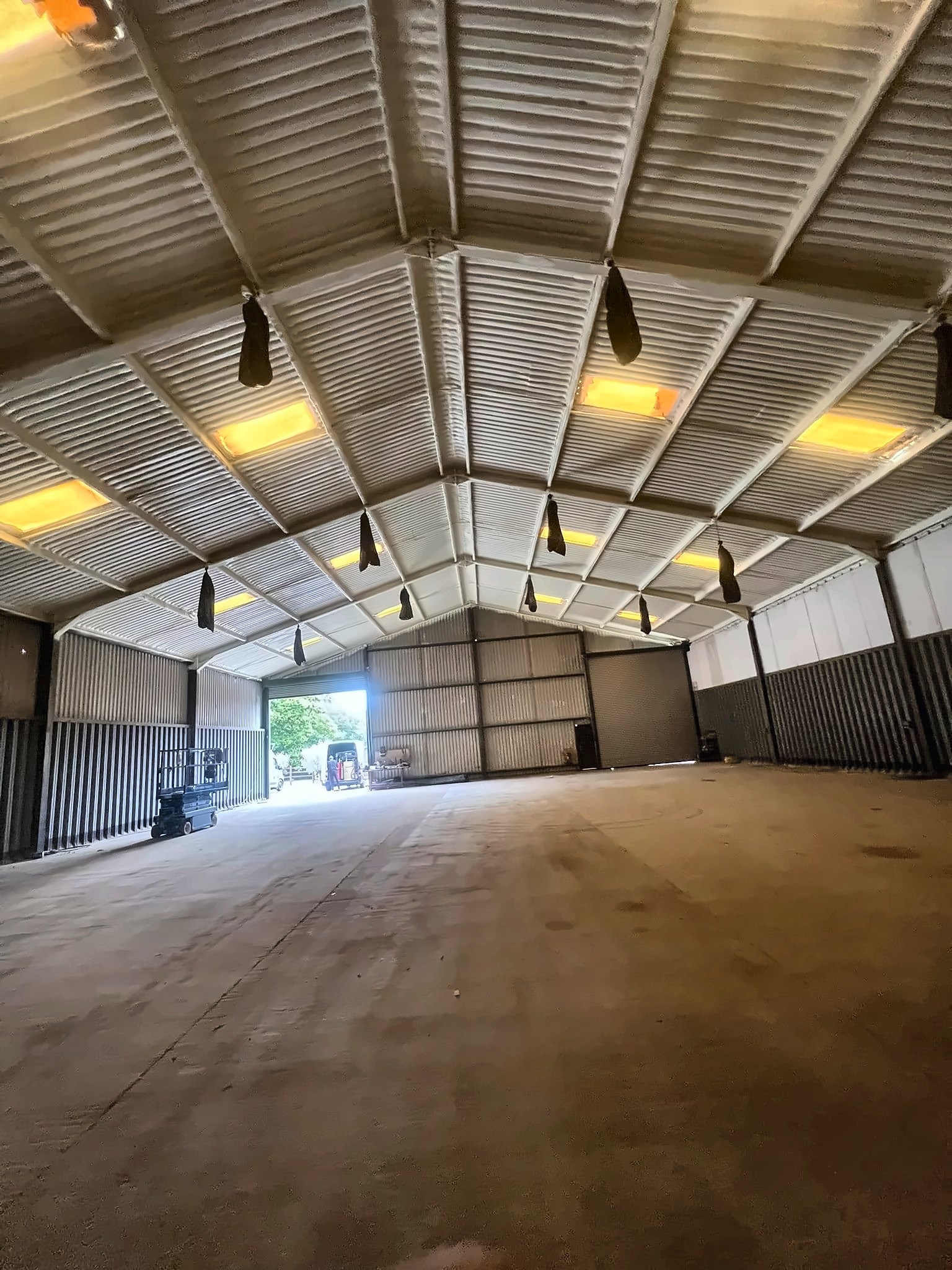
A pitched steel truss roof fully sprayed from beneath in a continuous pale closed-cell layer, fluorescent light battens hanging below.
Project recordSteel truss roof
Pitched steel truss roof sealed from beneathThe steel behind the layer no longer meets the moist air of the room.
A steel portal-frame building with its roof fully sprayed from beneath, warm lights and an open door at the far end.
Project recordPortal frame
Steel portal-frame roof, fully treatedOne continuous layer from eaves to ridge, fixings and purlin lines sealed.

Written records, with their figures and the basis each one rests on, live on the project pages.All project records

Your next step

Your building.
Your brief.
A specialist.

You do not need to know the depth or the system. Tell us where the rust shows, how long it has been there and what sits beneath the roof; if something is uncertain, say so. Someone who does this every day reads it and comes back to you.

Start a project brief About five minutes. Photographs help; nothing else is needed.

Or pick up the phone

Telephone . Before 3pm on a working day, you are contacted the same day. After 3pm, the next working day. A commitment to contact, not a quotation.

Two photographs first? A fixing close up, and the underside on a cold morning. Send photographs of the roof