Before 3pm on a working day, contacted the same day. After 3pm, the next working day. Contact, not a quotation. Telephone
Start a project brief
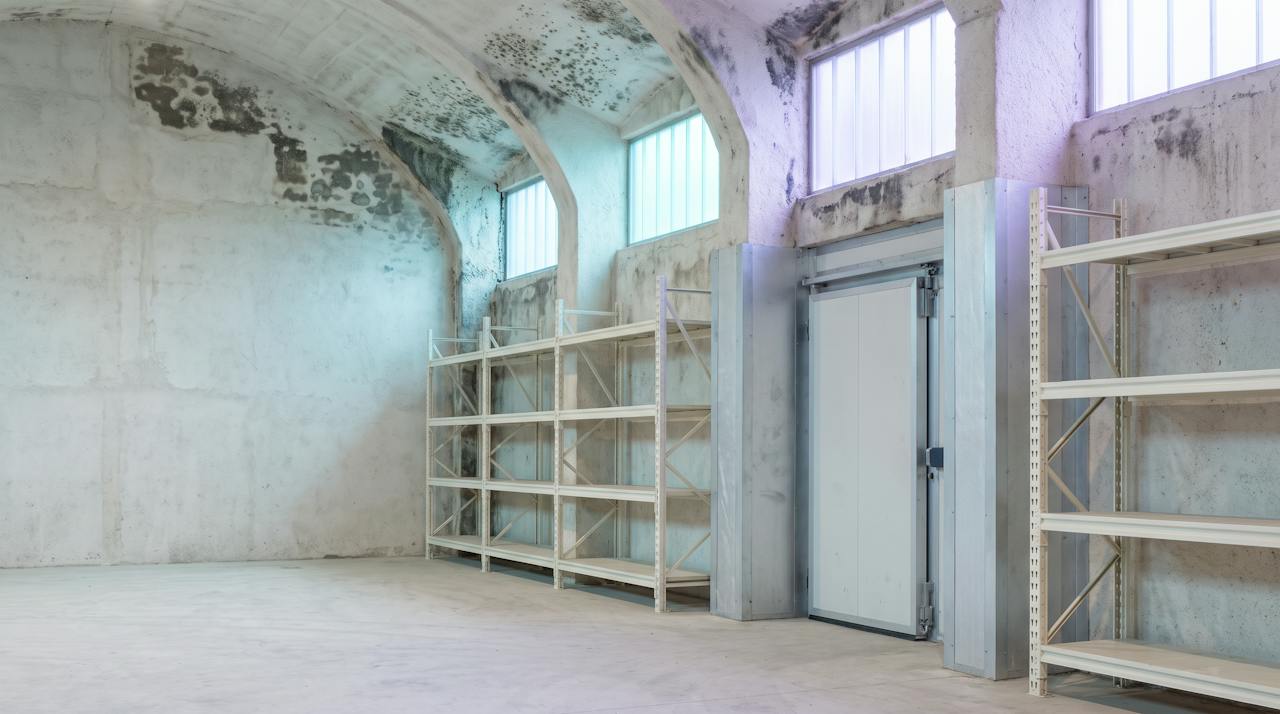
The corner of an industrial building interior where a cold roof meets the wall, dark staining and spotting along the purlin line in pale morning light.

Building problem

Damp and mould: a surface colder than the room will grow mould in time.

Mould needs a damp surface, and a surface gets damp when it is cold enough for the moisture in the air to settle on it. Under a bare roof that is the sheet, the purlins, the liner and the tops of the walls. This page is the physics, the number that predicts it, and how a layer from below changes it.

  • Roofs, soffits and cold walls
  • fRsi calculated for the build-up
  • Nationwide coverage

01What you see

Black spotting at the cold spots, a musty building on damp days.

Mould follows cold. It appears along purlin lines and at eaves and corners, on liners and ceilings under a bare roof, and on the tops of cold walls. It smells before it shows, and it is worst in autumn when the heating comes on and the air is still moist.

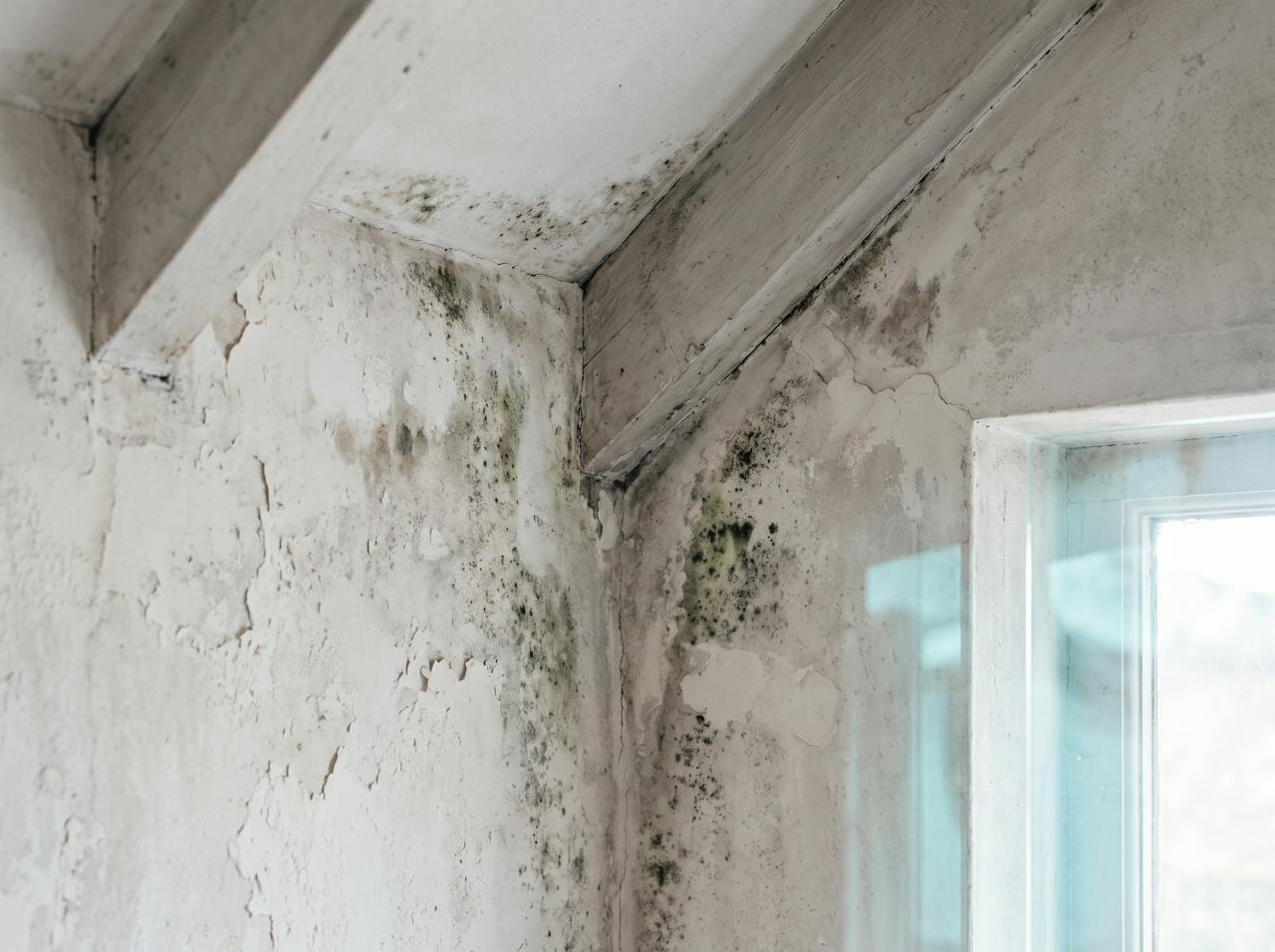
Close view under a bare industrial roof: black spotting along a purlin flange, a stained and sagging liner panel, and condensation beads on the sheet above.
Follows coldMould at the cold spots
  • At the coldest surfaces first. Purlin lines, eaves, corners and behind racking, wherever the surface sits furthest below the room temperature.
  • On liners and ceilings. A liner or ceiling under a cold roof takes the moisture from above and grows mould on its room face.
  • A musty smell before a visible mark. Mould is active well before it shows. Damp packaging, feed and paper give it away first.

Not a leak.Not cured by washing it off.The surface is too cold for the air in the room. Warm the surface.

02Why it happens

Surface condensation, and the temperature factor that predicts it.

Air at 20 °C and 65 % relative humidity has a dew point near 13 °C: any surface colder than that gets wet. Mould needs less. A surface that holds the air next to it above about 80 % humidity for long enough will grow it. The temperature factor, fRsi, says how close a surface stays to the room temperature; the lower it is, the more likely the mould.

Switch between the two states

A cold night. The inner face of a bare sheet sits near the outside temperature, far below the dew point of the room air. Water forms across it, and the purlins, eaves and corners stay damp long enough for mould to grow.

Schematic, not to scaleTemperatures and factors shown are example values, not a surveyed building.

03What it costs you

A damp workplace, spoiled stock, and fabric that rots from the inside.

Damp and mould cost quietly. People work in a musty building, stock and feed spoil on the shelf, and liners, boards and timber hold water and decay where nobody looks until the ceiling sags.

  1. The people

    Air quality, floors

    A damp, mouldy building is an unpleasant place to work and a slippery one under the drip lines. Complaints, absences and a workplace that fails inspection are the visible end of it.

  2. The stock

    Packaging, feed, paper

    Mould grows on cardboard, on feed and grain, on paper and textiles, and on anything stored against a cold wall. Write-offs that arrive in autumn and repeat every year.

  3. The fabric

    Liners, boards, timber

    Liners and plasterboard hold water and grow mould on both faces; timber decays; fixings corrode. By the time a ceiling sags the damage behind it has been there for years.

04What usually gets tried

Washing and repainting treat the mould. The surface is still cold.

Each usual remedy removes the mould or dries the air, and leaves the cold surface exactly where it was. The next damp spell brings the same result, in the same places, because nothing has changed the temperature of the surface the air is touching.

  1. Fungicidal wash and repaint

    The mould is killed and the mark is covered. The surface is as cold as before, the air is as moist as before, and the spotting returns the following autumn, often through the new paint.

  2. Dehumidifiers

    Drying the air helps while they run, in the space they can reach. A large building with doors that open is a great deal of air, and the cold surface is still there when they stop.

  3. More ventilation

    Diluting the moist air helps until a cold night, when even the drier outdoor air condenses on a sheet near freezing, and the vents bring in cold as well.

05What fixes it

Remove the cold surface. The layer becomes the surface instead.

Closed-cell spray foam applied to the cold face from inside: the underside of a roof sheet, a concrete soffit, the inside of a cold wall. It bonds to the substrate and puts a continuous, vapour-closed layer between the moist air and the cold surface. The face the room now touches is the foam face, above the dew point and above the mould threshold.

  1. Roofs

    The underside of the sheet, following the profile, with laps and fixings sealed and the purlin lines covered so the cold spots along them disappear with the sheet.

    Underside of a profiled metal roof
  2. Soffits and cold walls

    Concrete soffits over car parks and undercrofts, and the inside face of cold masonry and metal-clad walls, treated the same way where the analysis allows it.

    Concrete soffits
  3. Cleaned and dry first

    Existing mould is cleaned off and the substrate is dry before the layer goes on. Where a leak is supplying the water, that is repaired first, by a roofing contractor.

06How HOLVEM checks

The temperature factor is calculated for the build-up before a depth is named.

Mould is predictable, which is why HOLVEM calculates rather than guesses. Where the mould is tells the survey where the cold is; the condensation risk analysis reports the temperature factor and the interstitial risk for the build-up as proposed; and the depth follows the result.

  1. Photographs, then a survey from below

    Two photographs with a postcode tell a specialist whether it looks like surface condensation. The survey records where the mould and staining are, the substrate, and what is putting moisture into the air.

    Survey, or photographs?
  2. Condensation risk analysis

    Assessed to BS EN ISO 13788, which reports the temperature factor and the mould risk, and where the simple method is inconclusive, with a dynamic model to BS EN 15026. On a real HOLVEM roof the calculated factor was 0.970, comfortably above the critical value.

    How the analysis is done
  3. Applied thickness recorded

    The depth is checked and recorded as the work proceeds and compiled into the completion pack you hold at handover.

07From our own jobs

A surface temperature calculated, and a customer who reported back.

A photograph from HOLVEM's own project, and the one written record whose customer reported on the condensation afterwards. Everything here carries the label it has earned.

Project record · LE12

Commercial single-storey building, profiled asbestos-cement roof: 2340 m² at 50 mm closed-cell.

2340m²Treated at 50 mm closed-cell
≈ 0.53W/m²KTreated-roof U-value, calculated for that build-up
≈ 9°CHigher internal roof-surface temperature under representative winter conditions, calculated

Reported by the customer: condensation on the roof underside was mitigated following installation. The figures are calculated for that roof element from the survey and the completion record; nothing was metered, and none of it transfers to another roof.

Read the record
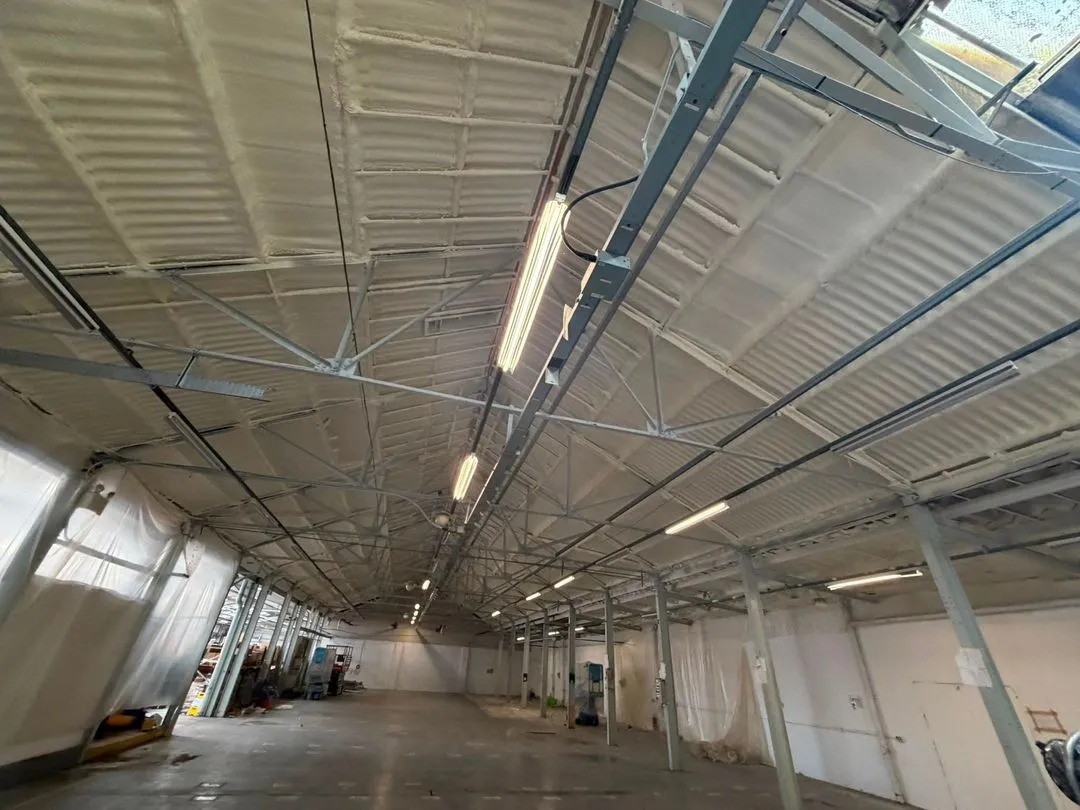
A long industrial unit with its roof sprayed between steel lattice trusses, polythene screening and fluorescent lights.
Project recordIndustrial unit
Industrial unit roof treated between the trussesA continuous warm face where the cold sheet was.

Written records, with their figures and the basis each one rests on, live on the project pages.All project records

Your next step

Your building.
Your brief.
A specialist.

You do not need to know the depth or the system. Tell us where the mould shows, when it is worst and what the building holds; if something is uncertain, say so. Someone who does this every day reads it and comes back to you.

Start a project brief About five minutes. Photographs help; nothing else is needed.

Or pick up the phone

Telephone . Before 3pm on a working day, you are contacted the same day. After 3pm, the next working day. A commitment to contact, not a quotation.

Two photographs first? The mould close up, and the roof or wall above it on a cold morning. Send photographs of the building