Project record · Shipping containers · School
The Regis School, Bognor Regis: a container that stopped raining inside, and one we refused to spray.
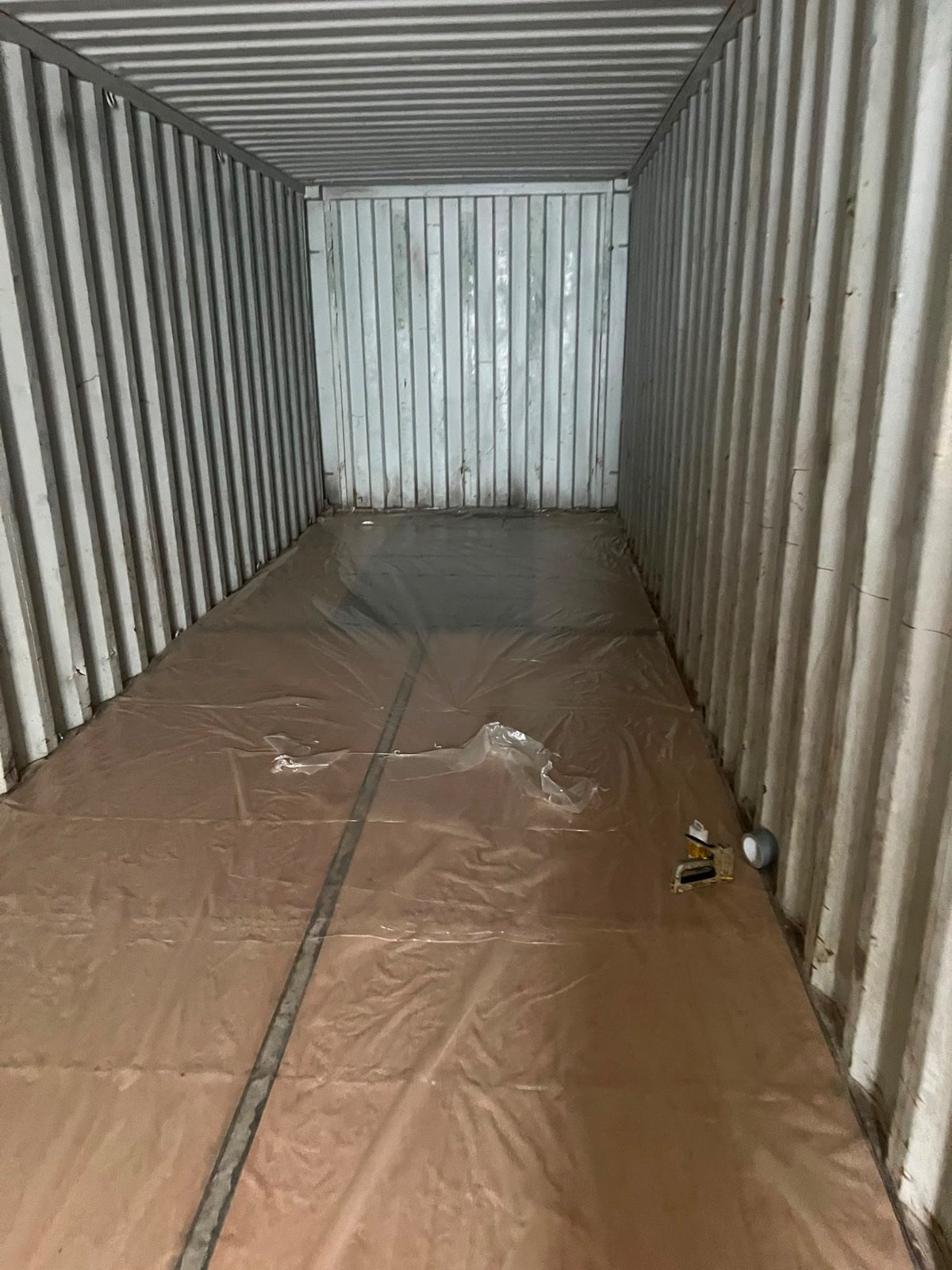
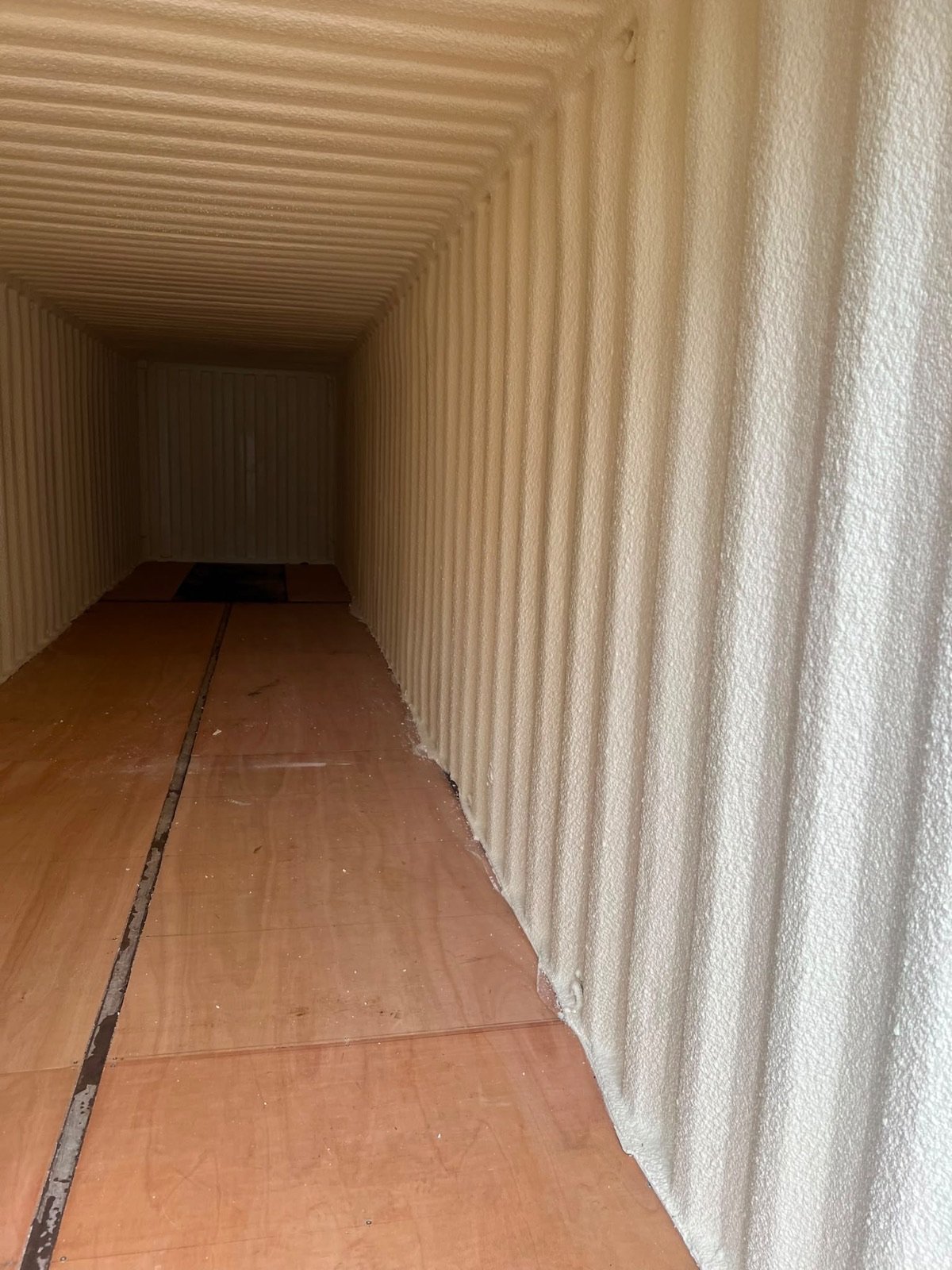
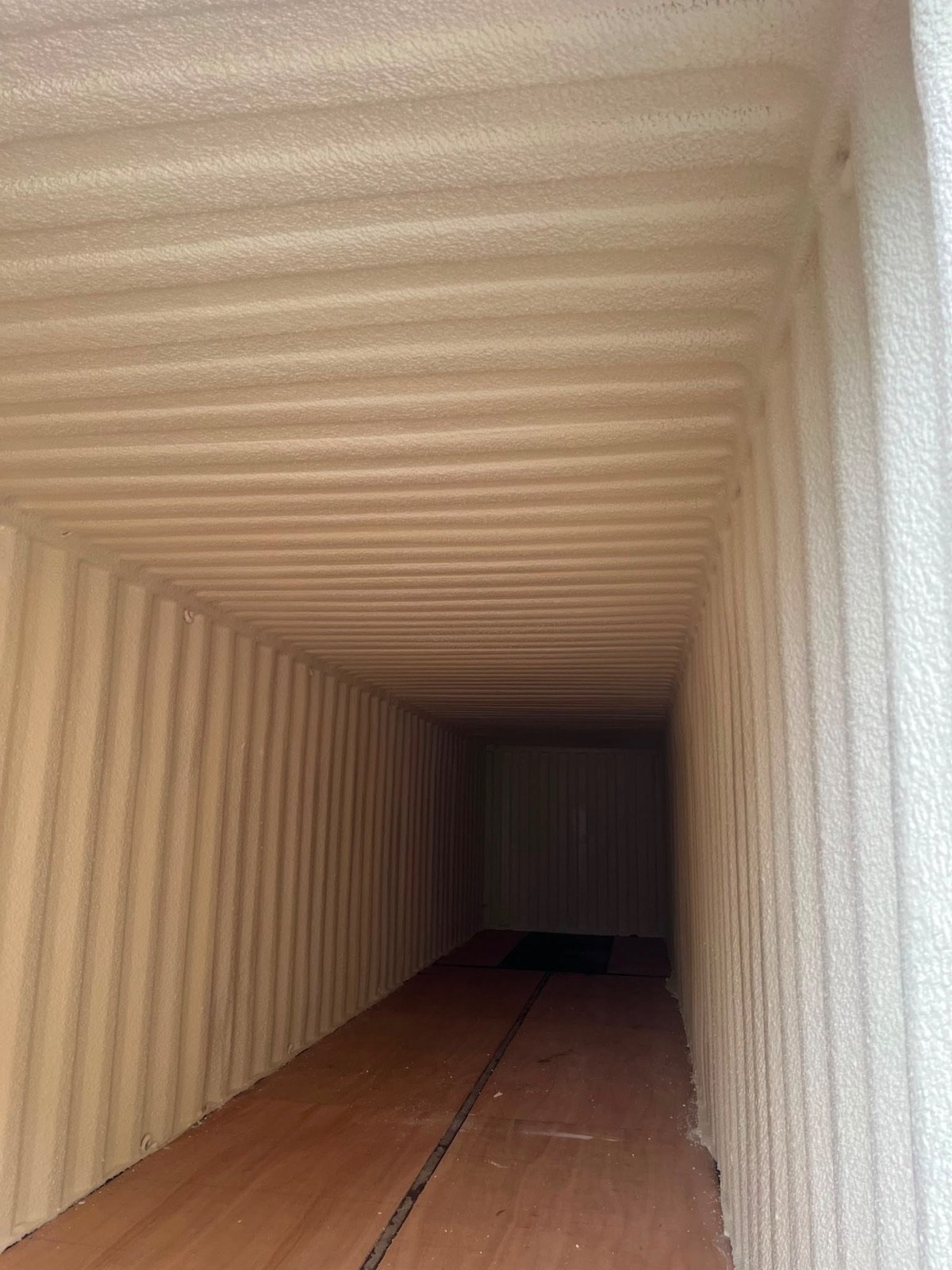
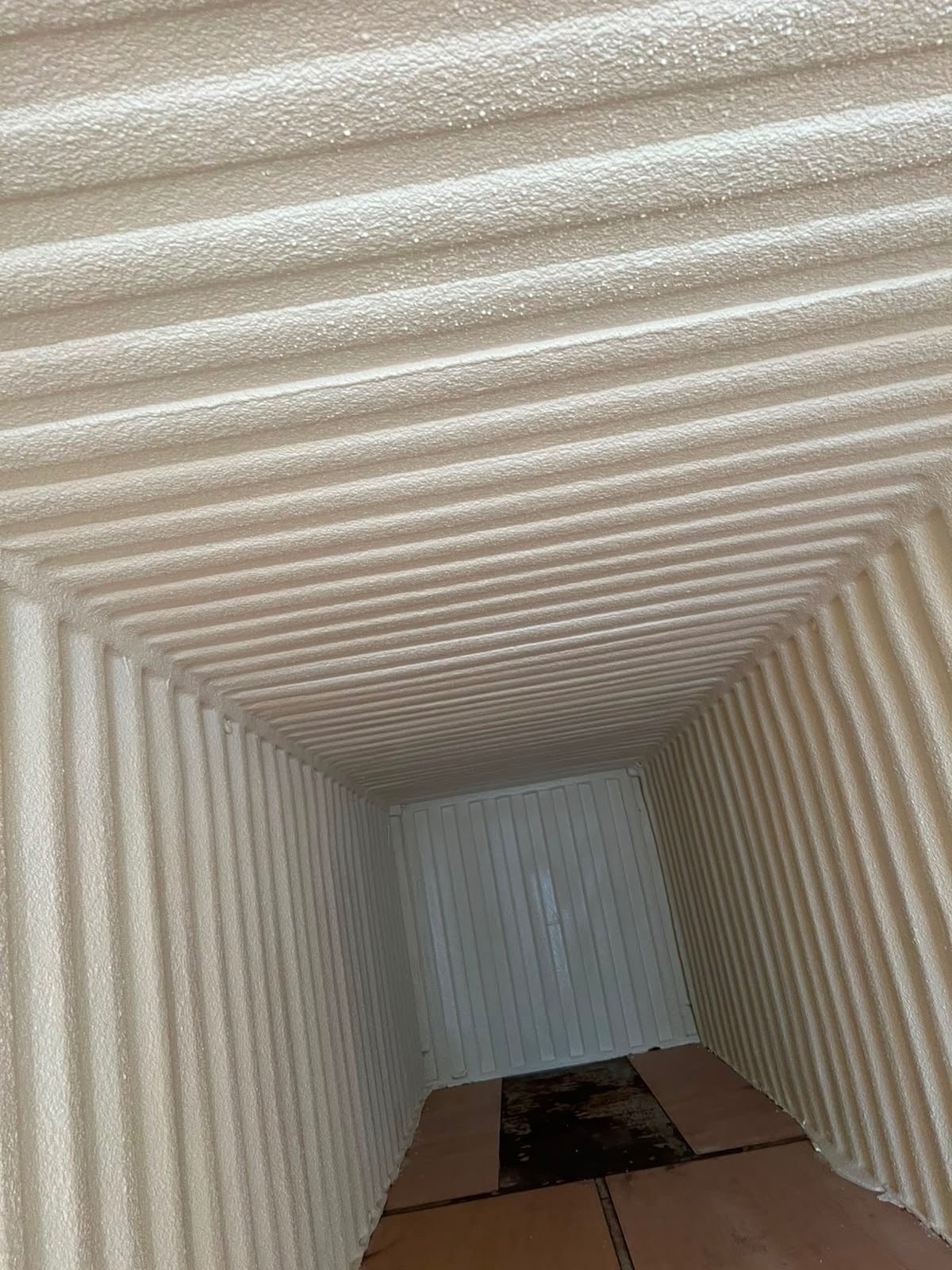
Two steel storage containers at a secondary school, rusting from the inside as condensation formed on the cold steel and dripped onto the equipment stored beneath it. On 11 June 2026 one was emptied, sheeted and fully encapsulated inside at 25 mm, walls, ends, ceiling and door leaves, in a single day. The second had an active leak, so we left it alone and reduced the invoice.
- ≈115m²
- Internal surface encapsulated
- 25mm
- Closed-cell, every internal face
- 1 day
- On site, 11 June 2026
- 1 of 2
- Containers treated; one refused
01The building
A steel box that rained on what it was meant to protect.
A shipping container is a thin steel shell with nothing between its inside and the weather. Schools use them for storage because they are cheap and secure. What they are not is dry: the steel runs cold, the air inside carries moisture, and the result is what people call container rain.
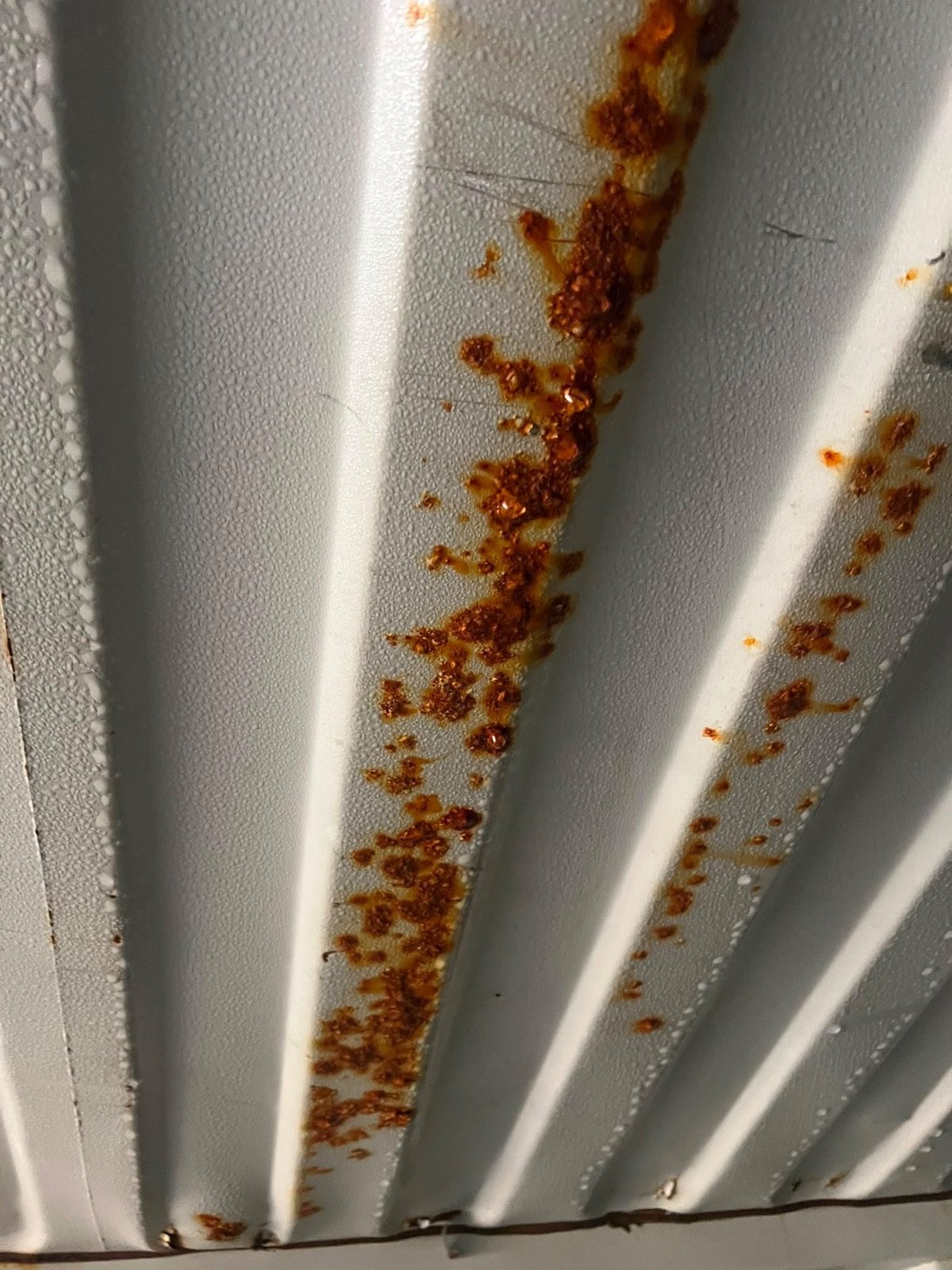
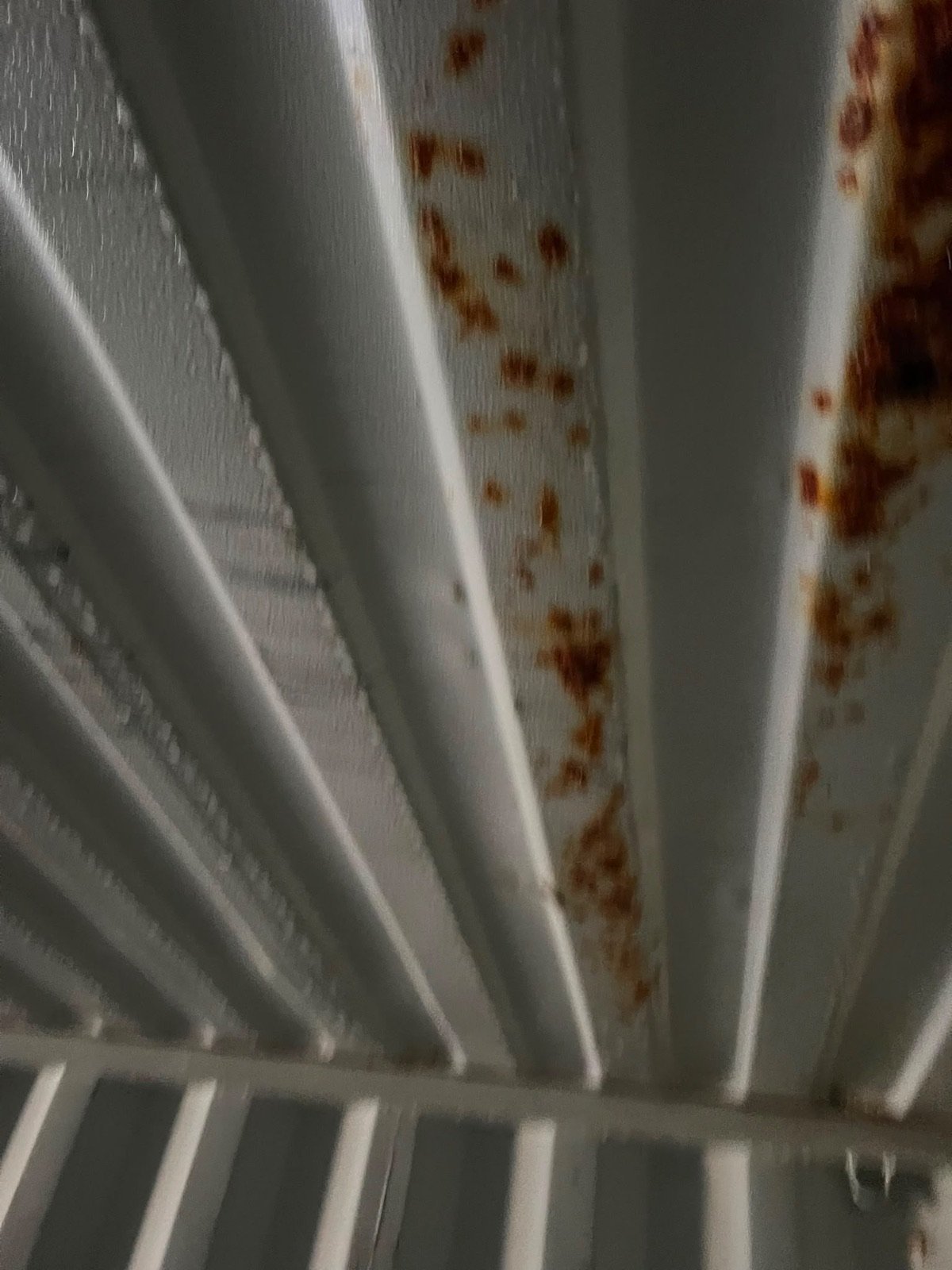
Container rain. Overnight the steel cools below the dew point of the air inside. Water forms on the ceiling and the upper walls, gathers along the corrugations and drips. The contents get wet and the steel rusts from the inside, which is what the school was finding.
Why it is a condensation job. There is no leak to fix, in a sound container. The fix is to make the inside face of the steel a warm surface, so the air inside never meets a cold one. That means a bonded insulating layer on every internal face, doors included.
Two containers booked. Both were to be treated on the same day. One was. The other, on inspection, had an active leak through the shell, and spraying over a leak is something we do not do. More on that below.
- Buildings
- Steel storage containers, school site
- Client
- The Regis School
- Location
- Bognor Regis, West Sussex
- Treated
- One container: walls, ends, ceiling and door leaves, inside
- Area
- About 115 m² of internal surface
- Application
- 25 mm closed-cell, full internal encapsulation
- Date
- 11 June 2026, one day
- Not treated
- Second container, active leak; invoice reduced
02What we specified, and why
25 mm of closed-cell on every internal face, door leaves included.
Condensation control is a 25 mm job: enough to keep the inside face of the steel above the dew point of the air in the box. The point is coverage, not depth. A single bare corner is a single place for water to form.
- The system: closed-cell, at 25 mm, inside. Sprayed to the corrugated walls, both ends, the ceiling and the inside of the door leaves, following every corrugation and closing at the floor line. How thickness follows the objective.
- Why closed-cell on steel. It bonds to the metal and sets rigid, so the inside face of the shell becomes the foam, not the steel. The water vapour resistance factor (μ) of 62 that NexSeal LE declares to BS EN 12086 is the figure the condensation-risk analysis uses for a box like this.
- Why the doors too. Door leaves are the largest cold surface a container has after the roof, and they are the one people forget. Leaving them bare moves the condensation; it does not stop it.
- What 25 mm does not do. It controls condensation. It is not a thermal upgrade that makes a container warm to work in, and we do not describe it as one. Shipping containers, the building type.
- Product
- Closed-cell spray foam
- Depth
- 25 mm
- Faces
- Walls, ends, ceiling, door leaves, inside
- Objective
- Condensation control
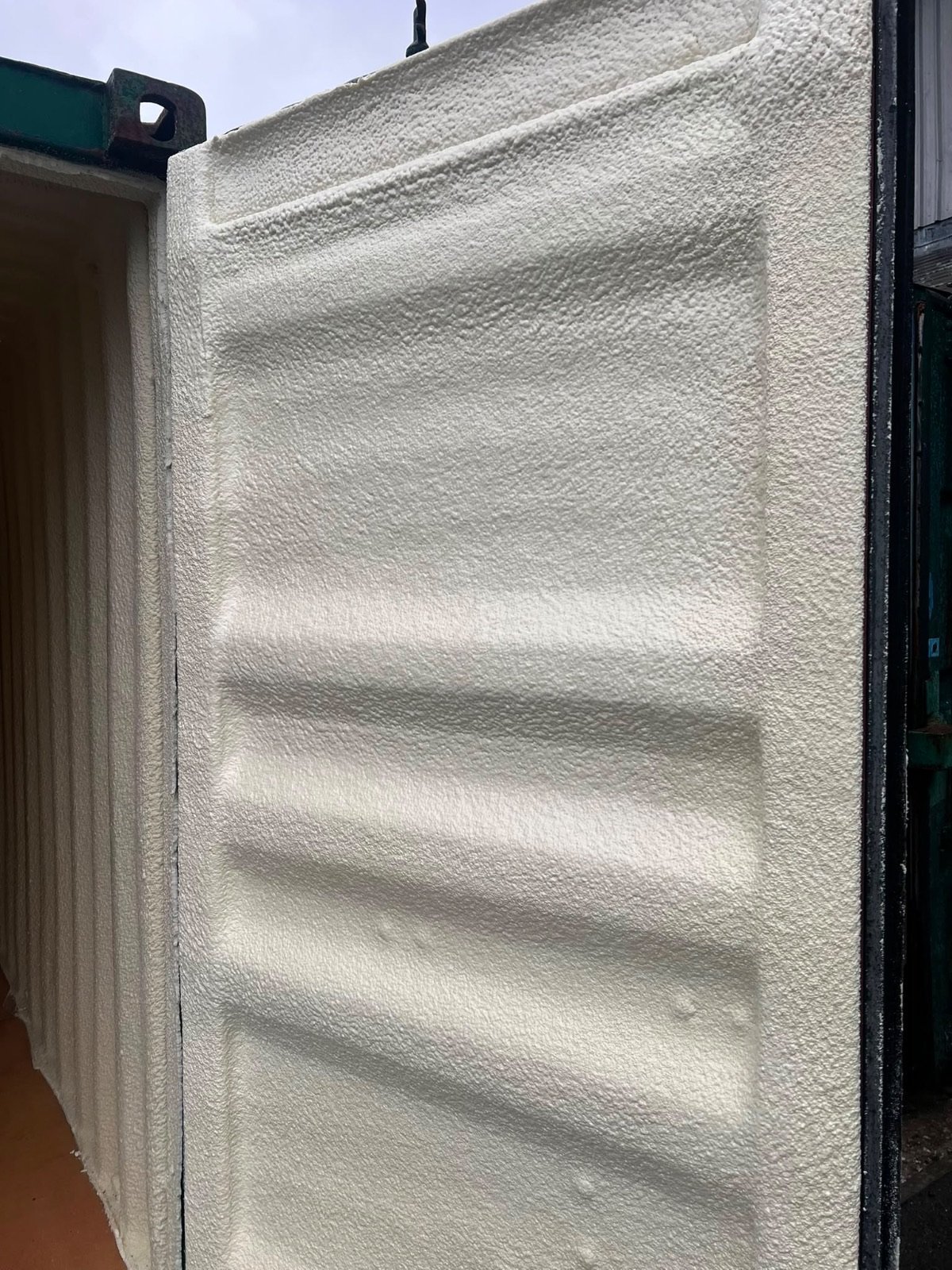
The door leaves. The faces most people leave bare, encapsulated with the rest, the locking gear kept clear. Project record.