Project record · Factory · Encapsulation
Nuneaton Signs: 2924 m² of roof upgraded and sealed at weekends, production untouched.
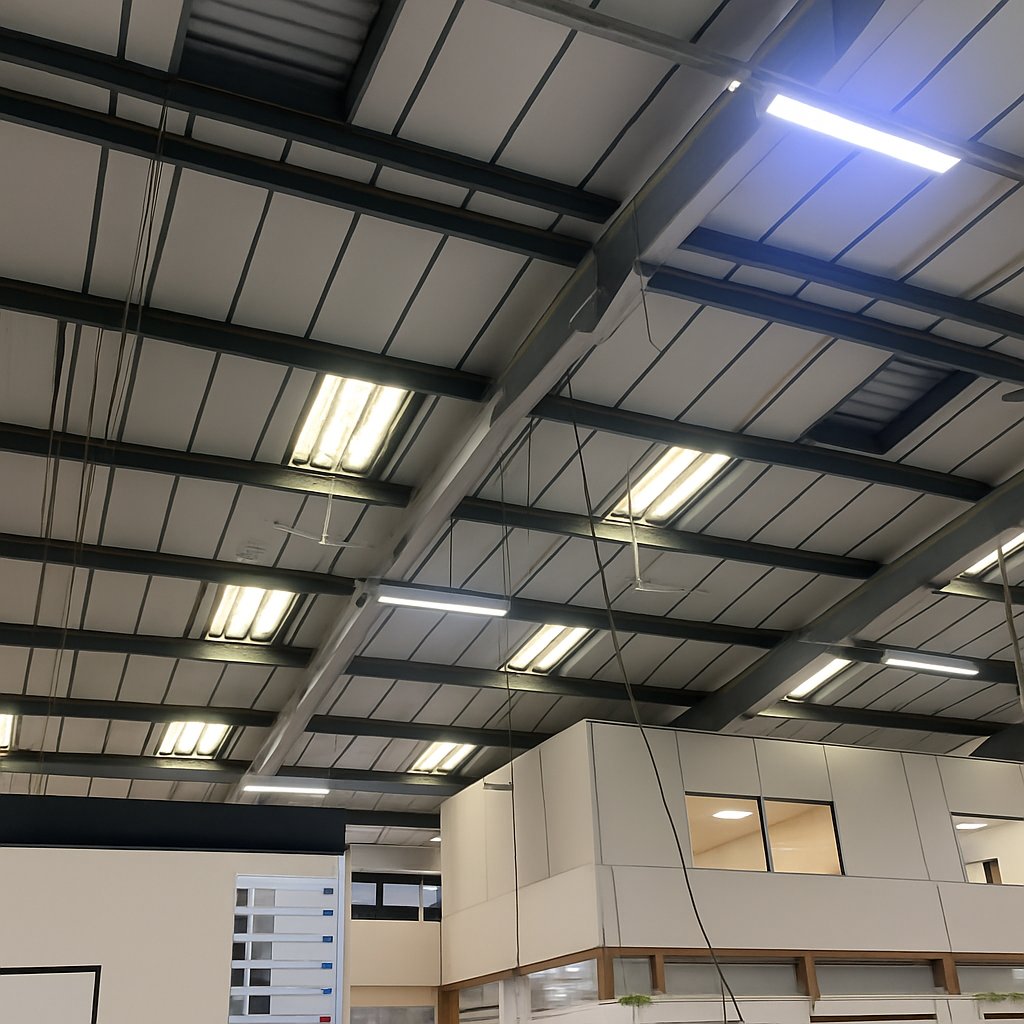
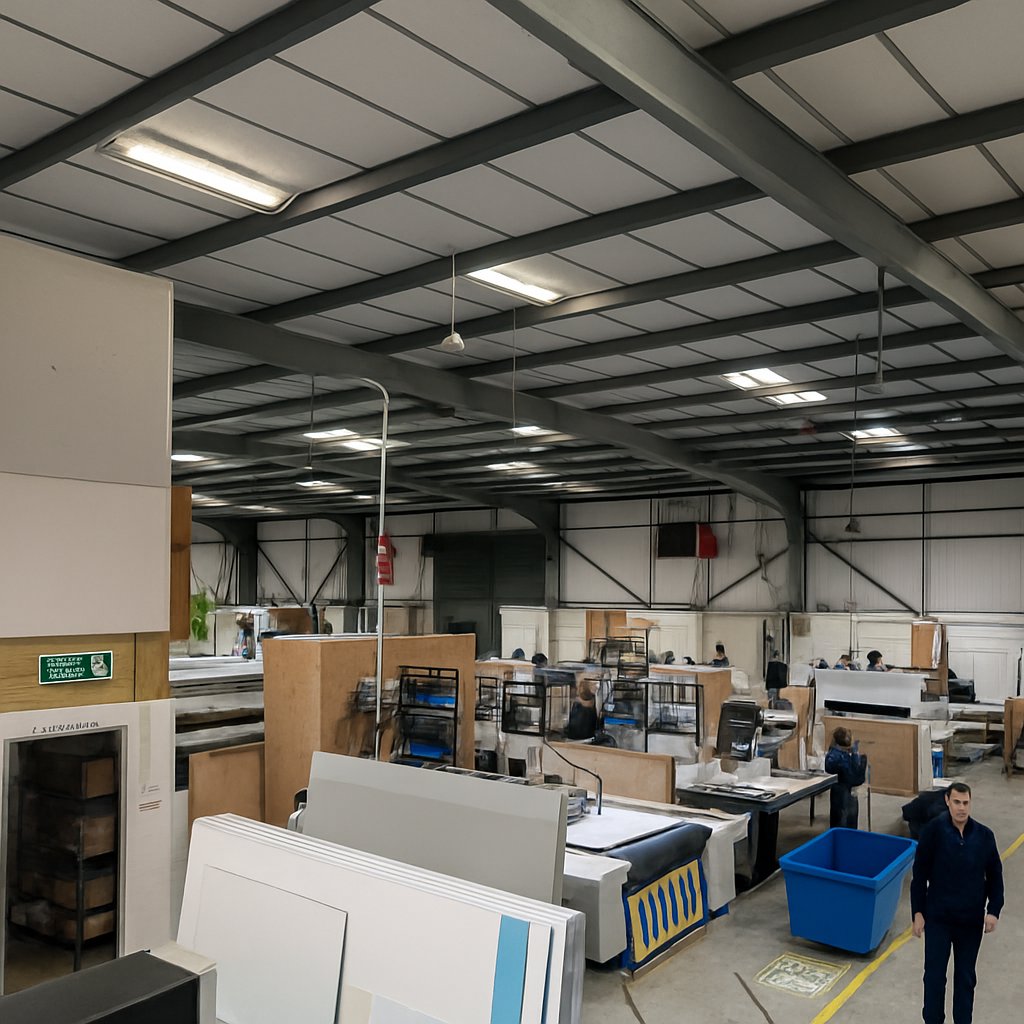
A sign-maker's factory and warehouse in Warwickshire under insulated roof panels, with original sheets that raised an asbestos question. In May 2025 we encapsulated the whole roof assembly from below with 25 mm of NexSeal LE closed-cell: a thermal upgrade and a seal against fibre release in one layer. Weekend working, plant protected, weekday production untouched.
- 2924m²
- Roof encapsulated
- 25mm
- Closed-cell over the existing panels
- May 2025
- Weekend working
- 0
- Weekdays lost
01The building
An insulated roof that still needed two things.
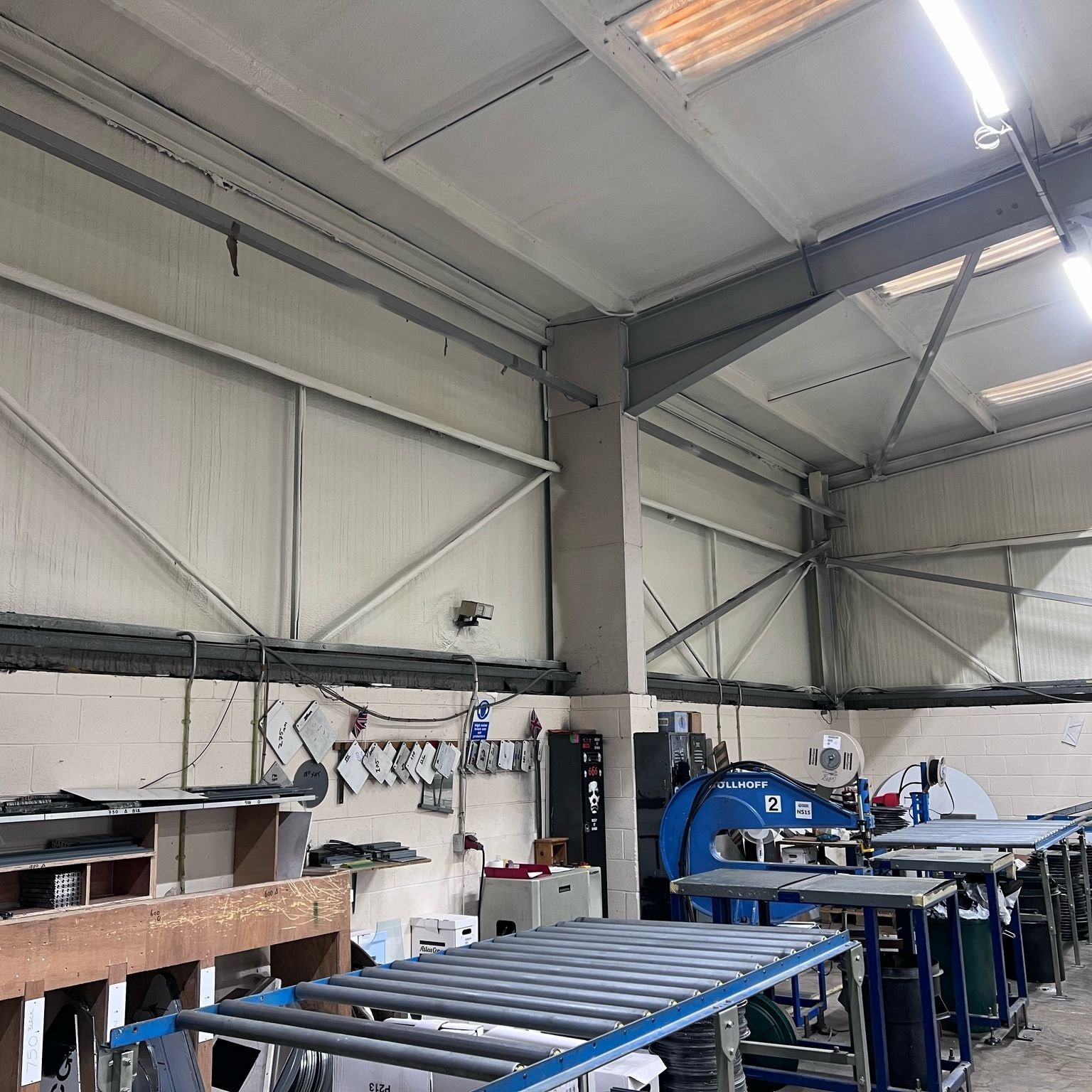
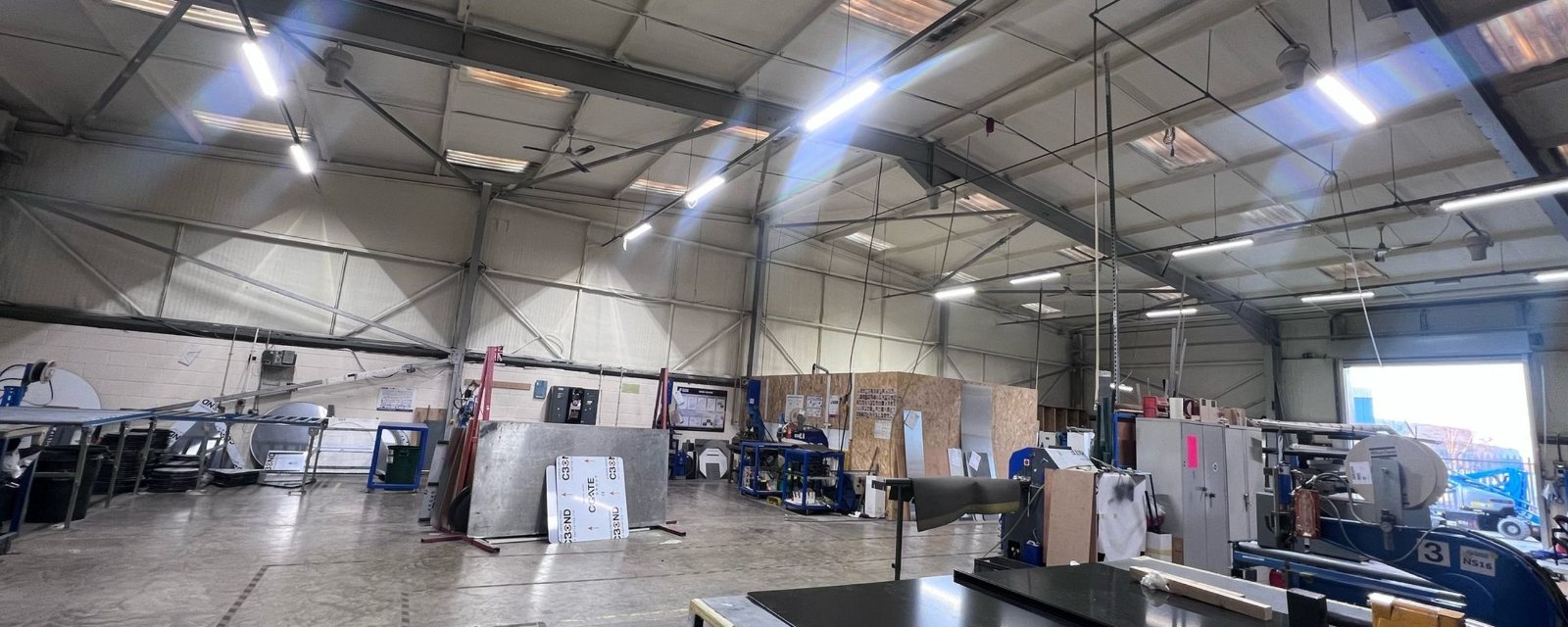
This roof already had insulation in it: panels over 150 mm of mineral wool. What it did not have was a sealed, continuous inner face. The thermal performance had room to improve, and the original sheets in the assembly were suspected of containing asbestos, so the roof needed closing as well as upgrading.
The thermal case. Panel-and-wool roofs lose performance at every joint, lap and fixing, and over years those paths open up. The factory ran hot in summer and leaked heat in winter through an assembly that looked insulated and behaved as if it were not.
The asbestos case. Where original sheets may contain asbestos, the safe move is to leave them in place and seal them. A bonded closed-cell layer across the whole underside encloses the assembly and seals against any potential fibre release, without anyone cutting or lifting a sheet.
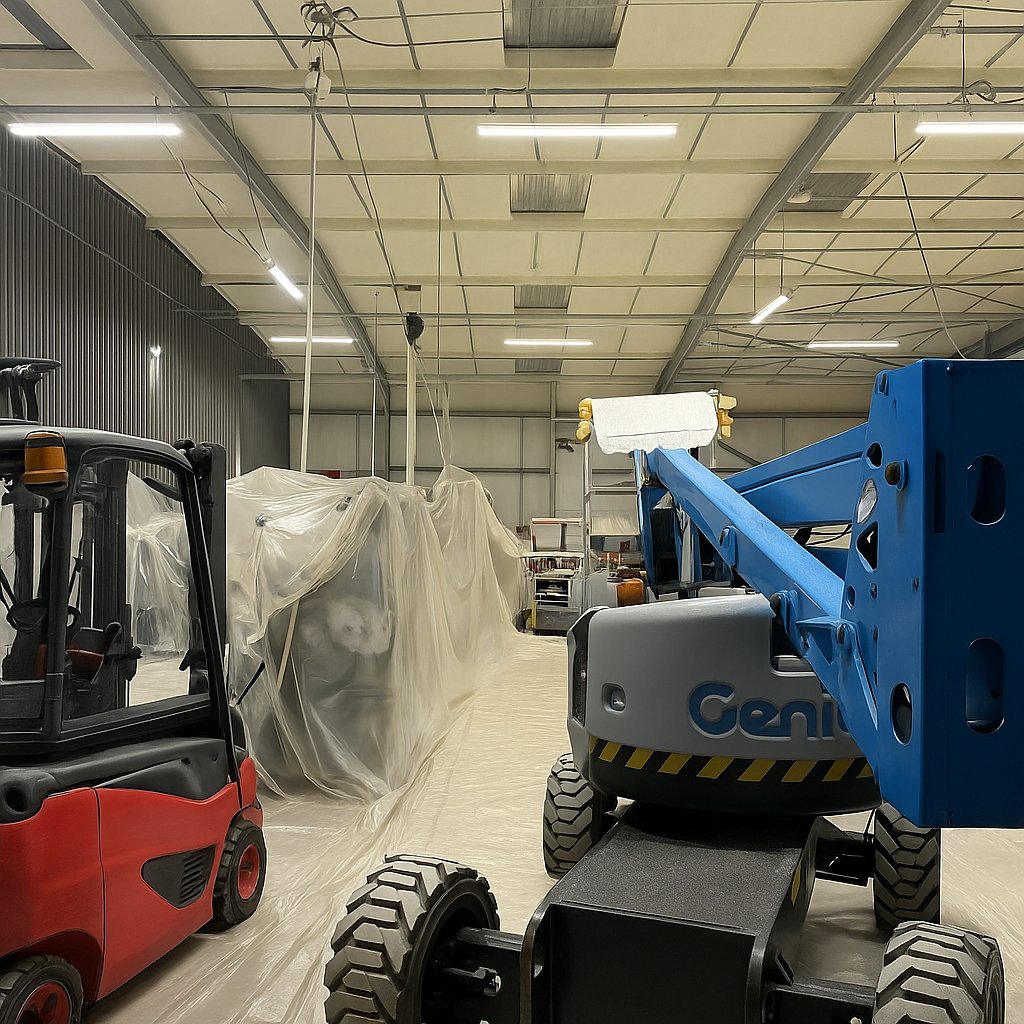
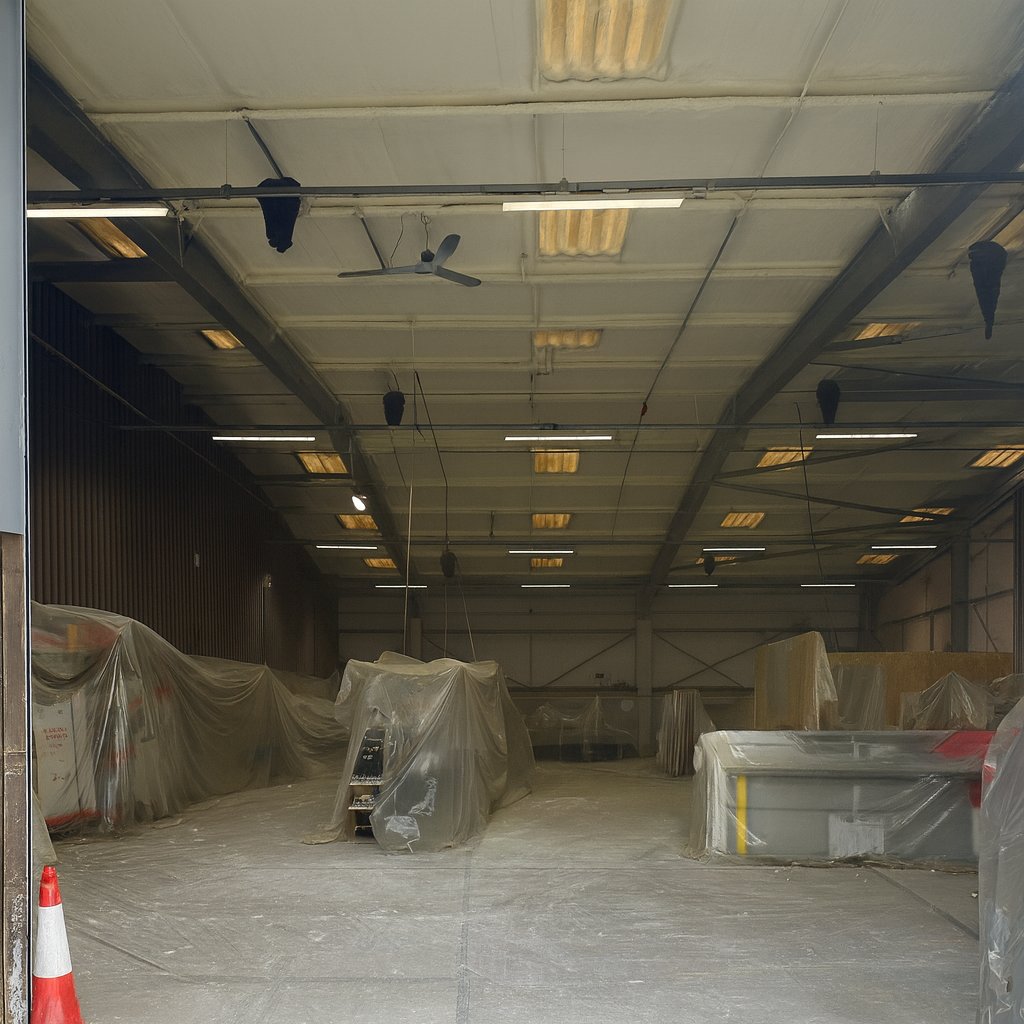
The operational case. A sign-maker runs a production floor on weekdays. The roof had to be done without stopping it, which meant weekends, and plant protected before every shift of work.
The funding. The upgrade was part-funded as a sustainability measure, which set the brief: better thermal performance, recorded.
- Building
- Factory and warehouse, sign manufacturer
- Client
- Nuneaton Signs
- Location
- Nuneaton, Warwickshire
- Roof
- Insulated panels over 150 mm mineral woolOriginal sheets suspected to contain asbestos; kept in place
- Area
- 2924 m²
- Application
- 25 mm Enverge NexSeal LE closed-cell, encapsulation
- Date
- May 2025
- Working pattern
- Weekends; weekday production untouched
- Funding
- Part-funded as a sustainability upgrade
02What we specified, and why
25 mm of closed-cell over the whole assembly: one sealed face, one upgrade.
The roof already carried its thermal depth. What it needed was a continuous bonded face that closed the assembly, added to its performance and sealed the original sheets in. That is a 25 mm encapsulation layer, applied everywhere.
- The system: Enverge NexSeal LE closed-cell, at 25 mm. Sprayed to the underside of the existing roof assembly across the full 2924 m², bonding to the panels, closing every joint and lap and wrapping the fixings. Encapsulation, the application.
- Why 25 mm here. The depth was not asked to carry the roof's thermal performance alone; the mineral wool does that. It was asked to seal the face, stop the air movement through the joints, and add a continuous layer on top of what was there. 25 mm does that. How thickness follows the objective.
- Why closed-cell. It bonds and sets rigid, so the seal is permanent and the encapsulation is complete. NexSeal LE declares a water vapour resistance factor (μ) of 62 to BS EN 12086, which we carry into the condensation-risk analysis for the build-up.
- Why from below, at weekends. Nothing was to be touched from above, and nothing was to stop on weekdays. The floor was handed over on Friday night and back on Monday morning, with the plant sheeted in between.
- Product
- Enverge NexSeal LE, closed-cell
- Depth
- 25 mm, encapsulation layer
- Substrate
- Existing insulated roof panels, underside
- Monitoring
- Ventilation, temperature and humidity, foam yield
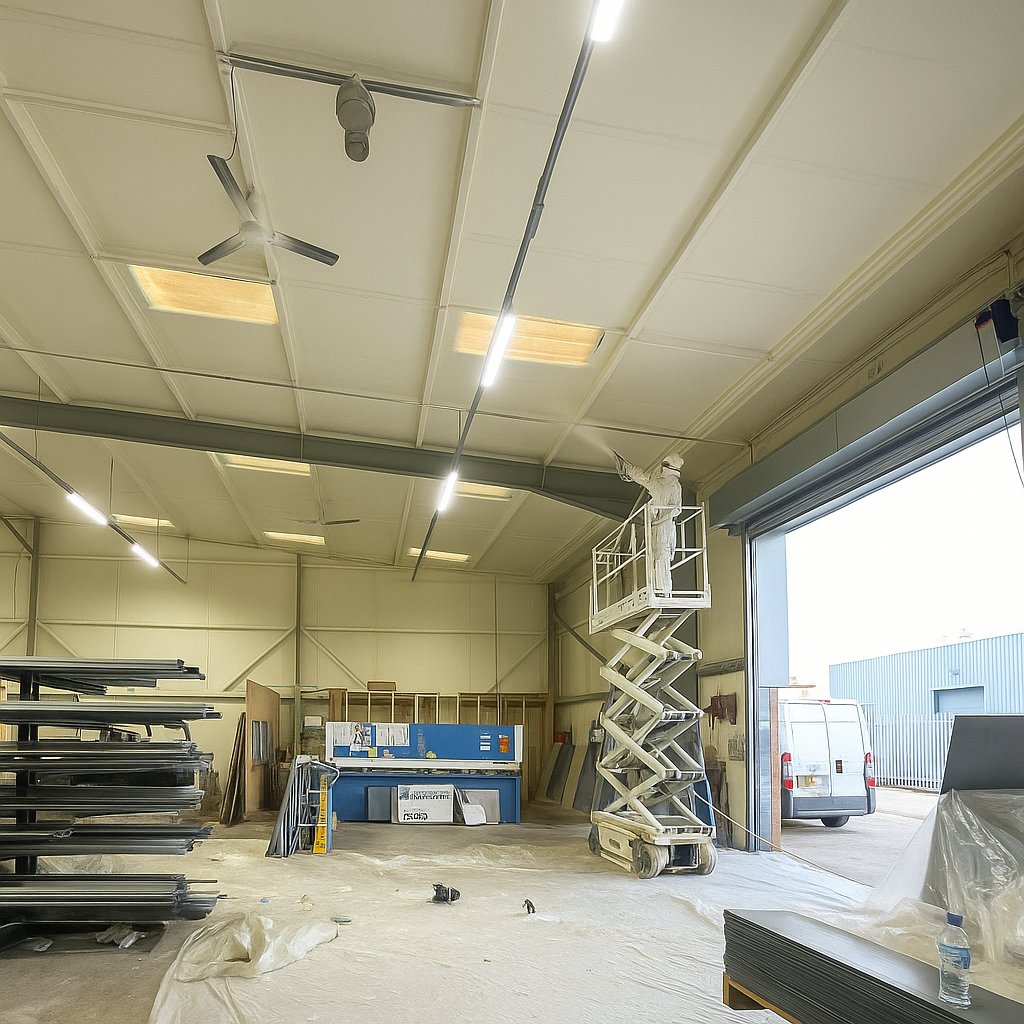
The encapsulation layer going on. 25 mm over the existing panels, from the lift, bay by bay across the weekend. Project record.