
The short answer
A commercial roof maintenance checklist starts inside: check the underside, rooflights and floor for drips, staining and rust in spring and autumn and after significant storms. Treat the roof as fragile until a competent person confirms otherwise, so nobody steps onto it without planned safe access. Recurring drips need a leak-or-condensation check.
HSE says roofs should be treated as fragile until a competent person confirms otherwise. Read HSE's fragile-surface guidance.
TJW Grab Hire's recorded metal roof was in good condition but ran with condensation. Read TJW Grab Hire.
The Midlands warehouse record identifies air leakage, condensation and drumming under rain as separate roof problems. Read the warehouse project.
01Start inside
First observations can start inside
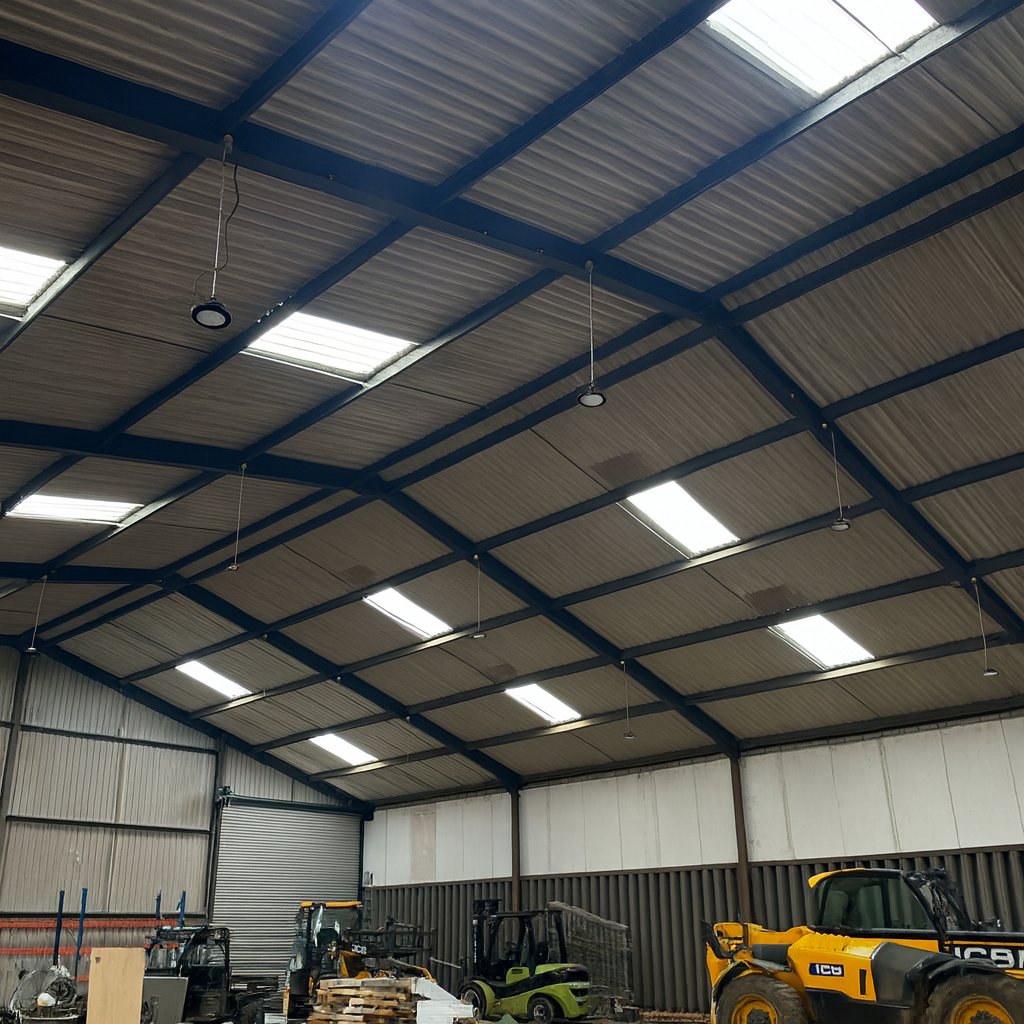
Start inside, where you can see changes without stepping onto the roof. From safe accessible positions, look for water, stains, corrosion, new daylight through the roof, or a change in draughts and rain noise. Record where each one appears.
That gives the inspecting contractor a starting record. They still need to check the weathering details, hidden areas and material condition with appropriate access. Your observations help direct the inspection rather than replace it.
Add the date and conditions to each photograph. A wet-floor picture becomes much more useful when it shows the roof area above, the recent weather and what was happening inside. Give the contractor the details needed to trace the cause.
 Project recordTJW Grab Hire, Bournemouth
02A starting schedule
A starting schedule to agree for the building
With a starting record in place, agree the routine checks. Spring and autumn, plus reviews after significant storms or a change in use, are a practical starting point. Adjust the frequency to your roof’s condition and system maintenance requirements.
| Occasion | Safe initial observations | What to record | Next step |
|---|---|---|---|
| Spring review | Accessible underside, visible staining, rust and changes noticed after winter | Location, date, weather and photographs | Arrange an inspection for new changes or wetting that remains unresolved |
| Autumn review | Existing defects, accessible rooflight surrounds and drainage concerns seen from ground positions | Open actions and changes since the last record | Confirm repairs and the inspection programme before winter |
| After a significant storm | New water, debris or obvious damage from safe positions | Timing and affected areas; keep unknown causes explicit | Appropriate roofing contractor for suspected weathering damage |
| Cold-weather wetting | Distribution of droplets and when they form | Rain conditions, internal use and the underside pattern | Leak-or-condensation assessment |
| Before a change of use | Known layers, moisture-generating activities and proposed works | Drawings and the planned operation | Review the roof and moisture specification for the changed conditions |
| Following completed work | Check the completed work against any symptom that returns | Installation/repair record and follow-up observations | Refer the symptom to the responsible contractor with its location and timing |
03After a storm
After a storm
After a storm, in order
- 01RecordNew wetting and visible changes, from safe positions.
- 02Keep clearKeep people clear of the area while the inspection is arranged.
- 03Tell the rooferWhen the water appeared and where; the water path still needs investigation.
- 04Keep the recordsThey show whether the symptom is new or recurring.
After a storm, record new water and visible changes from safe positions. Follow the site’s arrangements to keep people and operations clear of the affected area while you organise the appropriate inspection.
Tell the roofer when the water appeared and mark its location. If it arrived during rain, that helps them trace the path and find the weathering fault. Ask for the repair scope once the cause is established.
Keep the earlier records available. They can show whether the symptom is new or recurring and what work was previously completed. A repeated photograph with context can be more useful than an isolated statement that the roof still leaks.
04Rain entry or condensation
Drips: diagnose rain entry and condensation separately
Before calling every drip a leak, look at the pattern. Rain can enter through a fault, condensation can form underneath, and a roof can have both problems. Record the timing and spread so the assessment addresses each cause.
Existing leaks go to a roofer first. HOLVEM is not a roofing contractor; spray foam is not waterproofing.
At TJW Grab Hire, Bournemouth, the recorded roof of about 505 m² box-profile steel roof was in good condition. The uninsulated roof ran with condensation onto vehicles and equipment; 50 mm of closed-cell was applied to its underside. The customer reported that the condensation was eliminated.
Correctly diagnosed and specified, closed-cell spray foam stops roof condensation. Zero call-backs for condensation. The depth is typically 25 mm or 50 mm closed-cell, depending on the roof make-up, confirmed before we spray, with risk analysis where needed.
Existing leaks go to a roofer first. HOLVEM is not a roofing contractor; spray foam is not waterproofing. Keep roofing repair and subsequent insulation separate in the maintenance plan. Read Roof leak or condensation.
05Fragile roofs and access
Fragile roofs and access
Before anyone goes above the roof, follow HSE’s approach: treat it as fragile until a competent person confirms otherwise. Fibre-cement sheets and rooflights need particular attention. Arrange the inspection and access around those risks.
Keep access planning separate from the checklist. Do not step onto the roof to inspect it or take photographs. Inspection, cleaning and repair need competent people, planned access and the controls for the actual work.
A treated fragile roof remains fragile. Keep the material information and access restrictions with your maintenance records so the next contractor plans the work from those facts, rather than the roof’s appearance.
Read HSE's guidance for the contractor and client responsibilities.
06Match the check to the roof
Match the check to the roof type
Metal roofs
For a metal roof, note corrosion, wetting and changes at laps or fixings you can see safely. Mark their locations. Existing rust needs assessment and, where required, repair; stopping condensation does not undo damage already present.
If water returns, ask for the diagnosis and proposed work in writing. A weathering repair and an underside condensation treatment do different jobs, so their objectives should be clear. Read Metal roof corrosion for that distinction.
Fibre-cement and asbestos-cement roofs
For asbestos or suspected asbestos, start with the building’s material records and competent advice. The dutyholder’s management arrangements guide how the inspection and work are planned.
Report changes from a safe position and arrange the appropriate contractor’s assessment. HOLVEM does not test for asbestos or replace roof sheets, and never removes asbestos sheets. If the roof is safe to keep, we encapsulate it; if not, removal is a job for asbestos removal professionals, licensed where HSE requires it. Read Fibre-cement and asbestos-cement roofs.
Flat roofs
For other roof systems, agree the inspection and maintenance requirements for that construction. Ground-level and interior observations can flag wetting and changes, but the inspector still needs to examine weather-facing details you cannot safely see.
If the same faults keep returning, use the maintenance history to review the bigger job. Have the condition and remaining work assessed before choosing a treatment. The project team needs to know what has already been tried.
07When it becomes refurbishment
When maintenance becomes refurbishment
That is when maintenance becomes a refurbishment decision. Recurring wetting, several unresolved faults or a change to the premises call for a wider assessment. Compare the finished results each proposal delivers, rather than keep treating separate symptoms.
The findings can point to local roofing repairs, an external system, underside insulation or another route. Ask what each proposal fixes and what remains to be done. HOLVEM is a building-performance specialist, not a roofing contractor.
Global House, Surbiton, records external work from above on about 1575 m² of pitched asbestos-cement roofs and an office roof: biocidal wash, 25 mm closed-cell roofing foam and an airless silicone finish as one continuous system.
Read Ageing commercial roofs: refurbish or replace to work through the wider decision. Then check the proposed programme and scope against the assessment of your own building.
08Keep a useful record
Keep a useful maintenance record
To make the record useful, give each observation a date, location and short description. Add weather, building use and photographs taken safely. Say whether the cause has been established or is still being investigated.
Follow that with the contractor’s findings, completed work, exclusions and follow-up actions. Keep separate problems open until each has been resolved. Finishing one leaking detail does not close a moisture problem elsewhere.
Maintenance record · suggested occasion
- Spring reviewChanges noticed after winter
- Autumn reviewOpen actions before winter
- After a significant stormTiming and affected areas
- Before a change of useDrawings and the planned operation
Each observation
- Location
- the relevant roof area
- Date
- and time
- Weather
- recent, and at the time
- Building use
- operating conditions
- Photographs
- from safe positions
- Cause
- established, or still being investigated
- Contractor's findings
- work completed, exclusions and follow-up actions
At the Midlands distribution warehouse, the corrugated metal roof leaked air, collected condensation and drummed under rain. Its specified 75 mm closed-cell treatment addressed those recorded problems. Keep the same link between symptom, objective and completed work in your own record.
If insulation or refurbishment is the next step, send us that history with your enquiry. It helps us understand the building before assessing the treatment. Start a project brief or Send photographs.
09Where to start
Three questions point to the first step.
Answer the three questions to identify the first step to discuss. The appropriate inspection or assessment then confirms what the roof needs.
Commercial roof maintenance
Your roof, in three answers.
If water appears locally during rain, record it and ask the roofer to trace the entry path. Repair existing leaks first. HOLVEM is not a roofing contractor; spray foam is not waterproofing.
Commercial roof repairRecord when and where the water appears, the rain conditions and the work happening inside. Those details help distinguish rain entry from condensation, or identify both. The assessment confirms the diagnosis.
Roof leak or condensation?Record visible corrosion and changes at accessible laps or fixings, with their location. Existing rust needs assessment; stopping condensation will not undo earlier corrosion or repair the structure.
Metal roof corrosionRecurring wetting, several unresolved defects or a planned change to the premises may justify a wider assessment that compares complete proposals, rather than treating each symptom in isolation. Send the maintenance record with the enquiry.
Ageing commercial roofs: refurbish or replaceGive each observation a date and location, with weather and photographs taken safely. Say whether anyone has established the cause yet. You do not need to step onto the roof to start the record.
Send photographs10HOLVEM
Why choose HOLVEM for the next step after the roof check?
Your maintenance record should lead to the right work. If the roof is sound and the water is condensation, we can stop the drips from beneath. Existing leaks and damaged sheets go to a roofer first.
At TJW Grab Hire, about 505 m² took 50 mm closed-cell and the customer reported the condensation eliminated. We have completed over 500 installs, so you can compare real jobs with the findings in your record.
We specify certified spray foam systems, which we apply as an accredited installer for the manufacturer, with written roof calculations and a QA evidence pack from our own team at handover. We work nationwide across England and Wales from four depots.
Backed by our 25 year HOLVEM workmanship warranty, plus the manufacturer's 25 year product warranty issued directly to you.
11Questions, answered
Questions about commercial roof maintenance
How often should a commercial roof be inspected?
Start with spring and autumn checks, plus a review after significant storms. Adjust the routine to the roof’s condition, use and system maintenance requirements. Arrange a competent inspection for the areas you cannot see safely from inside.
What should be checked after a storm?
From safe positions, record new water, visible damage or debris and the affected area. Follow the site’s arrangements to keep people clear and organise the roofing inspection. Do not walk onto a fragile roof for photographs.
How can I tell condensation from a leak?
Note where and when the water appears, with the rain and internal conditions. That helps the assessment establish the cause. Repair existing leaks first; specify condensation treatment separately for the roof construction.
Who can go onto a fragile roof?
Access and work need competent planning and the controls required by HSE's guidance. Treat a roof as fragile until a competent person confirms otherwise. This checklist is for safe initial observations, not a roof-access method.
When should a roof be refurbished rather than maintained?
Arrange a wider condition assessment when faults recur, several areas are unresolved or the intended building use changes. Compare complete proposals against the problem and future use. A refurbishment system should not be chosen without the necessary repair, material and access information.
12In five lines
Commercial roof maintenance, in five lines.
- Start inside, from safe positions: record drips, staining, rust and changes with their location, date, weather and photographs.
- Spring and autumn reviews, with checks after significant storms or a change in use, are a starting routine to adjust for the roof.
- Treat the roof as fragile until a competent person confirms otherwise; do not step onto it to complete this checklist.
- Diagnose rain entry and condensation separately; existing leaks go to a roofer first, and spray foam is not waterproofing.
- Recurring wetting, several unresolved defects or a change of use justify a wider assessment; send the record with the enquiry.

