Project record · Metal roof underside
TJW Grab Hire, Bournemouth: a 505 m² metal roof that stopped dripping on the lorries.
A box-profile steel roof in good condition over a grab-hire business's warehouse. Uninsulated, it ran with condensation, swung with the weather and dripped onto the vehicles and equipment beneath it. We sprayed 50 mm of NexSeal LE closed-cell to the underside, left the polycarbonate rooflights clear, and handed the building back after two working days.
- ≈505m²
- Roof treated
- 50mm
- Closed-cell, from below
- 2 days
- On site
- Clear
- Rooflights left uncoated
01The building
A good roof doing one thing badly.
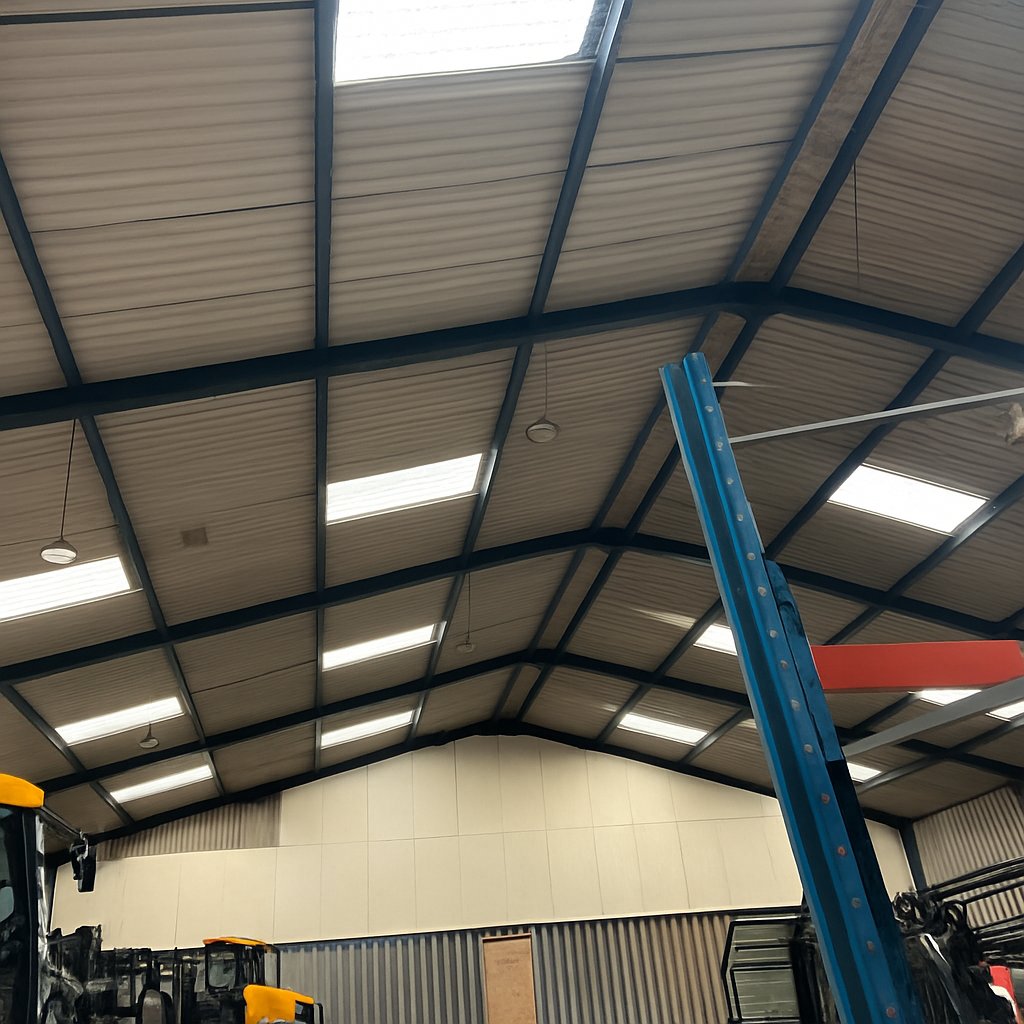
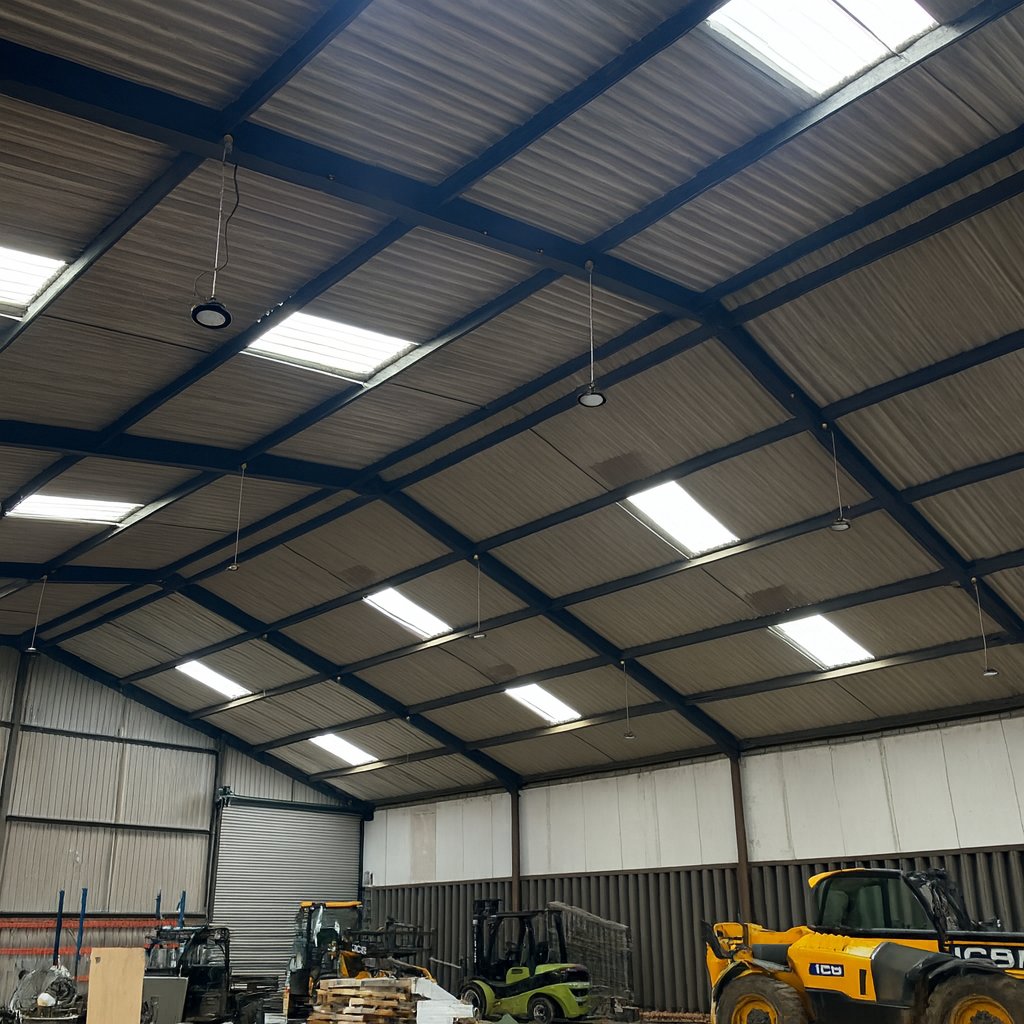
The roof was not the problem. The sheet was sound, the fixings were tight, and nothing was leaking. What it did badly was keep the inside of the building apart from the weather: bare steel above lorries, plant and a working yard, running wet every cold morning.
Condensation, not a leak. Vehicles come in wet and warm. Overnight the air inside cools, meets a sheet that is colder still, and the moisture lands on it. In the morning it drips: onto cab roofs, onto equipment, onto the floor. It looks like a leak and is not one.
Temperature swings. With nothing between the inside and a metal skin, the building was as warm as the weather and no warmer. Heat put in overnight was gone by morning.
The brief. Stop the drips, hold some warmth, keep the daylight from the rooflights, and do it in the shortest window a working yard could give up.
- Building
- Warehouse and vehicle store, grab-hire business
- Client
- TJW Grab Hire
- Location
- Bournemouth, Dorset
- Roof
- Metal box-profile sheet, in good conditionKept as the weather line
- Area
- About 505 m²
- Application
- 50 mm Enverge NexSeal LE closed-cell
- Rooflights
- Polycarbonate, left uncoated
- On site
- Two working days
02What we specified, and why
50 mm closed-cell to the sheet: condensation stopped, heat held, daylight kept.
Condensation control alone is a 25 mm job. This building also wanted to hold warmth overnight, so the layer went to 50 mm, the band that does both. The rooflights were the customer's call, and the call was daylight.
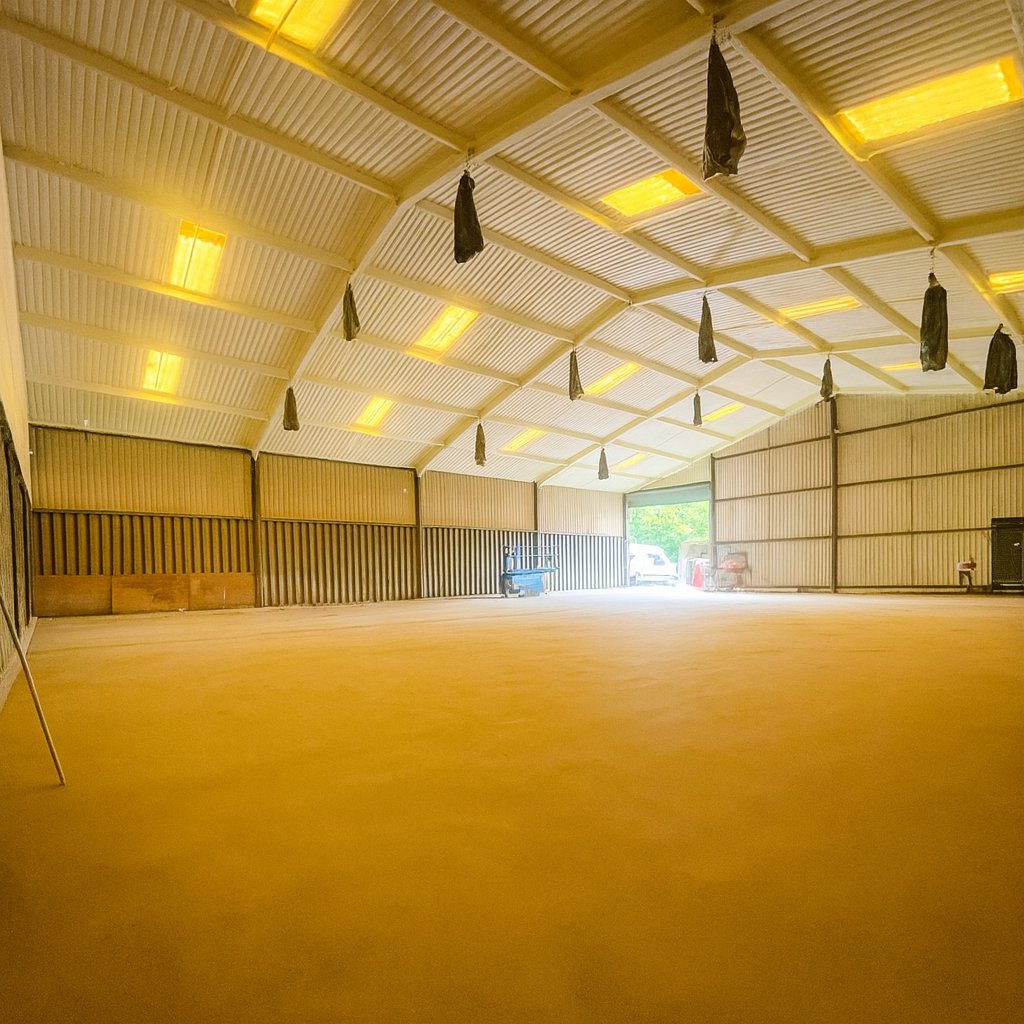
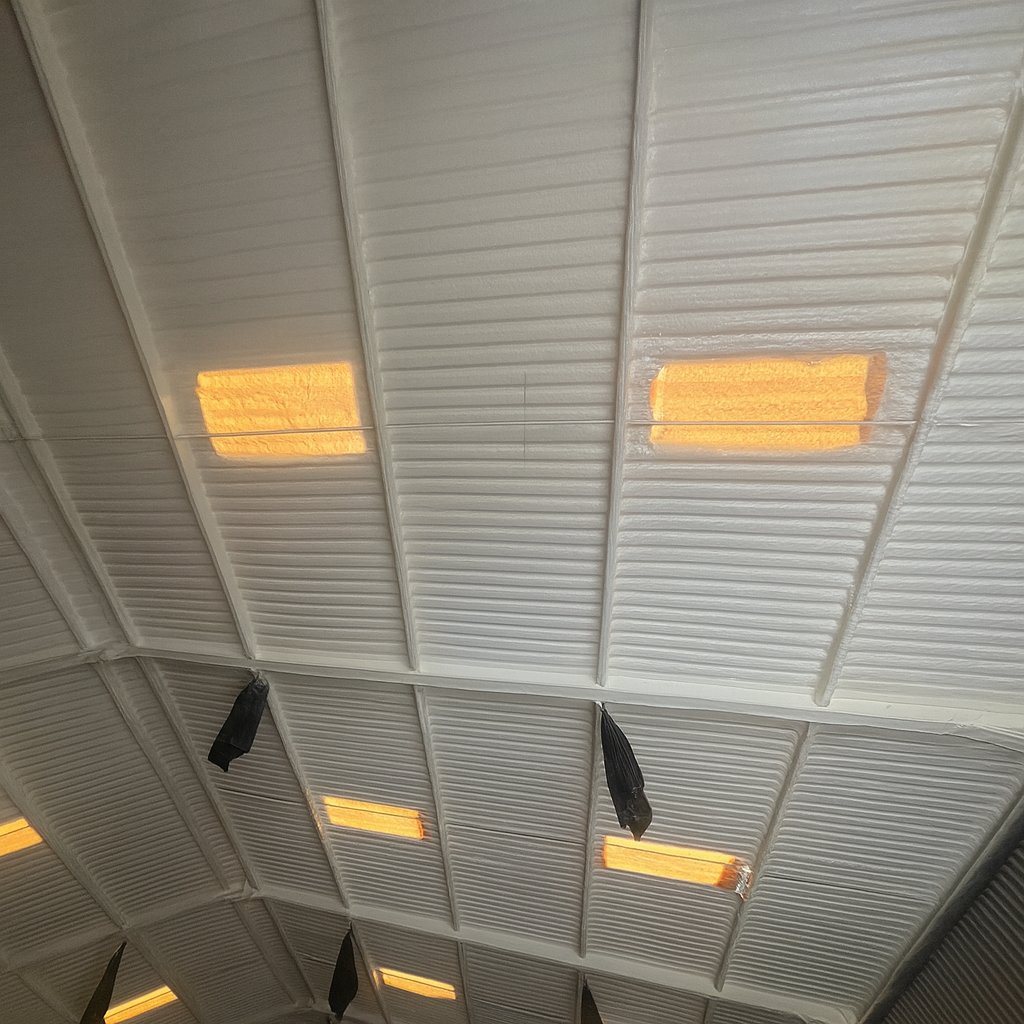
- The system: Enverge NexSeal LE closed-cell, at 50 mm. Sprayed directly to the underside of the box-profile sheet, following the profile into every trough and over every purlin. At 50 mm the layer controls condensation and holds useful heat overnight. How thickness follows the objective.
- Why closed-cell on metal. It bonds to the steel and sets rigid, so the sheet is no longer the surface the inside air meets. NexSeal LE declares a water vapour resistance factor (μ) of 62 to BS EN 12086, which we use in condensation-risk analysis to BS EN ISO 13788.
- The rooflights, left clear. Where a client prefers rooflights sprayed, we prime them first. Here the polycarbonate rooflights were masked and left uncoated, so the yard keeps its daylight and the layer stops cleanly at each one.
- Why from below, in two days. The roof is sound, so there was nothing to do from above. Working from inside, from a scissor lift, with the vehicles sheeted, the whole roof was done in two working days.
- Product
- Enverge NexSeal LE, closed-cell
- Depth
- 50 mm
- Substrate
- Metal box-profile sheet, underside
- Rooflights
- Polycarbonate, masked and left clear
- Thermal
- λ 0.027 W/mK aged, BS EN 14315-1 (product figure)
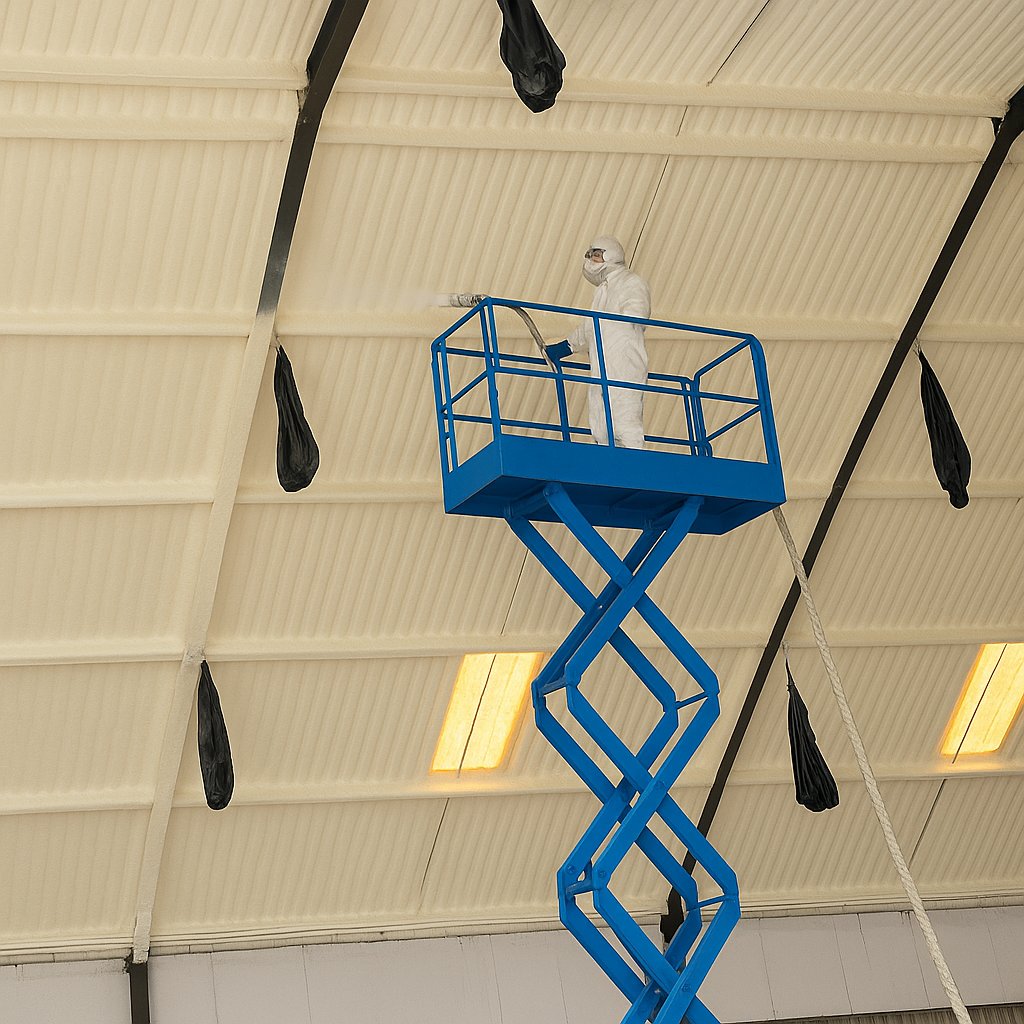
The layer going on. From the scissor lift, in passes, the sheet disappearing under a continuous cream layer. Project record.