Project record · Metal deck soffit · Closed-cell, profile filled first
Food-sector units, London: 324 m² of deck soffit at 140 mm.
Two adjoining industrial units in south London, fitted out for the food sector, with a corrugated metal mezzanine deck over the working floor. We filled the profile, built 140 mm of NexSeal LE closed-cell beneath it in three passes, and checked the layer for depth at 29 points and for adhesion and cohesion, then finished it in a black vapour control coating.
- 324m²
- Metal deck soffit treated
- 140mm
- Closed-cell, in three passes
- 29
- Depth checks recorded
- Five days
- 14 to 18 September 2026
01The building
A metal deck over clean rooms, with services everywhere beneath it.
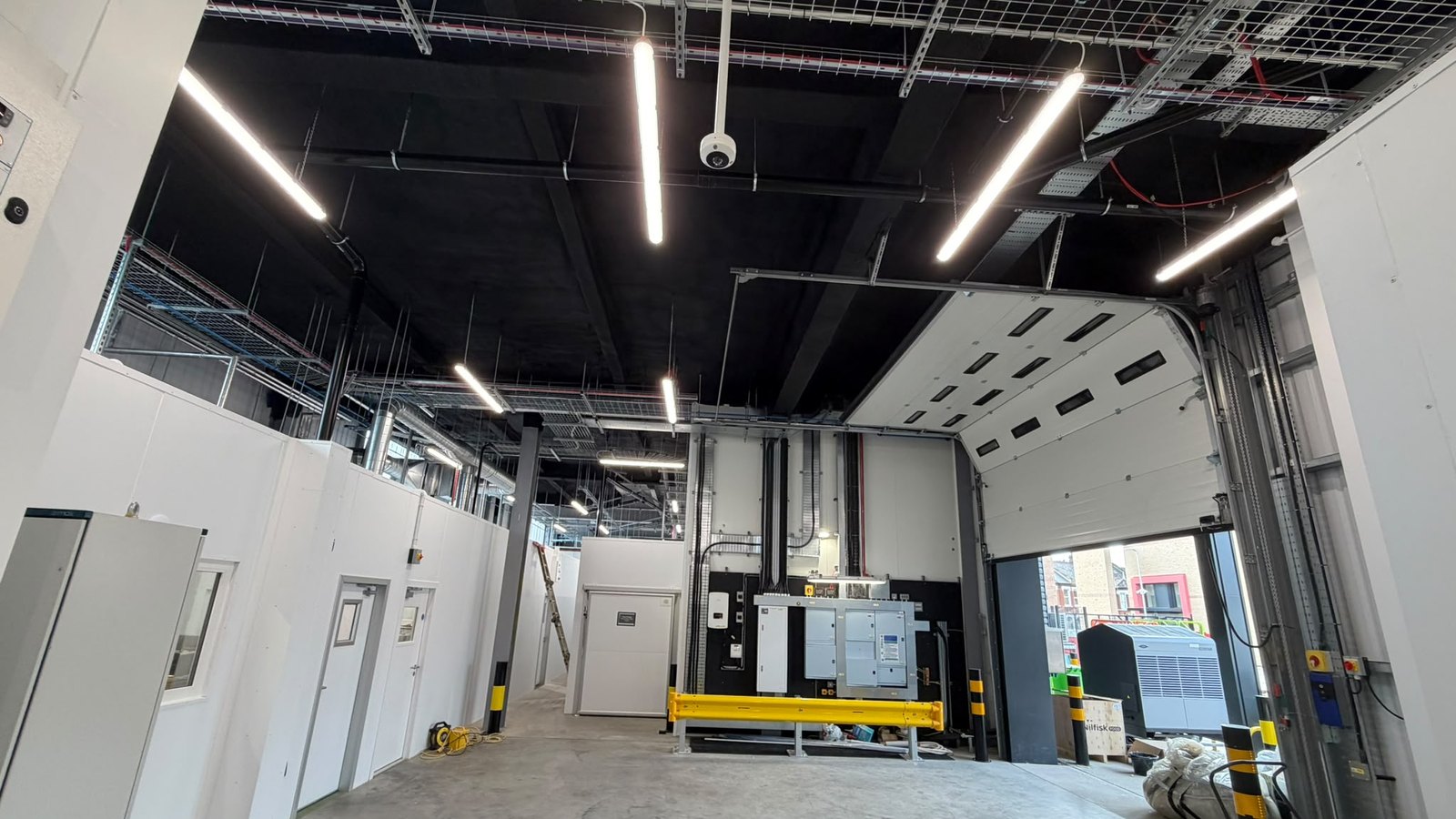
The units were being fitted out as food-sector premises: white hygienic rooms on the ground floor, a mezzanine above them, and cable tray, lighting and pipework hung beneath the deck. The underside of that deck is a corrugated metal profile on downstand beams, and it needed insulating, sealing against moisture vapour and finishing cleanly over the rooms below.
Why the deck mattered. Bare metal follows the temperature on its other side. Beneath it, warm and humid air from the rooms meets a cold surface, and every trough in the profile is a place for condensation to gather above a food area.
Why the profile came first. A corrugated deck has deep troughs between its ribs. Spraying straight to depth would bridge them and leave voids against the metal. Filling the profile first gives the build-up passes a flat, bonded base.
The brief. 140 mm of closed-cell across the deck and its beams, continuous around the services, with the conditions, the depth and the bond all recorded, then a black vapour control finish over the top.
- Building
- Two adjoining industrial unitsFood-sector fit-out, mezzanine over hygienic rooms
- Location
- South London
- Substrate
- Metal soffit, underside of the mezzanine deckCorrugated profile; services and cable tray below
- Area
- 324 m²
- Application
- 140 mm Enverge NexSeal LE closed-cellMorrells Mako 2K Etch Primer on the prepared metal
- Finish
- Bostik Idenden ET-150 vapour control coating, black
- Conditions
- Deck dry, clean and fixedSubstrate 23°C against a dew point of 15°C
- Verification
- Depth at 29 points; adhesion and cohesion
02What we specified, and why
Primed metal, 140 mm of closed-cell on a filled profile, and a black vapour control coat.
The depth was set at 140 mm. The method made sure that depth was a continuous bonded layer across the ribs, the troughs and the beams, rather than a skin over hidden voids, and the coating sealed and finished it.
- The base: Morrells Mako 2K Etch Primer. Applied to the agreed areas of metal before any foam, giving the insulation a properly prepared surface to bond to.
- The system: Enverge NexSeal LE closed-cell, at 140 mm. Sprayed directly to the underside of the metal deck, bonding to the profile and closing around beams, hangers and fixings. λ 0.027 W/mK is the product's declared figure. Profiled metal roof underside, the application.
- Why the profile is filled first. The troughs were filled before the build-up began, so each following pass sat on a level, bonded surface and nothing was left hollow against the metal.
- Why three passes. 50, 50 and 40 mm, with 12 minutes between them. Closed-cell foam gives off heat as it cures; controlled passes keep each layer stable and bonded to the one beneath.
- The finish: Bostik Idenden ET-150 vapour control coating, in black. Applied over the cured foam to form a vapour control layer. It reduces moisture vapour moving from the warm, humid rooms into the insulation, supports condensation control, and leaves a clean, durable surface over the services.
- Product
- Enverge NexSeal LE, closed-cell
- Depth
- 140 mm, passes of 50, 50 and 40 mm
- Primer
- Morrells Mako 2K Etch Primer, prepared metal
- Density
- 38 kg/m³, checked on site
- Coating
- Bostik Idenden ET-150 vapour control, black
- Checks
- Depth at 29 points, adhesion, cohesion

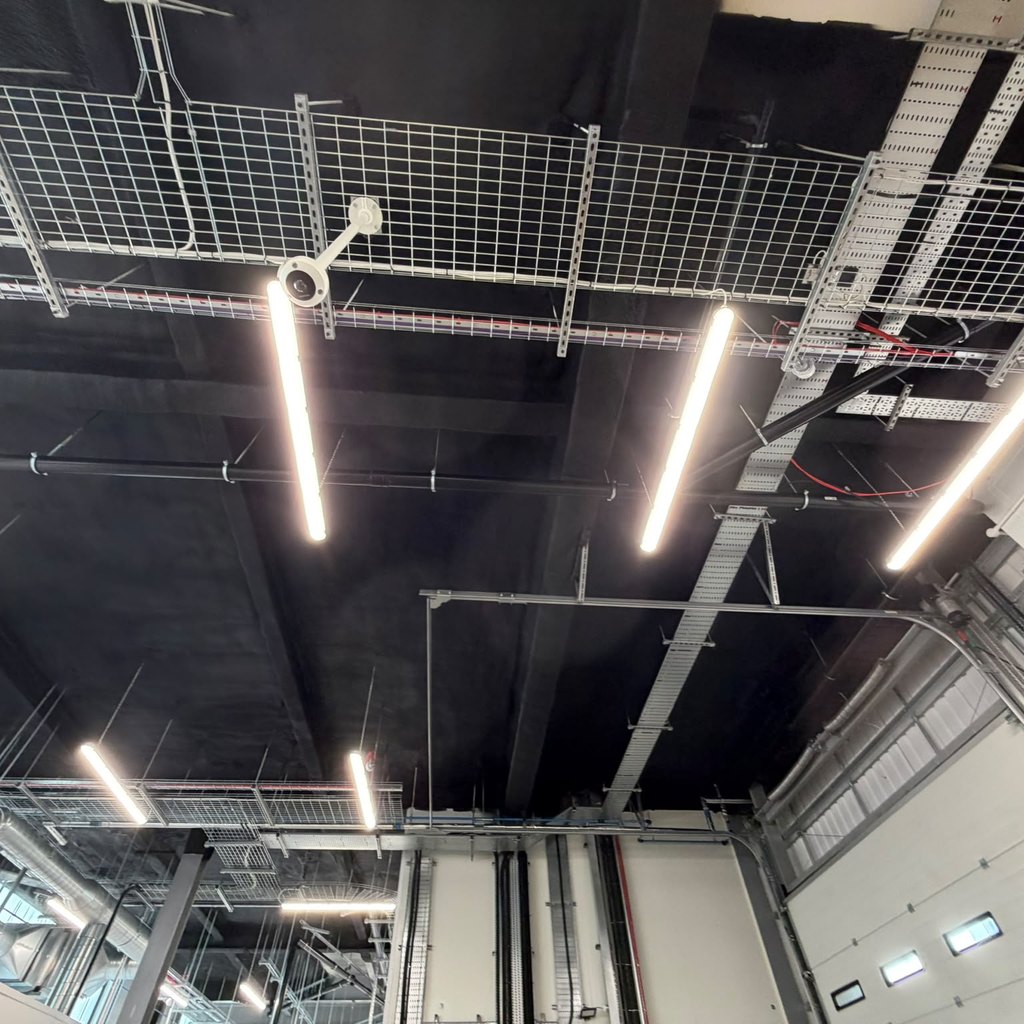
Over the beams. The deck and its downstand beams under one continuous layer, finished in the black vapour control coat. Project record.