Before 3pm on a working day, contacted the same day. After 3pm, the next working day. Contact, not a quotation. Telephone
Start a project brief
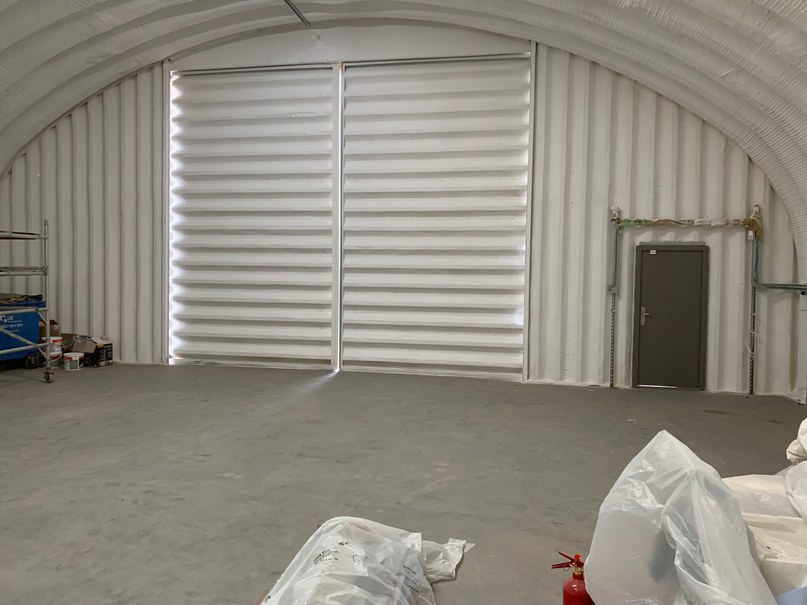
Inside the Nissen hut after the work: the whole corrugated arch and the end wall finished in a smooth white coated layer, a pair of tall doors in the end wall and a grey personnel door beside them.
Project recordCoated, complete

Project record · Nissen hut · Coated system

A Nissen hut for Rolls-Royce Motor Cars: 50 mm of closed-cell, coated for fire.

A corrugated steel arch used for finishing work on cars. It had to be warm, dry and specified against the fire requirements for an occupied workspace. We sprayed 50 mm of closed-cell foam to the inside of the arch, from the floor to the crown, and finished it with DC315 intumescent coating. The rooflights stayed clear.

50mm
Closed-cell to the inside of the arch
DC315
Intumescent coating over the foam
Full arc
Wall plate to crown, rooflights clear

01The building

A steel arch with cars inside it.

A Nissen hut is a single sheet of corrugated steel bent into a half-cylinder. It is quick to put up, cheap to run badly and hard to insulate with anything that comes in a flat board. This one was in daily use for finishing work on cars, so the inside had to be a workplace, not a shed.

The problem with a bare arch. There is nothing between the inside air and the outside weather but a millimetre or so of steel. In winter the arch is cold from end to end, condensation forms on it and runs down the corrugations, and the heating fights the whole shell at once.

The problem with boards. Rigid boards do not bend to a corrugated arch. Every board leaves a void behind it, and every void is a place for warm air to meet cold steel. The only lining that follows the geometry is one that is sprayed on.

The brief. Insulate the shell against heat loss, stop the condensation, and finish the surface so that it answered the fire requirements set for an occupied workspace. The cars and the people under the arch were the point.

Building
Nissen hut, corrugated steel archUsed for finishing work on cars
Client
Rolls-Royce Motor Cars
Location
UK
Treated
The inside of the arch and the end wall
Application
50 mm closed-cell foam
Finish
DC315 intumescent coating
Rooflights
Masked and left clear

02What we specified, and why

50 mm of closed-cell to the steel, then the coating the fire strategy asked for.

Two decisions. The foam depth came from the objective: hold heat and keep the steel above the dew point. The coating came from the use of the building: people working under an exposed foam surface, and a fire requirement to answer.

  • The foam: 50 mm closed-cell, sprayed to the inside of the arch. It bonds to the corrugations, follows the curve without a void and sets rigid. At 50 mm the layer controls condensation and holds useful heat overnight. How thickness follows the objective.
  • The coating: DC315 intumescent. A water-based intumescent coating made for protecting spray foam insulation, applied by airless spray over the cured foam. It is how we achieve the tested Euroclass B-s2,d0 build-up, and it gives the hut a clean, light, wipeable finish. The coating, explained.
  • The rooflights. The translucent strips along the crown were masked and left clear, so the hut keeps its daylight. Where a client prefers rooflights sprayed, we prime them first; here the choice was daylight.
  • Why from inside. The arch is the roof and the walls at once. There is no outside to work from without re-cladding the building, and no reason to: the steel stays as the weather line.
Foam
Closed-cell, 50 mm
Coating
DC315 intumescent, airless-applied
Substrate
Corrugated steel arch, inside face
Daylight
Rooflights kept clear
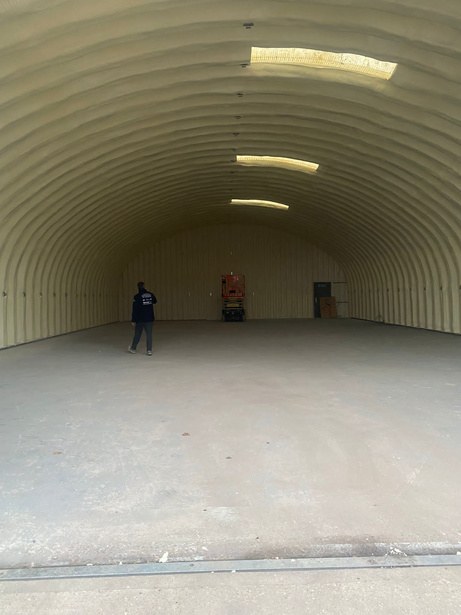
Inside the Nissen hut with the foam on and the coating still to come: the whole arch in a continuous cream closed-cell layer, three rooflight strips glowing along the crown, a person walking across the empty floor.

The foam before the coating. The arch in one continuous closed-cell layer, the rooflights clear along the crown. The white finish on this page's other photographs is the DC315 coat that followed. Project record.
03How the work ran

Bare steel, foam, coating, hand-back.

Three visits to the same arch, in order: the steel prepared and the foam sprayed to depth; the foam cured and coated; the hut cleaned and handed back for the cars.

  1. Survey

    The arch measured and the use understood.

    The corrugation profile, the end walls, the doors and rooflights, and what the space was for. The fire requirement for the finished surface was confirmed before the specification was fixed.

  2. Protection

    Floor sheeted, openings masked.

    The floor covered, the doors, rooflights and fittings masked, and the booth and equipment inside protected before the first pass.

  3. Foam

    Sprayed in passes to 50 mm.

    Closed-cell applied to the inside of the arch and the end wall, from the wall plate to the crown, following the corrugations into every trough.

  4. Coating and hand-back

    DC315 over the cured foam.

    The intumescent coating applied by airless spray to the whole foamed surface, checked for wet film thickness, then the hut cleaned and returned to use.

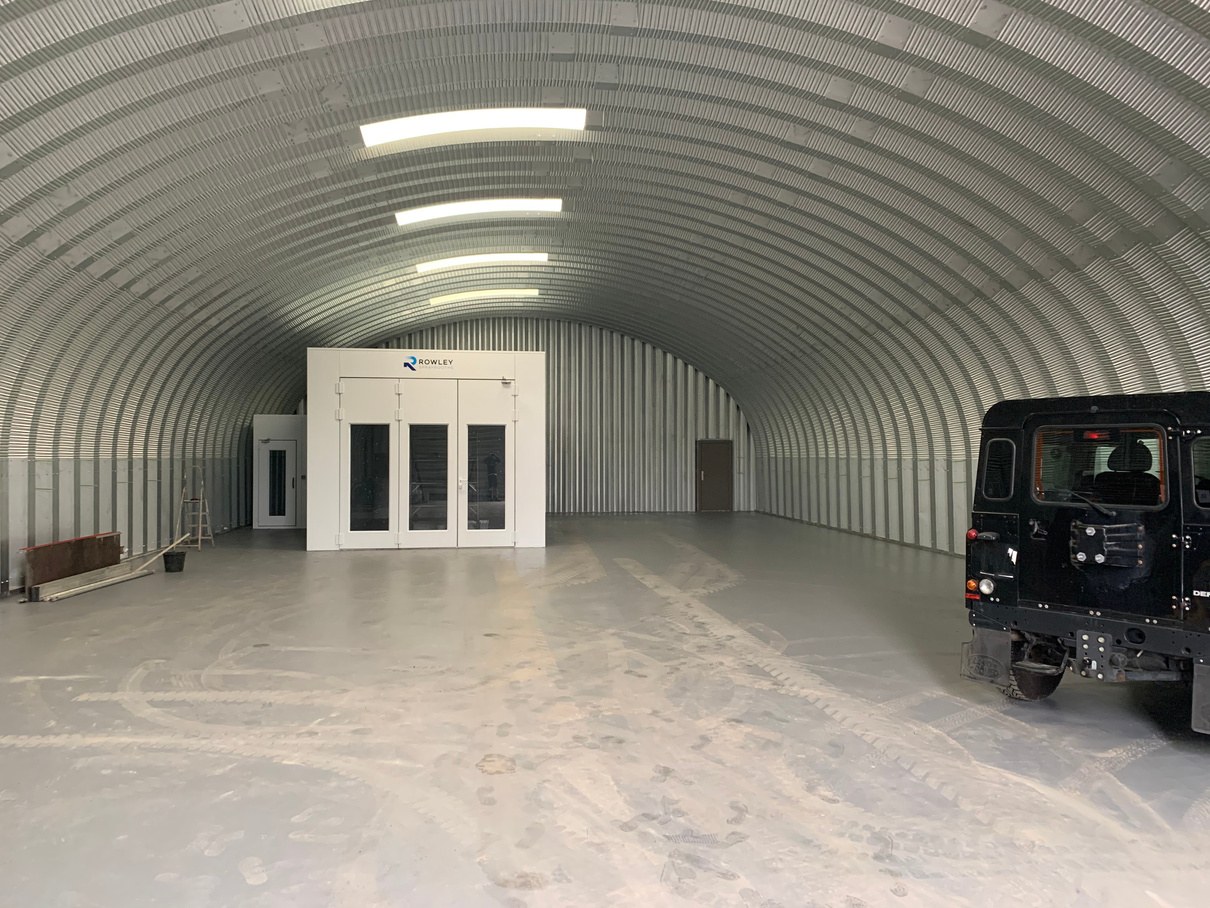
The Nissen hut before the work: bare galvanised corrugated steel from floor to crown, rooflight strips along the top, a white spray booth at the far end and a black four-wheel-drive parked inside.
Project recordBefore

Before. Bare corrugated steel from floor to crown, a workspace in a cold shell.

The same hut after foam and coating: the arch and the end wall in a smooth white finish, the tall end doors and a grey personnel door, fire extinguishers and sheeted equipment on the floor.
Project recordAfter

After. Foam and coating in one continuous surface, the end wall and the door reveals included.

04The outcome

A warm, dry workspace with a coated finish, as the client reported it.

The result is reported in the client's terms. We do not attach a percentage to it: heat loss through a bare steel arch is large, and how much of it a given building recovers depends on how it is heated and used.

Heat loss through the shell

Cutas reported

The client reported lower heat loss and lower heating and cooling costs after the work.

Condensation on the steel

Stoppedas reported

The arch is no longer the cold surface the inside air meets.

The finished surface

CoatedDC315

A continuous intumescent finish over the whole foamed arch, specified against the fire requirement for the space.

Daylight

Keptrooflights clear

The rooflight strips along the crown were masked and left as they were.

Where this record comes from

Reported, not metered by us. The heating and cooling saving is the client's observation; we do not publish it as a figure.

The fire evidence is stated as tested. The Euroclass B-s2,d0 classification belongs to the NexSeal LE and DC315 build-up tested at BTTG; the qualifier above is part of the claim, not a footnote to it.

Your next step

Your building.
Your brief.
A specialist.

If you already know the U-value or thickness you need, tell us and we price to it. If you do not, tell us what you know about the building and the problem, and we work it out with you. Someone who does this every day reads it and comes back to you.

Start a project brief About five minutes. Photographs help; nothing else is needed.

Or pick up the phone

Telephone . Before 3pm on a working day, you are contacted the same day. After 3pm, the next working day. A commitment to contact, not a quotation.

Want a figure before you talk to anyone? What it costs: the cost guide