Project record · Concrete soffit · Coated system
Pondswick substation, Luton: 127 m² of concrete soffit insulated and coated under live switchgear.
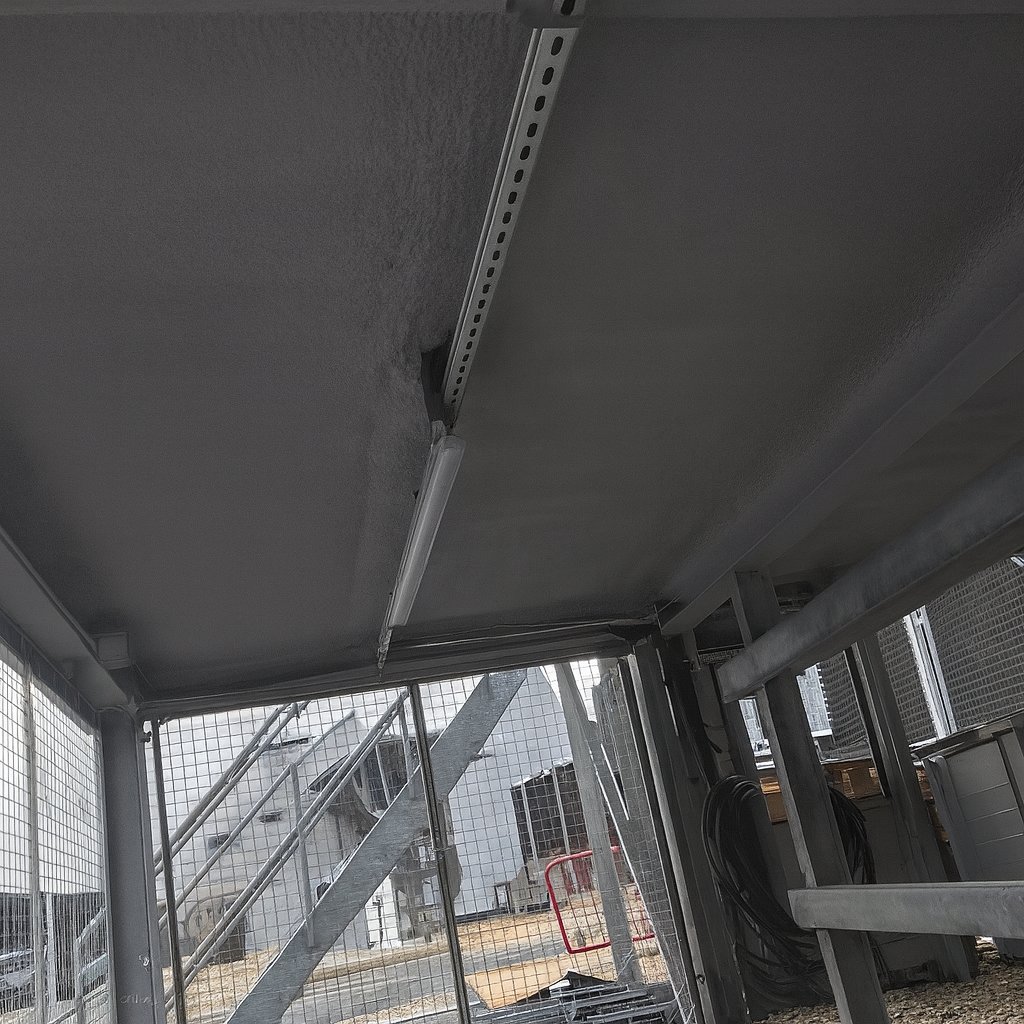
A primary electricity substation with an exposed concrete soffit under rooms of switchgear that must hold steady temperature and humidity. In October 2025 we applied an average of 90 mm of NexSeal LE closed-cell to the soffit and overcoated it with DC315 intumescent coating in ice grey, commissioned through the passive fire contractor for the site.
- 127m²
- Concrete soffit treated
- 90mm
- Closed-cell, average depth
- DC315
- Intumescent coating, ice grey
- Oct 2025
- Completed
01The building
A cold slab under rooms that cannot be cold.
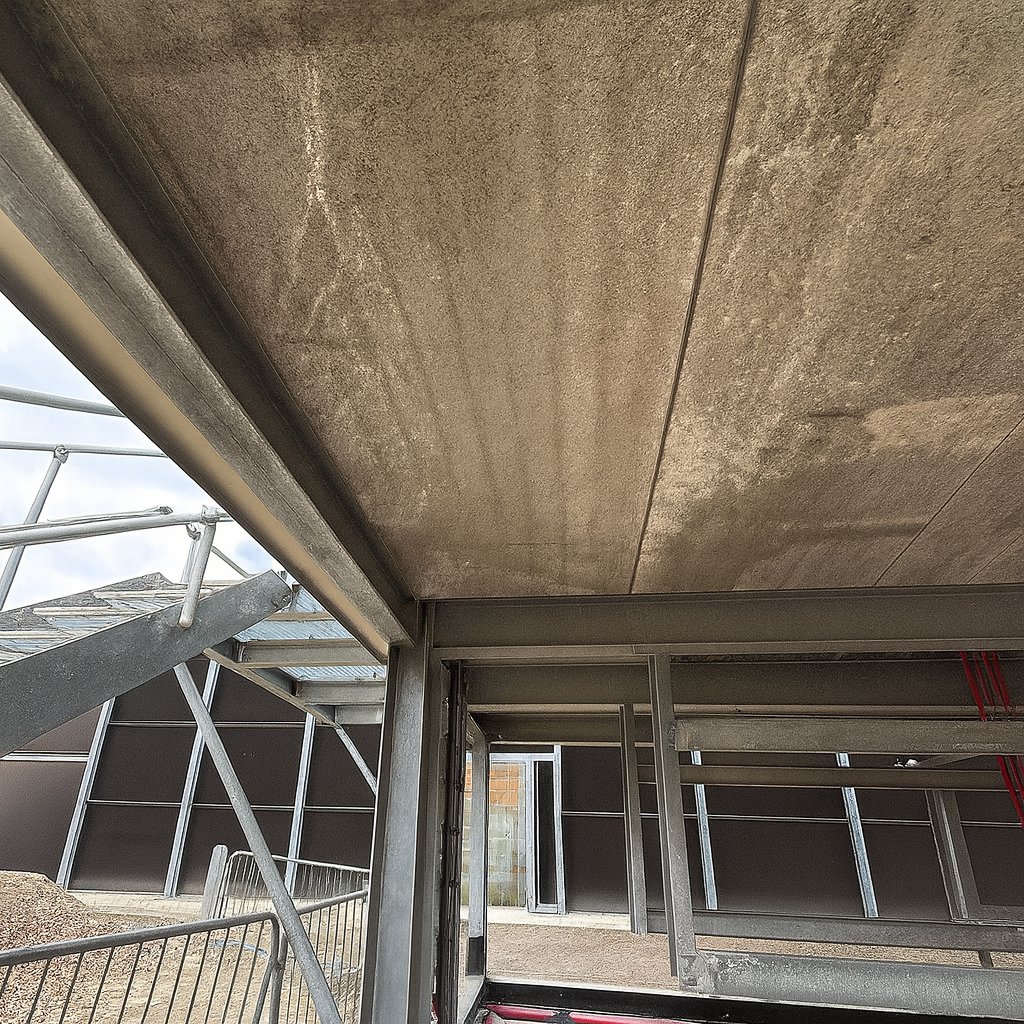
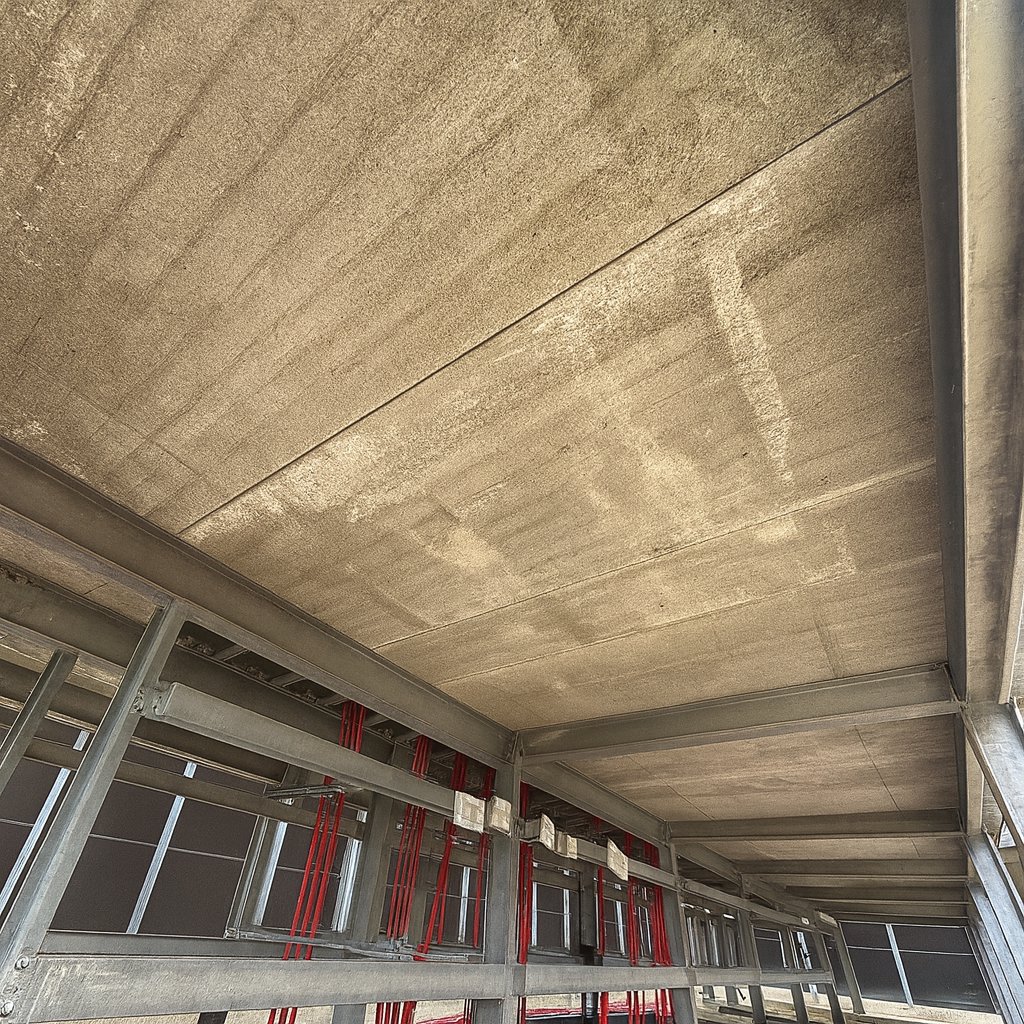
A primary substation is a building whose interior conditions are not optional. The switchgear above this soffit needs tight control of temperature and humidity, and the exposed concrete slab beneath it was a large cold surface, losing heat downward and threatening to carry condensation into the rooms above.
The thermal risk. Concrete has high thermal mass and stays cold. An uninsulated soffit under a conditioned room is a continuous heat loss and a cold bridge along every beam and column head, with the plant above working against it.
The condensation risk. A cold slab and humid air meet at the surface. Condensation on or within the structure beneath switchgear is a risk the operator cannot carry, so the soffit had to be lifted above the dew point and kept there.
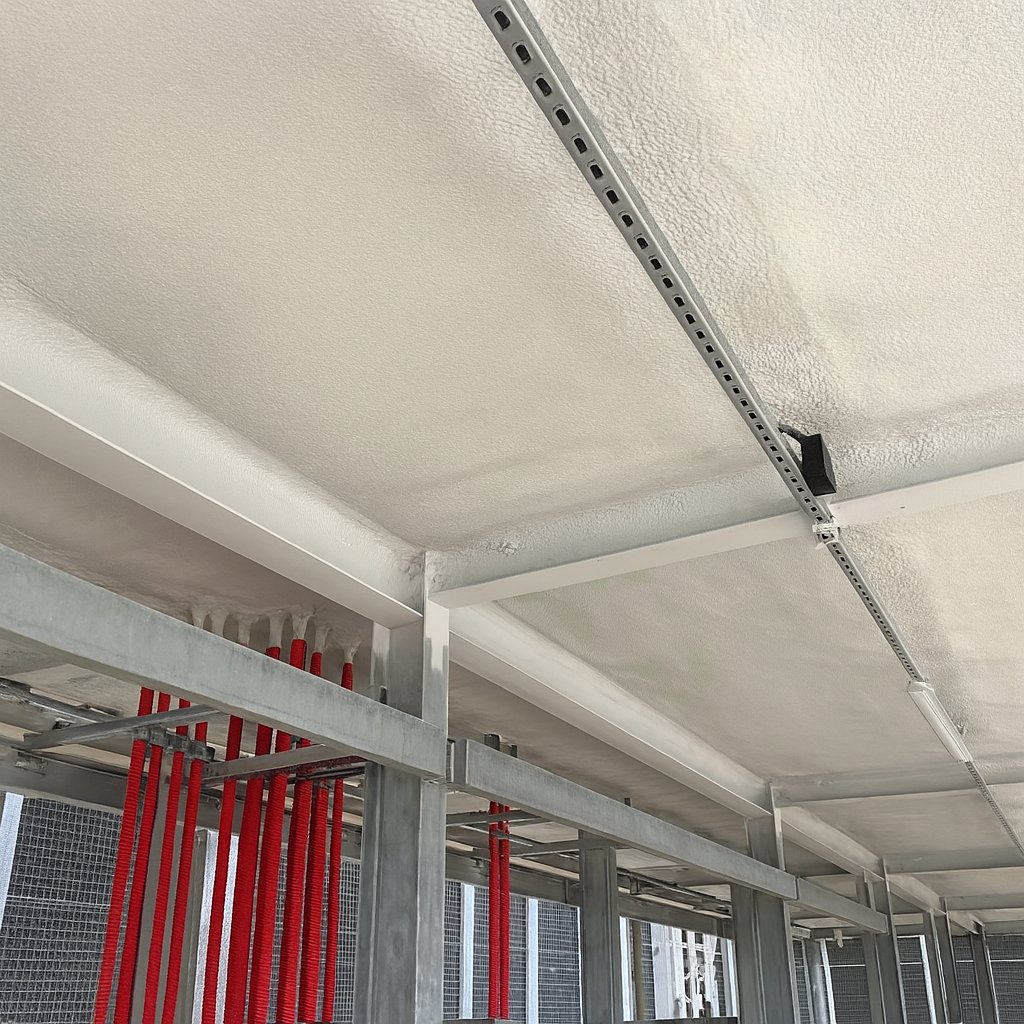
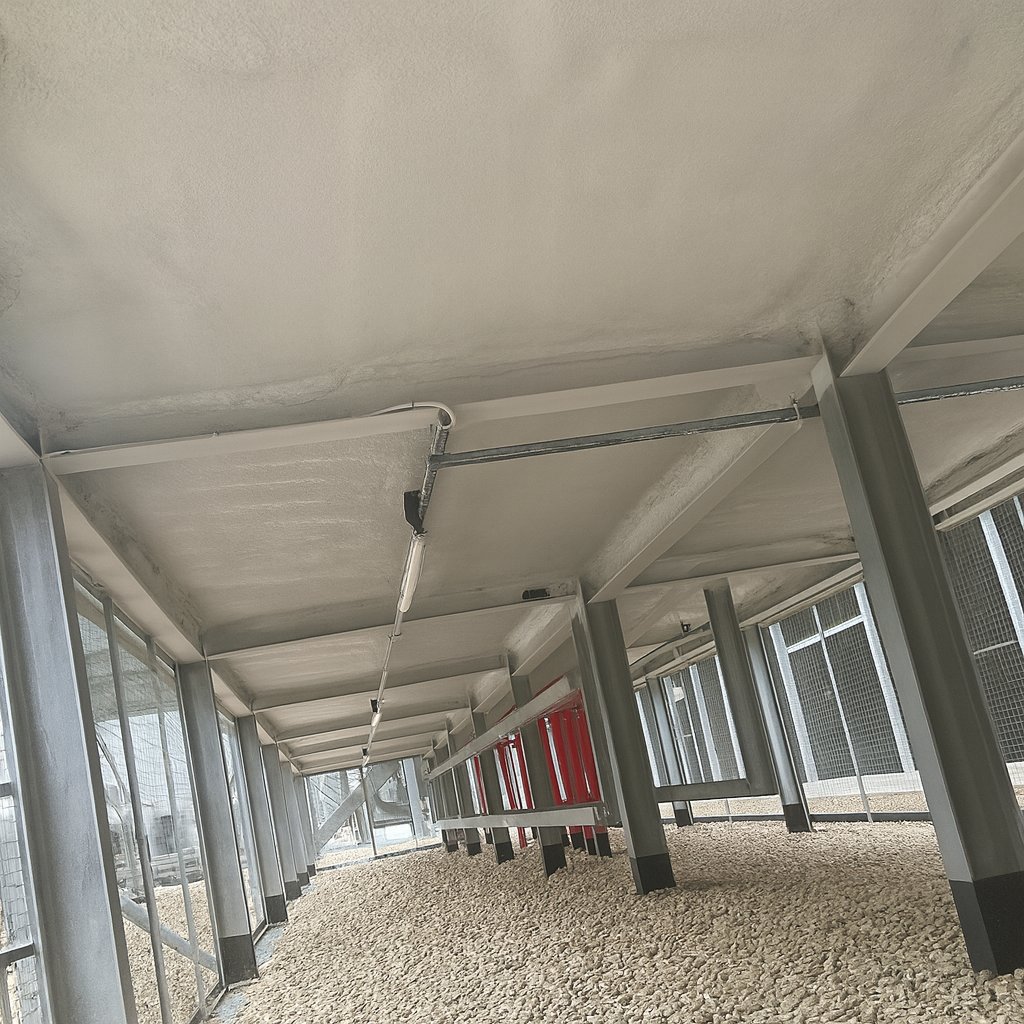
The fire requirement. An exposed foam surface in an electrical building needs the finish the fire specification calls for. Here that was DC315 intumescent coating, in ice grey, over the whole foamed soffit.
- Building
- Primary electricity substation, undercroft soffit
- Commissioned through
- Vulcan Passive Fire, for UK Power Networks
- Location
- Luton, Bedfordshire
- Substrate
- Concrete soffit, undersideBeams, columns and services worked around
- Area
- 127 m²
- Application
- Enverge NexSeal LE closed-cell, 90 mm average
- Finish
- DC315 intumescent coating, ice grey
- Date
- October 2025
02What we specified, and why
90 mm of bonded closed-cell to the slab, then the coating the fire specification required.
Depth for the thermal target and the dew point, bonded to concrete without fixings, finished in the coating the fire specification named. On a soffit full of beams, columns and penetrations, boards were never an option.
- The foam: Enverge NexSeal LE closed-cell, 90 mm on average. Sprayed directly to the concrete in passes, it bonds to the slab, follows every downstand and column head and closes around the penetrations. The depth was set by the design: enough to meet the thermal target and hold the surface above the dew point. Concrete soffits, the application.
- Why closed-cell on concrete. It bonds, so there are no fixings into the slab and no voids behind the layer where cold air could reach cold concrete. NexSeal LE declares a water vapour resistance factor (μ) of 62 to BS EN 12086, used in the condensation-risk analysis to BS EN ISO 13788 and the design to BS 5250.
- The coating: DC315 intumescent, ice grey. A water-based intumescent coating made for protecting spray foam insulation, applied by airless spray over the cured foam at a minimum of 0.7 mm wet film thickness and checked with a wet-film gauge. Ice grey is one of its three standard colours. The coating, explained.
- Why the whole soffit. A cold bridge anywhere is a condensation point. The layer runs continuously across the slab, the beams and the column heads, and the coating runs with it.
- Foam
- Enverge NexSeal LE closed-cell, 90 mm average
- Coating
- DC315 intumescent, ice grey, min. 0.7 mm WFT
- Substrate
- Concrete soffit, beams and column heads
- Vapour
- μ 62 (BS EN 12086), in the risk analysis
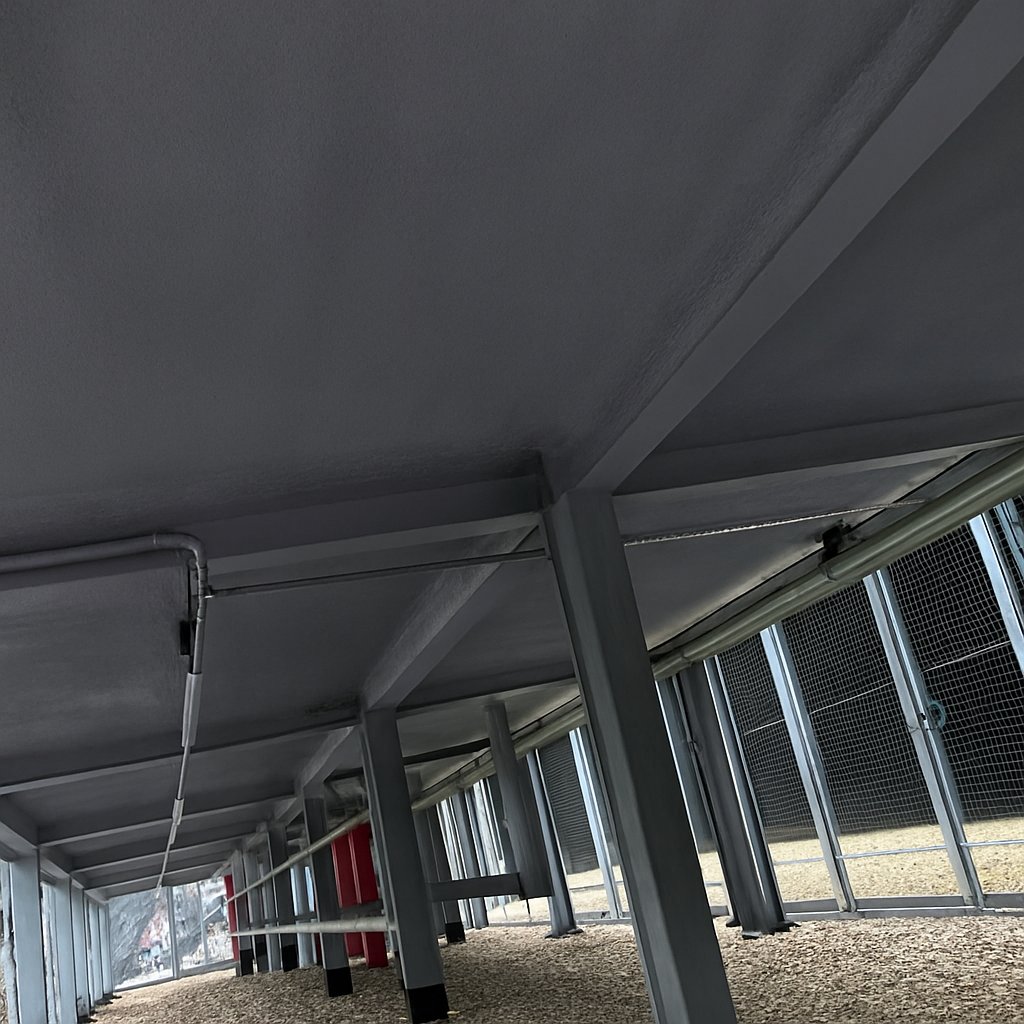
The finish. DC315 in ice grey over the whole foamed soffit, beams and column heads included: one uniform surface. Project record.